

My Tipperary Life with artistic director at The Source Brendan Maher
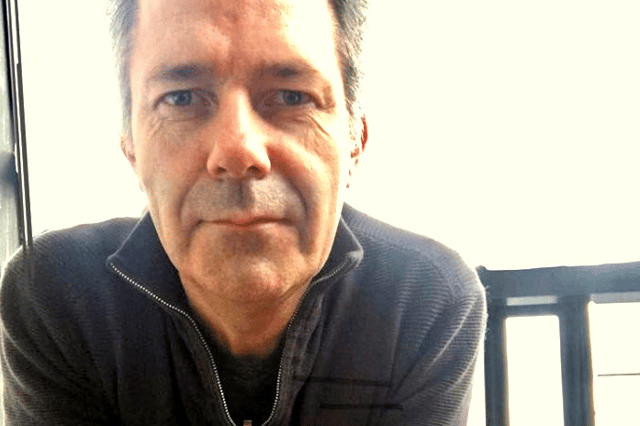

Brendan Maher is Artistic Director at The Source Arts Centre, Thurles. He studied at Limerick College of Art and Design and University College Dublin. He has worked at The Hunt Museum, Limerick, Galway Arts Centre and Galway Film Fleadh and was previously director at South Tipperary Arts Centre and Nenagh Arts Centre.
What's your idea of a perfect day, or perfect weekend in Tipperary?
We generally work at weekends here at The Source, so although it’s great to see live music, theatre or film, it still tends to be a working day. If I wasn’t working, I would be at home with my family.
We live near Dundrum which is a beautiful spot and we often head into the woods nearby for a walk with our dog, Leo. We regularly see deer and squirrels around there and Leo is especially entranced.
Who has made the greatest contribution to Tipperary in your lifetime - and why?
We could talk about artists like Alice Maher or a poet like Michael Coady, but I think in my lifetime, Shane MacGowan has made the greatest contribution – especially in broad cultural terms. If he had written the lyrics for ‘The Sick Bed of Cuchulainn’ and ‘The Body of An American’ and nothing else, his place would be assured.
What's your first Tipperary memory?
Coming from Urlingford, I was warned about Tipperary people from a very early age…
Joking aside, I do remember coming in to Thurles on Kavanaghs bus on a Saturday in the 1980's and being intrigued by the young people in The Square and the amount of mods and ska heads that seemed to be around.
We don’t seem to have those individual sub-cultures anymore and everything seems a little more homogenised style-wise.
What's your favourite part of the county - and why?
I do like Cashel as a town but I am also intrigued by the small tucked away villages like Hollyford, the Silvermines and Gortnahoe. It seems to me that the real heart of Ireland is in places like these, beating gently.
What do you think gives Tipperary its unique identity?
Tipperary is unusual in that it doesn’t have a centralised main town. As such, people are orientated towards different towns – Nenagh, Clonmel, Thurles, Cashel etc. – and their sense of loyalty and pride remains somewhat localised. Until All-Ireland season, that is.
The staff at The Source are hard-working, supportive of each other and generous with their time, traits which I think are common to people across the county and you see in small kindnesses between people every day.
Do you have a favourite local writer or author?
Clonmel-born writer Laurence Sterne reimagined and modernised the novel in his book ‘The Life and Opinions of Tristram Shandy, Gentleman’ written in 1759. It’s purported to be the autobiography of the title character, but sends the reader on many digressions and winding storylines. It remains quite contemporary in style and it’s got a lively sense of humour.
I am also excited to see the new crop of artists from Tipperary writing and developing their own theatre productions – Aine Ryan, Eve O’Mahony and Roseanna Purcell - to name three who are doing great work in this area.
What's the biggest challenge facing the county today?
Tipperary is part of a global community and we will all face actual climate change or the ramifications of it such as food production issues, migration etc. into the future. Since the industrial revolution we have increased our exploitation of the planet to the detriment of other creatures and the broader environment and we are now having to make a sharp turn into uncharted waters to attempt to rectify this.
One of the characters in Pat McCabe's small town novel 'The Butcher Boy' put it best when she famously said; “it'll be sad day for this village if the end of the world comes” suggesting that even though we all naturally look at events though our own local prism, global issues cannot be avoided.
If you had the power to change one thing in, or about Tipperary, what would it be?
I think the arts provide a powerful opportunity to allow people to develop a broader range of abilities. We often think of language in a narrow fashion as in reading and writing, however there are a number of non-verbal languages such as music, visual arts and dance which expand our ability to communicate with each other in often very profound ways. So if I was to see young people in Tipperary carry a guitar or a pair of dance shoes as naturally and as proudly as they carry a hurley in public, that would make me very happy.