

Hundreds of thousands of public sector workers staging 24-hour strike
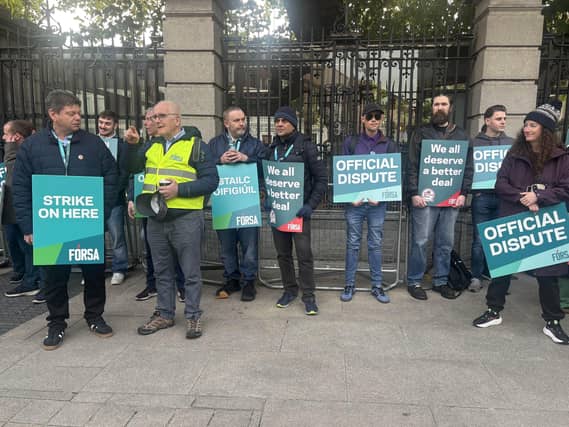

Members of Fórsa, Ireland’s largest public sector union, as well as Siptu had voted in favour of industrial action including strike.
Hundreds of thousands of public sector workers are taking part in a national 24-hour walkout on Wednesday in a dispute over pay.
The public sector workers, including nurses, doctors, teachers and civil servants, are engaging in the national strike following earlier work-to-rule action.
Members of Fórsa, Ireland’s largest public sector union, as well as Siptu had voted in favour of industrial action including strike.
The major teachers’ unions as well as collective bodies for nurses, midwives and doctors also voted in favour of action.
The main teaching unions are also taking part in the strike, which has led to the closure of most schools, colleges and universities.
Thousands of medical appointments have also been cancelled, with the HSE warning of “significant and widespread” disruption” to its services.
Speaking at the Mater Hospital in Dublin, Forsa general secretary Kevin Callinan said it is up to the government to address the issues to resolve the dispute.
Mr Callinan joined hundreds of union members, including nurses, doctors and hospital staff, outside the Mater building.
“It’s the breach of trust and the lack of confidence in the industrial relations process,” he said.
“It’s over to the government now to try and address those things if this dispute is going to be resolved.”
Asked on Tuesday evening whether pay would be a starting point to negotiations, Minister for Public Expenditure Jack Chambers told RTÉ: “Absolutely. That’s being put out there as a deflective mechanism to actually continue this escalation.”
In response to the minister’s comments, Mr Callinan said: “If he’s (Jack Chambers) sincere, I think it’s possible that there may be a way in which a framework can be built on that.
“I’ve indicated that the Taoiseach needs to intervene, consider that.
“Obviously, if that’s possible, we’ll work with it. If it doesn’t happen, we’re going to have another strike next week and beyond.”
He added: “We’ll consider anything that is reasonable. But the government needs to respond to our members today, right across the country.
“The struggles they’re having with the cost of living, the sense of a breach of trust that’s happened with the Department of Public Expenditure.
“They’re the issues that need to be faced up to by the government now, and we’ll obviously work with them if they take them seriously.”
On Tuesday, the Taoiseach urged trade unions to undertake further dialogue ahead of the major public sector strike.
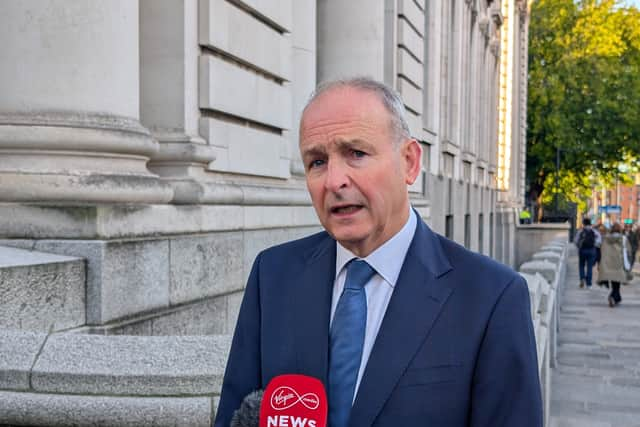
Micheál Martin expressed concern around the disruption that could be caused and said the 1.2 billion euro the government set aside in the recent budget for a pay deal provided a strong foundation for talks.
“We did appeal (on Monday) for the unions to come in for talks, and I would say in the recent Budget, the Government made a number of efforts and took a number of initiatives that were important for workers – significant tax cuts, continued expansion of public service numbers and specific initiatives on reducing the cost of childcare,” the Taoiseach said.
“In my view, there is a strong foundation there laid by the Budget and other measures to facilitate productive negotiations on a new national pay agreement.
“We have negotiated previous pay agreements in good faith, there is no reason why anyone should doubt our bona fides in respect of negotiating a new package.
“My real concern is the disruption that will be caused to many people, particularly patients who were expecting operations and procedures and indeed in terms of school days being lost.”