

A Tipperary woman was breaking 'glass ceilings'before they were invented

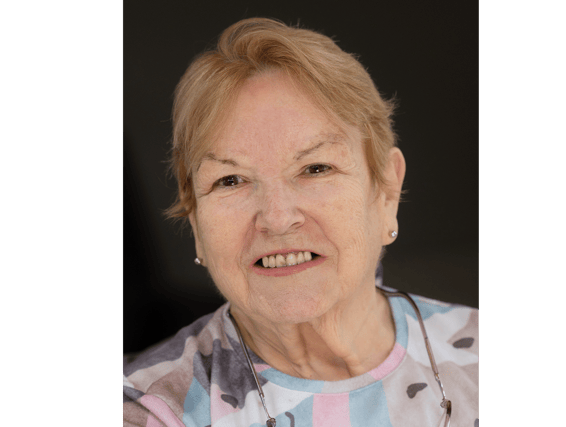

Patricia O'Sullivan was the first female to be elected Mayor of Clonmel 50 years ago
Concern for others was always and still is the driving force that motivates a Clonmel woman who broke a glass ceiling long before the terminology was in common use.
Patricia Keeley, as she was then, made history on June 29, 1976, when she was the first female to be elected Mayor of Clonmel, 368 years after Clonmel Corporation came into existence in 1608.
At that point, the 22-year-old community activist was the youngest person to be elected Mayor in Ireland and remains the youngest ever elected Mayor of Clonmel.
Looking back now, almost 50 years after that momentous event, Patricia is still very passionate about Clonmel and invested in the welfare of its people.
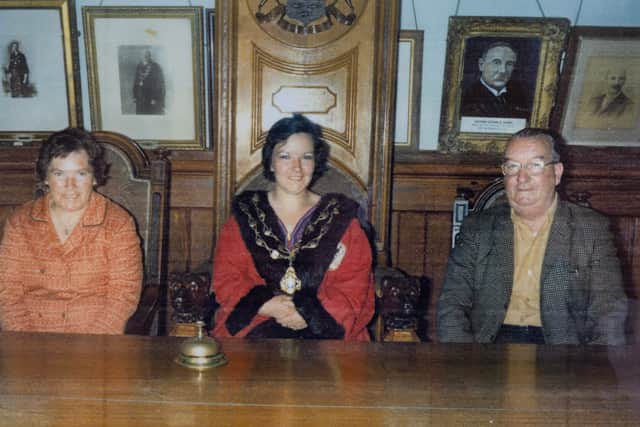
As Mayor of Clonmel in 1976, Patricia Keeley, she married her husband, Clonmel businessman John O’ Sullivan, the year after, was the public face of a campaign to save St Joseph's Hospital in Clonmel.
She led a campaign to organise a petition in the town, and that campaign was followed by many more to save the hospital and services over the years. The surgical facilities in Cashel were amalgamated with the medical facilities in Clonmel and the acute services operating on one site in Clonmel were officially opened in 1996.
“In 1976, the people of Clonmel were responsible for saving the hospital in the town, and it was the people of the town who saved it numerous times since. 50 years ago, the support of the people of Clonmel was overwhelming, and I am so proud of the role I played at that time, and it gives me great joy to see the strength of the hospital now,” said Patricia.
The family of the former psychiatric nurse has had strong links with the provision of care in the community since her great-grandmother, as one of the first midwives in Clonmel, started delivering babies door to door when she qualified in 1894.
Patricia worked as a psychiatric nurse, following in the tradition set by other family members, some of whom work in the hospital to this day.
Among her regrets would be the abolition of Clonmel Corporation in 2014 when South and North Tipperary were amalgamated in a review of local authorities in the country.
“The history of the Borough was just wiped out. Clonmel lost its status and its identity. There are only six members now compared to 12. It was a disgraceful downgrading of Clonmel Corporation,” insisted Patricia.
The demise of the Labour Party, which was founded in 1912 in the Town Hall in Clonmel, where she was elected mayor, is also a source of upset to Patricia, who is still a member of the party at national level.
She believes the divisive campaign between Clonmel and Cashel over hospital services heralded the beginning of the party's downfall in Clonmel.
“I think the decline of the Labour Party in the town began back then when the late Labour TD Michael Ferris sided with Cashel, which did not go down too well in Clonmel,” she said.
Patricia came to the attention of the Labour Party when she was a very young woman, making a name for herself as a forceful advocate for elderly people.
Patricia wrote a regular column in The Nationalist under the pseudonym ‘Concerned’ and used that platform to start up a campaign to establish a welfare home for the elderly who held fears about having to move to live in Cashel at St Patrick’s Hospital and being uprooted from their homes in Clonmel to live fifteen miles away, cut off from their family members.
Her interest in the plight of old people was fostered in the Youth Club, where she met her future husband, John, and she was a member of the Clonmel Young Civic League, whose members built a chalet for a man in the Old Bridge area.
“I received letters from all over Ireland in response to the columns, and it was that positive feedback that encouraged me to go into politics. I wrote to the three main parties, but Sean Treacy, the Labour TD, was the only one who took an interest in me. I did not even have a vote at the time as I was only 16 or 17,” said Patricia.
She was put forward for a seat on Clonmel Corporation when Labour member and friend, the late Jimmy Collins, resigned his seat in 1973.
Patricia went into politics knowing full well how dirty a game it could be, having witnessed the traumatic events that Jimmy had to endure, which led to his resignation.
“Jimmy was to be elected Mayor, the deal was done, and all his family was waiting across from the Town Hall to have the traditional celebratory meal after the mayoral election. Fianna Fail pulled out of the agreed deal at the last minute, and Jimmy was not elected mayor. It was very hard on Jimmy and his family at the time, so I knew very well before I went into politics how hard it could be,” said Patricia.
Patricia was co-opted onto Clonmel Corporation and continued her advocacy for the elderly.
In her first time contesting local elections in 1974, Patricia was elected to Clonmel Corporation in her own right.
“I remember having to leave the election count to do my final oral exam in Kilkenny to become a psychiatric nurse. It was a very busy time for me. I was delighted to be elected. Everybody elected worked together for the town regardless of what party they were in, and I was very proud to be part of that,” said Patricia.
Very quickly, however, she had personal experience of just how difficult life could be for a politician.
Her campaign for a welfare home led to a plebiscite being held in Clonmel, in which people were asked to make a decision on the future site of a new welfare home.
“I remember being hit with an umbrella at a meeting. It was very heated and controversial,” said Patricia.
The then Minister for Health, Brendan Corish,had agreed to provide funding for a welfare home, but delays occurred as the Government grappled with the political turmoil of The Troubles at the time.
A deal to provide a welfare home on the site of the Medical Missionaries (now Melview) was agreed, but the delays led to the possibility of an alternative option for a new welfare home at a Sisters of Charity site at Morton Street.
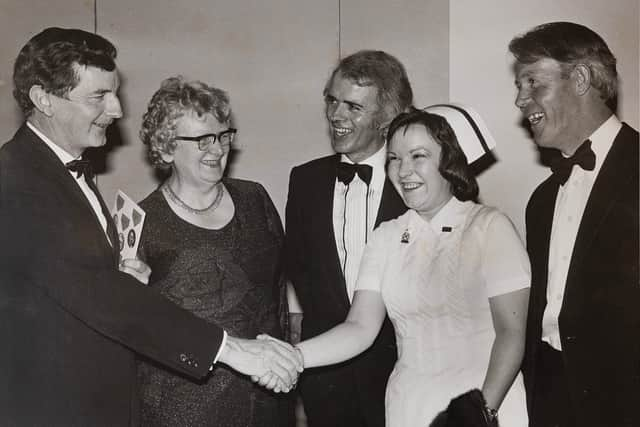
Her advocacy for the elderly people of Clonmel saw her win a prestigious national People of the Year award in 1975, and the following year, further honours followed when she was elected Mayor of Clonmel.
“Labour Party members of the Corporation, like Billy Byrne and Sean Lyons ( both now deceased), very much wanted to avail of the opportunity that was there for the first time to put in a woman as mayor. They were very supportive. I was very nervous,” said Patricia who defeated Fianna Fáil’s Tommy Norris by seven votes to five to make history.
While the high point of her mayoralty was the successful petition campaign to save the hospital in Clonmel, it was also a year of personal turmoil.
In November of that year, Patricia was on stage at Our Lady’s Hall thanking people as mayor for taking part in the Tops of The Town show, when she was told there had been a gas explosion in the town at the O’Sullivan’s home, located a short distance away from the Town Hall.
Ellen O’Sullivan, the mother of John, whom Patricia would marry the following year, died in the fire, while John’s father, Ambrose, survived.
“They closed all the bars and shops in the town when the explosion happened. I invited all the emergency services to the Town Hall to eat and have a drink. RTÉ was down the next day to cover it all. It was very traumatic,” said Patricia.
She also remembers a year of having to attend dinner dances almost every weekend and attending the inauguration of President Erskine Childers.
As was custom at the time, Showerings stocked the bar in the mayor's parlour in the Town Hall, and Carrolls supplied cigarettes and cigars.
“ I often brought the cigarettes and cigars to the patients in St Luke’s, and they really enjoyed that,” said Patricia.
Patricia decided not to run in the next local elections in 1979 for a number of reasons. She had been terribly upset with the outcome of the plebiscite for the welfare home and the bitterness it created.She was now a married woman, was expecting a baby, and was living in Nenagh, where her husband John was working at the time.
“I just decided not to go again. I was upset by what happened over the welfare home, and I decided to put family first,” said Patricia.
Patricia went on to have four children with John: Ailish, Sean, Claire, and Donna, and the couple are now the proud and adoring grandparents to ten grandchildren, ensuring them an incredibly fulfilling and busy family life.