

Market place in Clonmel has become a symbol of normalised dereliction in Tipperary

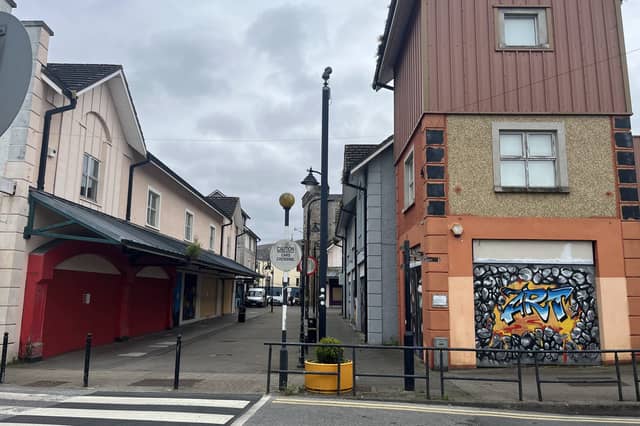

Market Place in Clonmel, once a thriving shopping destination, now stands mostly empty as campaigners say dereliction has become normalised across Irish towns
Market Place in Clonmel was once a thriving shopping area at the heart of the town of Clonmel. Today, it lies almost completely empty apart from one unit still operating and another unit opening again soon.
Thirteen units in the complex are now included on the local authority’s Derelict Sites Register, a list detailing all 115 derelict properties identified so far by the council in Tipperary.
The deterioration of Market Place did not happen overnight. Like many town-centre developments across Ireland, it was gradually hollowed out by changing retail patterns, the loss of key tenants, and declining investment.
As units emptied, they were not repurposed or redeveloped quickly enough. Vacancy deepened, buildings deteriorated, and over time neglect became normalised.
For campaigners like Dr Frank O’Connor of the Derelict Ireland movement, places like Market Place in Clonmel are not isolated cases but visible symptoms of a deeper systemic failure in Ireland.
One of the most striking aspects of dereliction, according to Mr O’Connor, is how it became culturally accepted.
“When we came back eight years ago and started the campaign, there was a normalisation. Everyone accepted it. It was just the way things are,” he says.
“That was one of the first things we had to challenge, the idea that it doesn’t have to be this way.” That sense of normalisation is evident in towns like Clonmel, where long-term vacancy has gradually blended into the background and become the norm almost.
According to figures cited by the campaign, Ireland has more than 163,000 vacant residential and commercial properties, including tens of thousands of derelict buildings.
Far from being an isolated problem in just Clonmel, vacancy and dereliction reflect structural failures in policy, taxation, enforcement, and housing strategy, says Frank.
A major issue identified by the Derelict Ireland campaign is the failure to enforce existing legislation.
The Derelict Sites Act, introduced in 1990, allowed local authorities to levy charges on neglected properties, but collection rates have historically remained low.
“There was a derelict site levy in place since 1990,” he says. “It was never fully enforced.”
Derelict Ireland have pushed for responsibility for collecting derelict property levies to be transferred from local authorities to Revenue, a move they believe will dramatically improve enforcement.
“They’ve decided to go with that move in the last year, and they’ve acknowledged it’s based on our work,” he says.
The change will introduce a new derelict property tax collected directly by Revenue rather than councils.
According to Frank O’Connor, that could significantly increase compliance rates. “If Revenue is collecting, they’ll be a lot more efficient than local authorities, who’ve struggled to collect them.”
However, not all hope is lost on the area as Remcoll Limited, the owners of Market Place, submitted plans in 2024 to revamp the development.
The company applied for a change of use of ground and first floor levels on one section of the site to administration and office use, as well as an addition of a new second floor space.
Plans were given the green light by Tipperary Council but the company has not began any concrete works to follow through with them as of late.
Remcoll Limited were contacted for an update on when works will begin in Market Place but did not respond by this article’s publication date.
Given Ireland’s ongoing housing shortage, some would argue that sites such as Market Place should be considered for residential redevelopment if large-scale retail activity is no longer viable in the town.
The complex occupies a central location within Clonmel, close to services, public transport links and existing infrastructure, factors that make town-centre housing developments attractive from a planning perspective.
New housing could increase footfall in the town centre and support local businesses. Similar regeneration projects in other Irish towns have demonstrated how vacant properties can be transformed into homes while helping to revive struggling urban areas.
An example of this is in Clones, Monaghan, where the Clones Renewal Scheme converted a number of derelict town-centre sites into 24 new housing units.
However, some local stakeholders may favour retaining a commercial element within the complex to preserve employment opportunities and maintain activity in the town centre.
For now, approved redevelopment plans remain focused on office and administrative use.
Yet as Market Place continues to await significant investment, the question of whether part of the site could eventually provide much-needed housing is likely to remain part of the wider conversation about Clonmel's future and the regeneration of Ireland's vacant buildings.