

"You never know what you are going to face" - Tipperary Crime Scene Investigator Tadhg Mohally

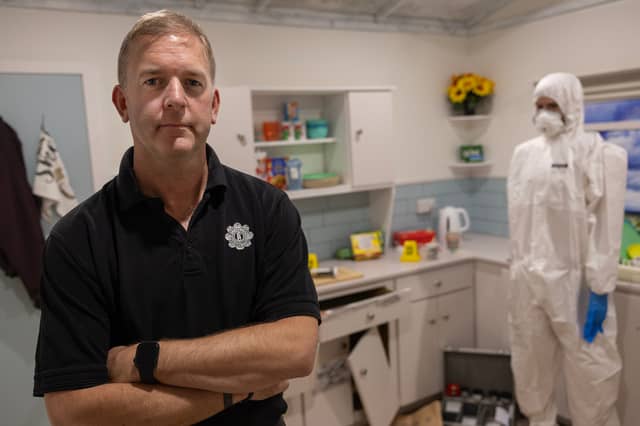

Take a look behind the scenes of crime with Tadgh Mohally, Crime Scene Investigator with Tipperary Garda Division
An interesting exhibition, Order From Chaos, a history of policing in Tipperary and Ireland, is now on display at the Tipperary Museum of Hidden History in Clonmel.
Chaos refers to the early days of policing in the State and the creation of the Civic Guard in the country at a time of political turmoil in 1922, but it is a word that could also apply to what Tadhg Mohally, a Crime Scene Investigator in the Tipperary Garda Division, is likely to find as he visits crime scenes all over the county on a daily basis.
A typical crime scene preserved for technical examination is on display in the museum as part of the exhibition presented by An Garda Síochána and Tipperary Museum of Hidden History.
The crime scene display has generated a lot of interest, particularly among the schoolchildren visiting the museum, who are also given a workbook to encourage engagement with the display that outlines the history of the force and looks at all of the specialist units, including air support, mounted support, dog unit, underwater unit, armed support unit, cyber crime bureau and crime scene examiners.
Tadgh Mohally is one of five crime scene investigators in the Tipperary Garda Division.
A native of Cork City and now living in New Inn, Tadgh gave an insight into his work to a captivated audience in an educational lecture at the Tipperary Museum of Hidden History as part of the ongoing exhibition.
He has worked in the crime scene area for the last fourteen years. Based in the Kilkenny/Carlow Division for a number of years, he transferred five years ago to the Tipperary Garda Division.
“Tipperary is a huge county. We could be called out to a location anywhere from the bridge in Portumna town to the Carrick-on-Suir/Piltown area to deal with criminal damage, a hit-and-run, burglaries, serious assaults, and murders,” said Tadgh.
Tadgh, who gave evidence in a sitting of the Central Criminal Court in Cork recently in a murder trial that took place following the death of 80-year-old Teddy Murnane in Tippeary Town in September 2025, said he goes out to work every day not knowing what he and his colleagues are going to face.
Tadgh said that whatever scene they arrived at, their top priority was to extract the best-quality fingerprints, DNA samples, and a photographic record of the scene so that “it can put members of a jury visually at the scene.”
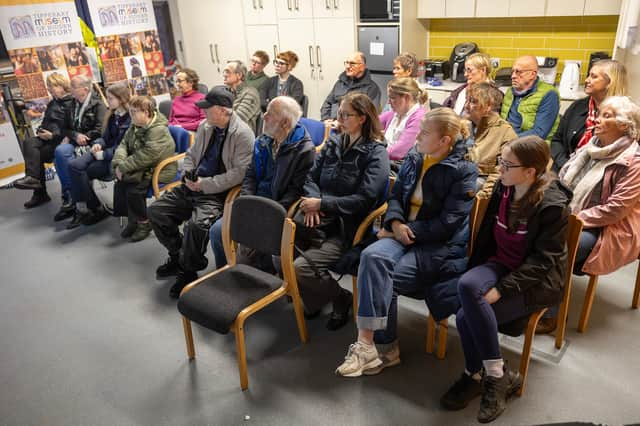
“You could take up to 200 pictures at the scene of a crime which could be narrowed down to a dozen to be shown in court after a process of selecting the best pictures involving defence and prosecution legal teams,” said Tadgh.
Tadgh said everything at the scene had to be photographed; you could not be selective.
“You would take pictures of every inch of the crime scene and make sure everything at the crime scene is visible through the pictures taken to ensure fairness to all parties in court. If there is a fatality involved, we could be at the scene for two days,” said Tadgh.
“I had no interest in photography, but it is an important part of the job. We are trained in how to lift fingerprints, how to take DNA samples, and you need to learn how to use the camera inside out, including how to take quality pictures at night.
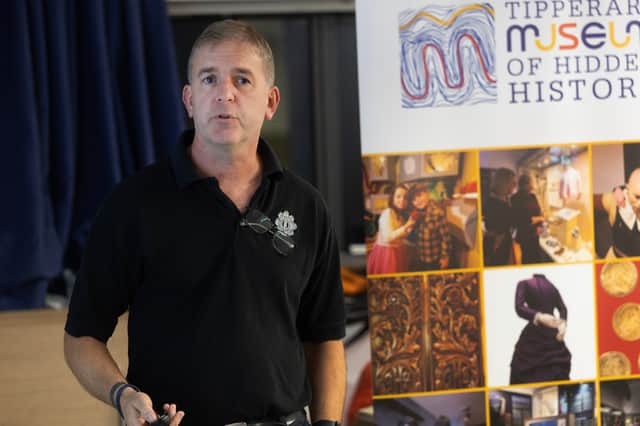
He said their role is twofold whenever crime scene investigators arrive at the scene.
“Our role is to find forensic evidence to get a conviction in court, but we are also there to help and advise the victim of crime and, in the case of criminal damage or burglary, advise people on security measures that could be implemented to try and prevent a repeat incident. People living on their own can feel vulnerable, and we can give them advice, and if there is something we can do to help them, we will,” said Tadgh.
At the scene, Tadgh and his colleagues will search for fingerprints, dust down fingerprints when found, do a tape lift and put the fingerprint on a lift card that is sent to the fingerprint section, who run the information through the national database. Blood samples are taken at the scene using a swab. The sample is labelled, and a picture is taken of where it was taken from before the sample is sent to Forensic Science Ireland, and they extract the DNA from the blood.
“If it is a murder scene, we assist the State Pathologist and take a picture of every stage of the process, as well as taking pictures at the post-mortem,” said Tadgh.
As part of his job, Tadgh is often put in a position of having to face fairly gruesome scenes.
“You try not to think of that; it is a job, you don't think of yourself, and you have to look beyond that. Your goal is to get answers for the victims of the crime and their families. If there was a body at the scene that was around the same age as my children, that would be very difficult to deal with, and I would remove myself from the scene and le