

COLUMN: 'Ever tried. Ever failed. No matter. Try again. Fail again. Fail better'
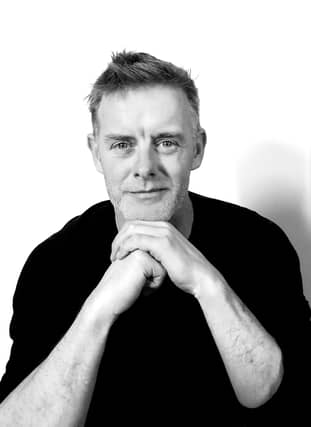

Karl Clancy writing in this week's Nationalist
Perception is reality. A common phrase to say that our reality is shaped by our way of looking at the world, and that’s true. It also follows that projection is reality, that we don’t see the world as it is but rather we see it as we are.
We shape our reality and act in accordance with our vision of reality.
All any of this means is that we build up a picture of how the world around us works and we act and react in ways that become habits and those habits dictate how we experience life, for good or bad.
What follows on from that is the thought that if life is working in some way, either for us or seemingly against us, at some level we are causing it to be that way.
We act or react in ways that perpetuate the cycles we live in, creating the same outcomes over and over, either with positive or negative results.
This is why some people seem to be stuck in one place, stuck in one way of living, they literally can’t be any other way until something changes and others seem to sail through with ease.
The world won’t change so there’s only one other thing that can and that’s us. If we don’t change the input we can’t change the outcome.
To change our mindset requires us to make changes to our habits, our behaviours and the small automatic, unconscious assumptions about the world we inhabit.
To begin to make those changes we need to first realise what’s in our control to change and reprogram ourselves to become the kind of person that naturally creates circumstances in our lives that work for us and by extension, work for everyone else too.
We start this process by realising that our self image, how we see ourselves, is how we control every facet of our lives.
How we relate to others, how we respond or react to situations, how we think and feel about each and every situation, all these are governed by the image we have built up over a lifetime of who we are.
Some are minute unconscious reactions and some are larger elements of our conscious minds and all are controllable and alterable, with training and consistent effort. We can learn new positive habits and remove old, self-sabotaging ones.
Over time you’ll find yourself creating a new version of your world where the outcomes are ones you want. It’s almost like you manifested them into being by being the person they should happen to!
Don’t get me wrong, it’s not a simple one time process and it’s not going to work unless you make the changes stick.
You will fail often as you begin and will still fail when you think you know all the answers, because we never know all the answers. At the start you may feel discouraged.
Don’t give up! Failing can trigger a fear based response in us that we aren’t good enough, aren’t worth enough to ourselves to want better for ourselves, leading our minds to interpret failure as a devastating event.
Our protective instincts tell us not to rock the boat, to return to the safety of what we always knew.
When this happens our instincts for self preservation kick in, using all the tools at their disposal, creating both emotional and often physical distress and pain in the shape of embarrassment, shame and guilt or self loathing.
Our nervous systems learn to process failure then, as a dangerous external event that you need to be protected from, causing us to have anxiety, fear, worry, stress and all the physical symptoms that go along with that, every time we try to push beyond what we have always known, always done, no matter how destructive and miserable that may be.
Our instinct, our ego, just wants to protect the physical organism and is perfectly well prepared to sacrifice potential happiness and reaching for the stars in favour of the safety of mediocrity.
So, to learn that failure in attempting change is a normal part of the process, comes as quite the relief! Samuel Beckett said
‘Ever tried. Ever failed. No matter. Try again. Fail again. Fail better’, and how right he was! We can retrain our minds and our bodies to accept failure as part of the process of learning and something to be welcomed not feared.
I think I’d rather have a raft of memories of trying to look back on than a similar amount of ‘What if’s’.
There is a popular saying ‘win or learn’. We only learn when we accept the truth. It’s win or lose.
The learning comes from not being afraid of losing, seeing it as teaching a lesson not as a failure to recoil from but as evidence that there is still some to learn, and that takes self awareness and humility and an ability to be honest with ourselves.
In life I’ve made many mistakes. I haven’t always taken responsibility for them through fear and shame and that held me back from learning.
Only when I decided that I had to face my inner fears did I find that they melted in the face of honesty, leaving me free to reach beyond my old life stepping into the one I have now, where I am content but growing, at peace but restless for improvement, happy in the knowledge that the worst that can happen is that I may fail, but if I do I’ll accept that with humility and good grace, not fear.
I’ll learn, let the failure go and try again, and so can you, when you make the choice to!