

Courts and schools in Tipperary invited to take part in road safety programme
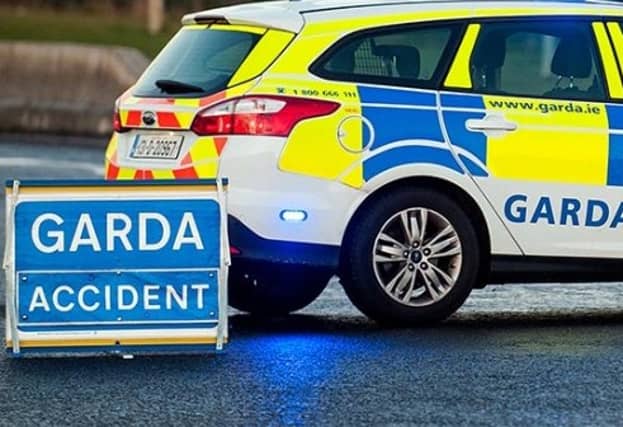

The programme is active in Limerick but gardai hope to roll it out in Tipperary and Clare
Gardai have asked district courts, schools and councillors to help them deliver a “hard-hitting” road safety programme in Tipperary.
Garda Pardaig Sutton, who is in charge of road policing and fatal collisions in Limerick City, presented a “whistlestop” of An
Garda Síochána’s Life Saver programme to members of the Tipperary Joint Policing Committee.
The programme consisted of crash footage and a series of videos of and by people who had been affected by road traffic accidents in Ireland and abroad. Contributors include parents who have lost their children, drivers and passengers who have suffered life-changing injuries and crash site investigators.
Garda Sutton said the programme is not about punishment but education.
“I have seen ones with serious criminality and I have seen ones where the person was in the wrong place at the wrong time. It’s absolutely horrific.
“My guys and girls have to go out there and deal with families and trauma. They go to homes in the middle of the night to tell people they have lost a loved one,” said Garda Sutton.
Garda Sutton said that 120 guards are trained to deliver the programme, and since October 10,000 people have seen it.
They include students at second (transition year and up) and third level, as well as defendants in court for road offences.
Garda Sutton said Clare Judge Alec Gabbett, has referred defendants to the programme. On completion, they receive a certificate which can be used in mitigation on sentencing.
He said he hopes other district courts will make referrals because the programme is about education and not just punishment.
Garda Sutton says that catching people is one thing, but they need to try another way and this programme is it.
“I have two girls and do I worry about them in 20 years' time? Absolutely. Do I worry about their driving? Yes.
“But I worry more about the young guy they get in the car with because they are the high-risk group males,” said Garda Sutton.
The clips shown to the committee were not all Irish. Garda Sutton said the guards have Irish footage, but they cannot use it yet.
He said there are people who have lost loved ones recently, and in five or six years they will ask those people if they can use their loved one’s stories for the programme.
JPC members also participated in one of the group's activities of passing a ball back and forwards.
This was to demonstrate that you cannot do a high-concentration task and operate your phone at the same time.
“It’s impossible to drive a car and text at the same time. It’s lethal,” said Garda Sutton.
Garda Sutton said if he could choose just one legislative change, it would be a technological restriction on the use of mobile phones when plugged into a car.
Garda Sutton said that road deaths are not just an issue with one group but the whole of society.
But if people change, they can bring the numbers down.
RESPONSE
JPC members were very positive about the programme. JPC Chairman Cllr Noel Coonan said: “we are all here to support you.”
Cllr Andy Molloy said the programme was “enough to shock anyone.” Cllr Anne Marie Ryan asked if the programme was to be delivered in Tipperary schools.
Garda Sutton said it is not suitable for students below transition year.
Chief Superintendent Aileen Magner said if there are schools who want the programme, “they will be there in a heartbeat.”
“We have been there, and we are wearing the t-shirts. We aim to get to all transition year students in Tipperary and Clare.
It is a working progress,” said Chief Supt Magner.
Cllr Shane Lee said he could not understand why cars are so powerful if Irish roads only go up to a certain speed limit.
Cllr Coonan and Cllr Fiona Bonfieldf agreed.
Chief Supt Magner pointed out that cars are built for multiple jurisdictions and restricting speed in them probably would not be possible.
But this programme is something they can do.
CHIEF SUPT REPORT
The Chief Superintendent’s report to the JPC shows that there were significant reductions in some traffic offences between November 2023 and January 2024.
Driving over the legal alcohol limit was down 14% from 64 incidents to 55.
Drug driving was down 53% from 17 incidents to eight.
And driving without a seatbelt was down four percent from 288 incidents to 276.
Fatal collisions were down 100% in the same period, and serious injury crashes were down 40%.
However, using a mobile phone while driving was up six percent from 602 incidents to 637.
Speeding saw a 38% increase from 12,881 detections to 17,798.
Between November 2023 and January 2024, there were 781 MIT checkpoints conducted across the division.