

BIG READ: Tipperary Peace Award Committee seeks final nominations

In this week's Nationalist
In a time when world peace was never more needed, I am reminded of the importance of the Tipperary International Peace Award, and of how it has been one of the beacons of hope for peace throughout the world.
By recognising peacemakers it has shown how a small group from Tipperary can learn from the past in planning for a peaceful future.
The Tipperary Peace Award was first awarded in 1984. The first recipient was the late Seán McBride, one of the founders of Amnesty International.
In the years since 1984 the award has been awarded to a range of peacemakers. Some have taken centre stage while others have worked behind the scenes in brokering peace accords under the most difficult of circumstances.
All of the recipients are extraordinary achievers who have overcome innumerable Everests in order to achieve the unthinkable.
They have been recognised for their courage in the face of adversity, for their perseverance through the most despairing of situations and for their vision and foresight at times when all around was disillusion and despair.
Over the years the award has recognised individual people, coalitions and societies and has also been awarded posthumously.
The only one of its kind, the Tipperary International Peace Award, has achieved national and international acclaim, and has shown what can be achieved when people work to make the world a better place to live in. In its history since 1984, the
Tipperary Peace Award has evolved into much more than a tribute to the peacemakers.
It has served as a reminder to us all of what people are capable of achieving when they put peace at the centre of their thoughts and efforts.
Christ said "Blessed are the peacemakers, for theirs is the kingdom of heaven".
The Tipperary Peace Award is a beacon of hope, signalling a brighter future and a reminder of the importance of peace in all of our everyday lives.
The most recent recipient of the Tipperary Peace Award was former President of Ireland, Mary Robinson, who received the award in Tipperary Town in November 2019.
The emergence of Covid 19 in our lives put paid to many of our plans and likewise with plans for the Tipperary Peace Award. However that has not prevented the nominations coming in and these will all be considered in due course by the committee.
With plans for an award ceremony in 2023 there is now a last call being put out for nominations and the final closing date is Wednesday December 3rd.
A number of people from different walks of life and representing different issues and causes have been nominated to date. I would now like to give readers the opportunity to hear about some of those already nominated and the reason for their nomination.
The following are 10 nominations (in no particular order) which have been received, and each of the ten would be worthy of receiving the Tipperary International Peace Award.
*Shahin Gavanji and Jahangir Gavanji are two award winning Iranian brothers, but they're also world peace ambassadors and child rights activists who are trying to make a safer world for children and to prevent abuse. The two brothers founded the first national signature campaign to prevent child abuse in Iran. They also founded the Global Campaign for the 'Prevention of Child Marriage,' a campaign across 41 countries with the goal of raising awareness and illuminating people's minds to address child marriage in the world. They were severely beaten by fundamentalists for campaigning for children's rights in Iran and fearing for their lives they fled the country to an undisclosed location.
*Ifrah Ahmed is a Somali-Irish social activist. She is one of the world's top Female Genital Mutilation eradication advocates and activists. At the age of eight years old, she underwent enforced circumcision at the hands of a family member who was a licensed doctor. It was during the Ethiopian War that Ahmed retreated from Somalia to Ireland at the age of 17. She evaded traffickers and was granted refugee status in Ireland in 2006. She has received many humanitarian awards for her work and campaigns relentlessly for an end to FGM/C around the world. She is the founder of the United Youth of Ireland non-governmental organization and the Ifrah Foundation. She was awarded a People of the Year Award in 2018 for her work.
*Colin and Wendy Parry are the parents of 12-year-old Tim Parry, who along with three-year-old Johnathan Ball lost their lives to a PIRA terrorist attack in north west England in 1993. Since that day, Colin and Wendy have searched for answers surrounding his death and have dedicated their lives to supporting those affected by the Northern Ireland conflict and other terror attacks, including the Manchester Arena bombing. They set up a foundation in 1995 to help with their efforts to find and promote peace and in 1996 and 1997 they organised their first exchange programmes for young people from Belfast, Dublin and Warrington. They were so successful that they built a Peace Centre both as a memorial to the boys, and to provide an East-West dimension to the peace process in Ireland.
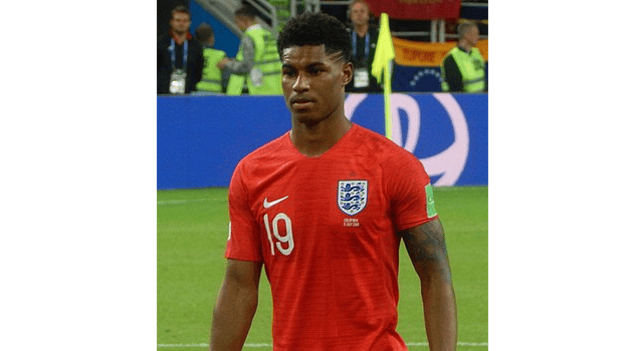
*Marcus Rashford is an English professional footballer and a campaigner against racism, homelessness and child hunger in the United Kingdom. Rashford has been praised for using his platform to be a political activist and philanthropist to drive societal change. In October 2019, Rashford set up the In the Box campaign with Selfridges to give homeless people essential items over the Christmas period, something he had wanted to do when first training with Manchester United as a youth. In response to the COVID-19 pandemic, Rashford teamed up with the poverty and food waste charity FareShare to deliver meals to those in the Greater Manchester area who were no longer receiving their free school meals. In nJune, he wrote an open letter to the UK government calling on them to end UK child poverty. At the 2020 Pride of Britain Awards, he won the award for Special Recognition for his campaign against child food poverty.
*Sviatlana Tsikhanouskaya is the leader of Belarusian democratic forces. Independent observers agree that she defeated Aliaksandr Lukashenka in a presidential election on August 9th, 2020. She stepped into the race after her husband was arrested for his presidential aspirations. After Lukashenko declared himself the winner she fled via Lithuania and since August 2020 she has worked with a staff of 16 people in exile in Poland. She has been nominated twice for the Nobel Peace Prize for playing a leading role in non-violently challenging Lukashenko and for calling for fair elections. She was one of the “Chernobyl children”, whose health was either directly or indirectly affected by the radioactive fallout of the 1986 nuclear disaster in neighbouring Ukraine and whom Irish families hosted for respite and recuperation. She spent many summers in Roscrea, Co. Tipperary, Ireland, as part of the programme. Tsikhanouskaya and other Belarus leaders of the country's democratic opposition were awarded the European Parliament's 2020 Sakharov Prize for Freedom of Thought in a ceremony in Brussels.
*Fr. Seán McDonagh, Columban priest and ecologist, is an outspoken critic of the degradation of the environment, linking this to global poverty and the increased suffering of the poor. He is the author of numerous articles and nine books including Climate Change: The Challenge to All of Us; Greening the Christian Millennium; Care for the Earth; and Dying for Water. During his time as a missionary among the T'boli people in S.E. Mindanao, Philippines, he became aware of the enormous destruction of the environment which was taking place and has continued to challenge behaviour which destroys the Earth and impoverishes People. His latest book is on Pope Francis' encyclical Laudato Si' on environmental and social issues. He was Chair of Greenpeace Ireland in the 1990s and he has been instrumental in offering a master's degree in ecology and faith at the Columban Centre in Dalgan Park, County Meath.
*Joanna Cynthia Berry is a British peace activist and public speaker. She is the daughter of the Hon. Sir Anthony Berry, who was killed by the IRA in the Brighton hotel bombing on 12 October 1984. The bomb was planted by Patrick Magee, whom Berry publicly met in November 2000 in an effort at achieving reconciliation as envisioned in the wake of the Good Friday Agreement. Magee was given multiple life sentences for the Brighton Bombing but was released under the Good Friday Agreement in 1998. He has since been actively involved in peace work, including supporting Jo in her work with Building Bridges for Peace, a charity she founded to promote peace and better understand the roots of war, terrorism and violence. Jo is also an executive committee member of Uniting For Peace which promotes a culture of peace, non-violence and sustainable development and a founder member of Survivors Against Terror.
*The Irish Defence Forces have been a continuous presence on peace support operations since 1958. Ireland has a proud tradition of participation in UN and UN-supported peacekeeping missions, both civilian and military. The largest deployment currently is with the UN peacekeeping mission in Lebanon (UNIFIL). There are also Defence Forces troops deployed in the Golan Heights, Syria, Israel, Jordan, Bosnia & Herzegovina, Kosovo, Mali and the Democratic Republic of Congo. Since 1978, a number of Defence Forces officers have also served in different positions at UNHQ, New York which currently provide two officers to the UN's Department of Peacekeeping Operations (DPKO). Irish peacekeepers are highly respected internationally and in the past 15 years members of the Defence Forces have served with a number of missions which have been authorised by the UN and led by the EU or NATO.
*Nigerian Professor, Nwaocha Ogechukwu is the leading pioneer for the abolition of caste systems in South eastern Nigeria. He has contributed so much towards the struggle for the abolition of the age-long practice of Osu Caste system in South Eastern Nigeria, which covers the entire Igbo race and Igbo society to promote peaceful coexistence. The Igbo people are an ethnic group in Nigeria. After the Nigerian Civil War, many Igbo people emigrated out of the indigenous Igbo homeland in southeastern Nigeria because of an absence of federal presence, lack of jobs, and poor infrastructure. Ogechukwu contributions are geared towards peaceful cohabitation of Igbo families, human rights development, human development via social equity and human equality, and the total unity of Igbo communities for proper integration for nation’s peace building.
*James Thomas Walsh is an American Republican politician from Syracuse, New York. Currently a government affairs counselor for K & L Gates in Washington, DC, Walsh retired from the United States House of Representatives in 2009 after serving for twenty years. While in Congress, he was a member of the United States House Committee on Appropriations for 16 years, also chairing several of its subcommittees. He is known for his active and consistent efforts at supporting peace for Northern Ireland and in 1995, he was the chair of an historic delegation from Congress to Northern Ireland with President Bill Clinton, being the first visit of this type by a sitting US President. Through his efforts at promoting peace in Northern Ireland The Walsh Visa program was created and named in his honour. The exchange program allowed for Irish adults to spend up to two years in the US, gaining enriching employment, educational, and conflict resolution experiences. In 2019, Walsh alongside a number of other Irish American political and civil society figures founded the bipartisan Ad Hoc Committee to Protect the Good Friday Agreement. He currently serves as co-chair of the committee alongside fellow co-chair, Democrat Bruce Morrison.
The final closing date for receipt of nominations is Wednesday December 3rd. Once all nominations have been received they will be fully reviewed before final selection and announcement of recipient on January 1st, 2023.
The email to nominate is [email protected]