

Rape Crisis Midwest renews call for dedicated Sexual Assault Treatment Unit


Rape Crisis Midwest reported 330% increase in requests for support
Demand for specialist support for survivors of sexual violence has more than quadrupled over the past decade, while persistent gaps in healthcare continue to leave people in the Midwest at a disadvantage, according to Rape Crisis Midwest Executive Director Siobhán O'Leary.
Speaking to Tipperary Live following the recent opening of Misneach House, Rape Crisis Midwest’s new permanent North Tipperary counselling centre in Nenagh, Executive Director Siobhán O'Leary said requests for support have continued to rise year after year, with every counsellor carrying a full caseload and waiting lists remaining across the service.
“Since 2016 there's been a 330% increase in requests for support for survivors of sexual violence," she said.
“Every year there's increased demand. All of our counselling services are operating waiting lists. We now have 15 counsellors and they all have full caseloads, but people are still waiting."
While referrals come from Gardaí, GPs, social workers and other healthcare professionals, Ms O’Leary said most people contact the organisation directly.
“Most people self-refer,” she said. "They'll find us online or they'll ring our helpline and we'll work with them from there to see what supports they need."
Rape Crisis Midwest provides specialist counselling and psychological support for people who have experienced rape, sexual assault or child sexual abuse, whether the abuse occurred recently or many years ago. The organisation also offers support to family members, particularly those supporting young people accessing its adolescent services.
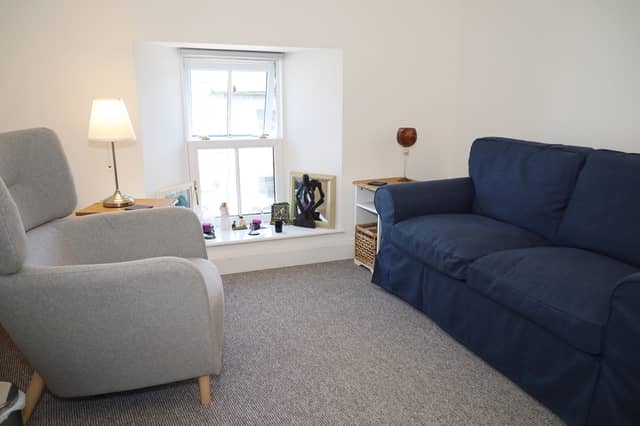
The opening of Misneach House marks the first time Rape Crisis Midwest has had a permanent base in North Tipperary after operating from rented accommodation in Nenagh for more than a decade.
Located on Sarsfield Street, the centre serves as the organisation's dedicated North Tipperary counselling hub, with two part-time counsellors currently providing appointments across three-and-a-half to four days each week. Additional counselling hours have recently been introduced in the region, helping to keep waiting times shorter than in some other parts of the Midwest.
Ms O'Leary said the new premises represent the natural progression of a long-established service.
"We've always had a presence in North Tipperary," she said. "We've had a therapist working in Nenagh for well over 10 years, but we've always been renting space. Opening a permanent centre was the natural evolution of that."
She also acknowledged the support of the JP McManus Pro-Am Fund, whose donation enabled the organisation to purchase the building.
However, despite the investment in counselling services, Ms O'Leary said one of the most significant challenges facing survivors in the Midwest remains the absence of a dedicated Sexual Assault Treatment Unit (SATU).
SATUs provide specialist medical care following rape or sexual assault, including forensic examinations, emergency healthcare, sexual health treatment and onward referrals for psychological support. Importantly, survivors can attend a SATU without first reporting the assault to An Garda Síochána, allowing forensic evidence to be preserved while giving individuals time to decide whether to pursue a criminal investigation.
Unlike many other parts of Ireland, survivors in the Midwest who do not wish to immediately make a Garda report must travel to Cork or Galway to access a SATU.
Although an out-of-hours Forensic Medical Examination (FME) service is available in Limerick, it generally requires Garda involvement before survivors can access it.
"People in the Midwest are being provided a different service simply by virtue of geography," Ms O'Leary said.
"We remain in a situation where the people of North Tipperary and the wider Midwest do not have access to a specialised SATU service. This remains a significant and unjust barrier for survivors and is something I will continue to highlight."
She said there have been occasions where survivors have had to travel by public transport to another county following an assault to access a forensic examination, adding that the additional journey can compound trauma and may discourage some people from seeking medical care.
The issue has also been raised in the Dáil, where TDs have called on the Government to establish a dedicated SATU for the Midwest. Discussions involving the HSE and other stakeholders remain ongoing, but Ms O'Leary said responsibility for developing and funding a new unit ultimately rests with the health service.
"We're reviewing the situation with the HSE and other stakeholders," she said. "Our role is to provide psychological support and follow-up care. The decision to establish and fund a SATU is ultimately a matter for the HSE and the Department of Health."
Despite those ongoing challenges, Ms O'Leary said Misneach House would provide a stable and permanent base from which Rape Crisis Midwest could continue expanding services across North Tipperary while advocating for improved supports for survivors.
"My hope is that with a stable and consistent base here in North Tipperary, Rape Crisis Midwest can continue to highlight the barriers and challenges that persist for survivors of sexual violence while continuing to provide appropriate and holistic services throughout North Tipperary and the wider Midwest."
People wishing to access Rape Crisis Midwest services can contact the organisation through its free helpline on 1800 311511 or online via rapecrisis.ie.