

OPINION: 'What we need more than anything is to learn to be happy with what we have'
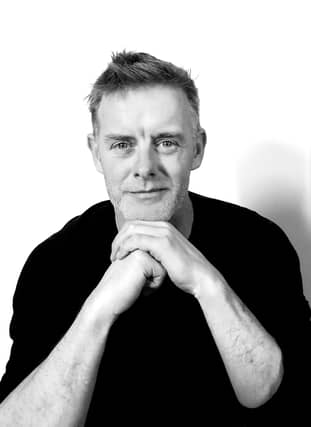

Karl Clancy writing in this week's Nationalist
Life presents us with adversities. That’s how we, as humans, find the greatest of ourselves. We face and overcome obstacles, learning more about ourselves as we do.
I watched a young man box in the Olympics this morning and, on losing his gold medal bout, behaved in a petulant and un-Olympian way, refusing to congratulate his opponent and refusing to wear a silver medal.
He clearly has a lot to learn about finding the best of himself in adversity. It’s a little akin to the Aerosmith lyric, “you’ve got to lose to know how to win”.
The battle tests us and we emerge from it, changed and wiser or unchanged and doomed to fight again without having learned anything.
In contrast, watching the young women performing in skateboarding I saw camaraderie, genuine sportsmanship and genuine appreciation for each other’s talents.
The double edged sword of winning and losing, in winning we learn how to be gracious in victory knowing that we could as easily have lost and in defeat we learn to be gracious and aspire to bettering ourselves the next time round.
Life is a battle sometimes, a real daily struggle where we fight ourselves and the world and the expectations of the world, just to meet a standard that may never have been our own.
We struggle to perform well, to get ahead and to achieve the best possible standard of living we can aspire to. Have you ever taken a moment though, to ask why?
Why do we have a starter home on a property ladder? Why do we change cars every three to five years, change clothes every season and look for more in almost every facet of daily life?
Mostly it’s the external influence of the society we live in, where a starter home isn’t good enough because we need more space, more of everything. Do we though, really?
Perhaps what we need more than anything is to learn to be happy with what we have, content with what Tolkien meant when he said, “it is no bad thing to celebrate a simple life”.
Maybe we should be “cutting ourselves some slack” and taking an opportunity to be gentle with ourselves. To celebrate where we are, who we are and take our collective foot off the pedal every once in a while!
The Taoist concept of “wu wei” (woo way) means to go with the flow, non-doing or “doing nothing”. It sounds like a pleasant invitation to relax or worse, fall into laziness or apathy. Yet this concept is key.
According to the central text of Taoism, “the Way never acts yet nothing is left undone”. This is the paradox of wu wei. It doesn’t mean not acting, it means “effortless action”, it means being at peace while engaged in the most frenetic tasks so that one can carry these out with maximum skill and efficiency.
Something of the meaning of wu wei is captured when we talk of being “in the zone” - at one with what we are doing, in a state of profound concentration and flow.
We can learn to use this thinking to minimise the stress we experience in the daily struggles of life.
Do what we have to do, but do it as well as we can, concentrating on the moment and the task at hand without worrying about the outcome.
If we box as well as we can, but come away with silver instead of gold, we haven’t struggled, we have done our best and can be justifiably proud of the effort, knowing that it was all we could have done.
It translates into daily life in doing our job well, paying attention to the details and in being able to go home at the day’s end at peace because we simply couldn’t have done any better.
It works on our relationships too, where we choose the path that is the most natural for us, we don’t try to force anything and we see clearly that some things work, some need work and some will never work.
That’s learning Acceptance too, learning that we can either accept, change or reject anything.
This is how we learn to struggle less and to be at peace more.
We learn how to see life that bit more clearly when we stop trying to force things, stop trying to swim against the current and realise that stopping anything is final.
It allows no room for growth. It’s when we start things that we practise wu wei. We don’t stop smoking, we start living healthily.
We don’t stop procrastinating, we start doing things that we know we either want or need to do in order for us to achieve the sometimes elusive goal of inner peace, and when I refer to inner peace I don’t mean living in bliss and strolling about in a state of constant euphoria, though sometimes I can absolutely guarantee that happens to me, particularly when I take a moment to realise how ridiculous I’m being in my thinking or worrying or struggling when there’s an easier, better way.
I mean simply seeing that better, simpler way in everything we do.
There is no starter home, just my home.
There is no property ladder, just the bank telling me what I have isn’t good enough.
There is no worry if I’ve done my best, there’s just someone else’s need for me.
Learn to be gentle with yourself.
Learn to swim with the current.
Learn not to be in your own way, making things more difficult for yourself.
Start asking yourself what is the best way to be, to think and to act at any moment and then do that to the best of your ability.
That’s how wu wei becomes part of learning The Art of Acceptance.