

Kids don’t see danger, and it’s up to us to see it for them

The yard is a valuable classroom, but children need to be supervised and watched at all times
There are two kinds of time in your life as a parent: normal time, where a job takes roughly as long as you expect, and school holiday time, where a five-minute job somehow get misdirected into a side quest involving a missing welly, two emergency sandwiches and a conversation about where baby cows come from.
For the next nine glorious weeks I am the CEO (Chief Entertainment Officer) of the summer break.
The cows, completely uninterested in school calendars, still expect to be milked twice a day. Calves still need feeding, fences still need fixing, and the grass keeps growing. The only real change is that we suddenly have three extra helpers, and somehow get about the same amount less done.
Kids have a special talent for turning any normal farm job into a full-blown adventure. Like most farming parents, I start each morning with big plans.
By 11:30am, I’ve usually explained artificial insemination to an eight-year-old (who will definitely bring it up in school come September), settled an argument over whose turn it is to feed the calves, and comforted someone who’s just discovered that nettles, thistles, and electric fences are all similarly stingy.
If we manage to get one proper job done before lunch, I call that a win.
That said, there’s one thing we don’t joke about. Summer is one of the busiest times on Irish farms. Contractors are in and out, machinery is moving, cattle are being shifted, and everyone’s trying to make the most of a good stretch of weather.
Farming is still the most dangerous job in Ireland, with more workplace fatalities than any other sector. Over 90% of child farm accidents involve a vehicle or machine.
Kids don’t see danger; they see fun.
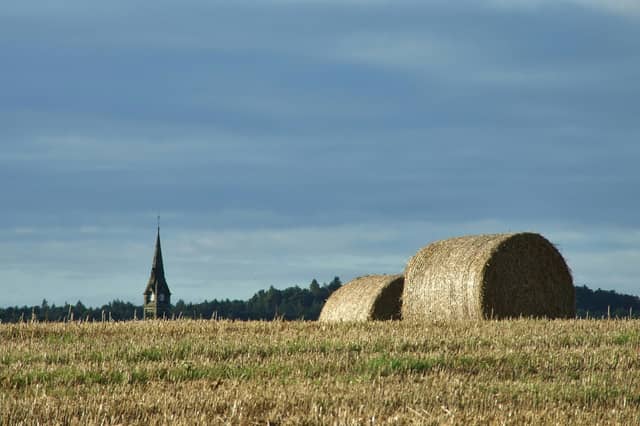
They see a tractor and think “spin.” They see bales and want to climb them. They see cattle being moved and want to help out.
It’s up to us as parents to spot the risks for them.
Over the years, we’ve come up with a few simple rules.
If the kids are heading to the yard, someone already there knows about it. A quick phone call means no surprises when cattle are being moved or machinery is running.
If you're not with an adult, you're not safe in the farmyard. Hi-vis jackets are always by the back door. Kids stay well away from a busy yard if contractors are working. Big jobs wait until there are two pairs of adult eyes available. And if something genuinely dangerous needs doing, the children are swiftly redeployed to granny's kitchen, where tea, biscuits and considerably fewer moving parts await.
I make no apologies for being overly cautious because we’d like everyone to make it home for tea.
Years from now, my kids probably won’t remember if the silage was good or if it rained for most of July.
But I hope they remember feeding calves, helping cover the silage pit, watching swallows skim across the fields, and eating ice cream that melted faster than they could keep up.
There's something rather special about a childhood spent on a farm. The classroom doesn't stop at the school gate: it continues in the calf shed, along hedgerows and out in the fields. Children learn that animals depend on you turning up every day. They discover that food doesn't begin on a supermarket shelf, and that some of life's best adventures don't need Wi-Fi.
If we’re lucky, maybe the most important thing we grow on a farm isn’t just grass.
It’s the next generation who’ll care enough to keep it going.