

Why we need to pay attention to Denmark
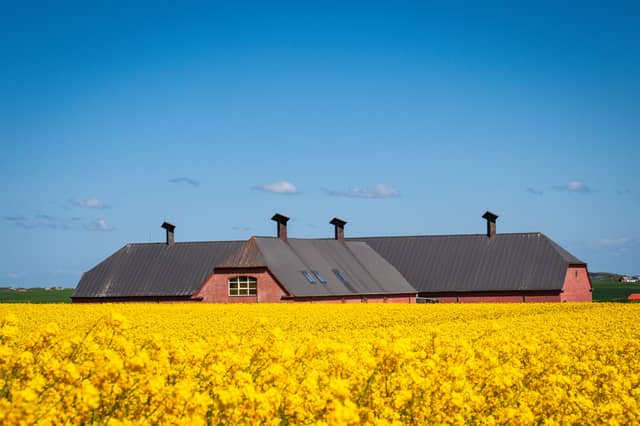

Denmark has gotten rid of its Ministry of Agriculture, and we should sit up and take notice
Most mornings, my world is fairly local: school runs, cows to milk, and deadlines to meet. The inner workings of foreign governments rarely make it onto my list of priorities, but every now and then a story cuts through the noise. Last week was one of those moments.
Denmark became the first country in the European Union to abolish its Ministry of Agriculture. In its place sits a new Ministry for Nature and Animal Welfare, while responsibility for food, farming and fisheries has been divided among a number of other departments.
Now, this isn't a column about whether Denmark is right or wrong: it's about what that decision tells us. Government departments are more than administrative machinery.
They are signposts of national priorities, declarations of what a society values and where political energy is directed. We have departments for health because health matters, education because education matters.
Departments for transport, justice and finance because those things are considered important enough to earn their own seat at the cabinet table. For most of human history, agriculture sat at the centre of national life.
Governments worried about producing enough food. Failed harvests could topple economies. Food security wasn't a policy objective; it was a matter of survival.
Today, things are different. In Denmark, the recent election became known as the "pig election". Voters were far more concerned about animal welfare, water quality and the environmental impact of intensive livestock farming than they were about food production itself, and that shouldn't surprise us. The fact that people can afford to prioritise those issues is, in many ways, a sign of success. Modern agriculture has become so productive, so efficient and so reliable that most people rarely think about the processes behind where their food comes from.
The shelves are full. The fridge is stocked. The weekly shop arrives. Job done. Agriculture may be suffering from the same problem as electricity. Nobody notices it when it's working. We only think about electricity during a power cut.
We only think about plumbing when a pipe bursts. We only think about broadband when the Wi-Fi drops. Likewise, most people only think about food production when something disrupts it. A pandemic. A war. A drought. Less choice on the shelves. Suddenly, the invisible becomes visible again.
As someone who spends time both inside and outside farming circles, I've noticed an interesting shift. When farmers gather, they talk about grass growth, milk price, weather forecasts and input costs.
When the wider public discusses agriculture, the conversation is more likely to focus on biodiversity, emissions, water quality and animal welfare. Both conversations matter, but they are not quite the same conversation. There is another dimension that rarely enters either discussion: who will actually be producing the food in the future.
One of the unspoken realities across much of the developed world is that farming populations are ageing. The average age of an Irish farmer is now 60 years and on par with figures from across the EU. Generational renewal has become one of agriculture's biggest challenges.
The people behind the produce are declining in number, and in many sectors there are not enough young entrants coming through to replace those retiring. Just over the weekend, the Farmers Gaurdian newspaper in Britain announced that there are now only 6,851 dairy farmers operating in 2026. That figure may seem almost unimaginable here, but it is a reflection of long term policy impact.
A key point about Denmark's decision wasn't that agriculture disappeared from government. It didn't. Farmers are still farming and food is still being produced. What struck me was that the word "agriculture" disappeared from the door.
Perhaps that's because modern farming has become a victim of its own success. We have become so adept at producing food that many people no longer see the vast, intricate system and people that makes it possible.
That is the real lesson from Denmark. History suggests that when we stop noticing the things we depend on most, we should probably pay a little closer attention.