

Readers' Views: Letters to the editor published in this week's Nationalist

Take a look...
Dear Sirs
I would like to make a few observations in relation to an article that appeared in The Nationalist.
Yes, we are all in agreement the Glen Hotel is dilapidated and it would be wonderful to see some sort of improvement (this site location was highlighted for a hotel in the new tourism plan for the area). It’s also good the water has been checked and monitoring is ongoing and there has been no impact on the water quality. So it seems there isn’t raw sewerage going into the stream as some stated!
So why then, do the councillors and the residents, think this sewerage system is now for the taxpayers to resolve? It’s a private (holiday homes) estate and the majority of houses were sold in recent years at low prices that reflected there were issues with the estate. Councillor Fitzgerald states the houses share the hotel’s sewerage system and states the hotel has been in total dereliction for over 20 years and should be “erased off the face of the Glen of Aherlow”.
So it seems it’s obvious to all but those who bought the houses, that sharing a sewerage system with a hotel in long term dereliction could be an issue!
The Residents’ Committee spokesperson said the septic tank was meant to be maintained by the management company but there isn’t one. Where there’s a management company then there are management company fees. So is non-payment of the management company fee a contributing factor to this? Could they set a new one up, pay and appoint someone qualified to manage the septic tank?
In the article, the Residents’ Committee spokesperson is quoted as saying the sewerage system hasn’t functioned correctly in the last 10 years. How many of those houses were actually purchased in the last 10 years? You can do a Google search for this information and see the price history on these large detached holiday homes. They were sold for well below the normal market value for both the area and the large homes they are. Anyone purchasing a house would know if it appeared a bargain and wonder why and they would have instructed an engineer and a solicitor and been made aware! In 2016 three of the houses all in good condition were purchased for approximately €132,000 (€44,000 each). Having paid so little could they not look at providing their own solutions? Individual systems like normal rural property? A group scheme? I see one of those three houses is currently on the market for €110,000, so despite the issues raised (the dumping, the squatters, the rats, the sewerage coming up everywhere, the danger, the pollution) they clearly believe the property saleable, clearly believe it is still worth a lot more than they paid and I doubt the profit is being put to a new septic tank for the other two!
It’s like what Jackie Cahill said recently about the squeaky hinge!
Emer Nolan
Litter
Tipperary County Council want to keep Tipperary litter free but some bins are being removed. Information I obtained under the Freedom of Information Act says that since January, 2019 to November, 2020 seven bins have been removed in Clonmel and two in Cahir. I understand some are replaced with larger capacity bins called “Big Belly” bins but there are less of the big ones, but will people with litter to dump use their feet to get to their belly?
In relation to my photo (above) I think they should extend the wording of “don’t be a tipper” to include “be a tipper offer” to encourage reporting of littering.
JOHN WILLIAMS
CLONMEL
Thomas Kirby
The story of Thomas Kirby – for those who are interested – executed 100 years ago in the hills of Rossmore, Tipperary - a story that did not come to its conclusion until January 7 1990 – almost 70 years after his execution.
How Kirby met his death and came to rest in a lonely hillside grave for so long, has generated renewed interest locally.
It is the result of deadly undercover activities by Crown Forces, operating in west and south Tipperary during 1920 and early 1921 and counter-intelligence tactics by the local IRA companies.
Kirby, a native of Golden, Tipperary and a man with a strange past – he enlisted in the British army in 1901 at the age of 18, and was subsequently thrown out of the army a few months later on the grounds that he was a “harmless lunatic”.
In 1916, he reenlisted again in the British army - and once again this venture only lasted a few months. Around the 1919-21 War of Independence Kirby worked as a farm labourer in Annacarty, Tipperary and was noted for hanging out with the RIC and members of the Black & Tans stationed in nearby Dundrum.
In the lead up to his execution, the British military conducted a series of raids on houses in the Dundrum, Annacarty, Hollyford, Rossmore and Clonoulty area - that indicated clearly they had inside information. In response to this, IRA counter-intelligence went into action. Suspicions about Kirby’s engagements and movements started to rise. The local IRA unit deliberately fed Kirby two pieces of information which were acted upon by Crown Forces. As far as the IRA were concerned - they had their man! Historian John Hassett noted: “after four months of intensive surveillance and observation, conclusive evidence pointed to Thomas Kirby as the informant to British forces on the whereabouts and movements of the local IRA men.” The ground beneath Kirby’s feet was shrinking and IRA intelligence was closing in on him. Tadhg Dwyer, (Commandant of the 3rd Battalion, 3rd Tipperary Brigade) in his BMH witness statement takes up the story: “Although he (Kirby) disguised himself whenever he was out of the barracks with enemy parties, he was soon recognised. Then one night he ventured out alone and was followed and captured in a public house at Ballybrack near Annacarty where he was drinking. He was tried by court-martial and could give no satisfactory explanation of his movements. To the charge of spying for the enemy forces he pleaded insanity. He was sentenced to death and was executed by a firing party. Before his death we brought a priest to him, who anointed him and gave him all spiritual aid. We buried him up in the hills near Ballybrack. Kirby’s execution took place on or about January 8, 1921.”
BMH witness statements note that Kirby was held in a remote farmhouse for several weeks until orders came from IRA GHQ for his execution – other archival documents suggest that “he met his Waterloo” on the night after capture. Kirby’s court-martial took place in a farmhouse in Foilmacduff close to the village of Hollyford. He was executed and buried in Ring Hill, Turraheen in a spot where the parishes of Hollyford and Rossmore meet. A priest in Clonoulty at the time, Fr John Ryan, accompanied Kirby - heard his confession and offered him spiritual aid on his final journey. Local folklore suggests that Fr Ryan was shaken up after the experience and spent the evening in Davern’s pub in Rossmore, settling the nerves!
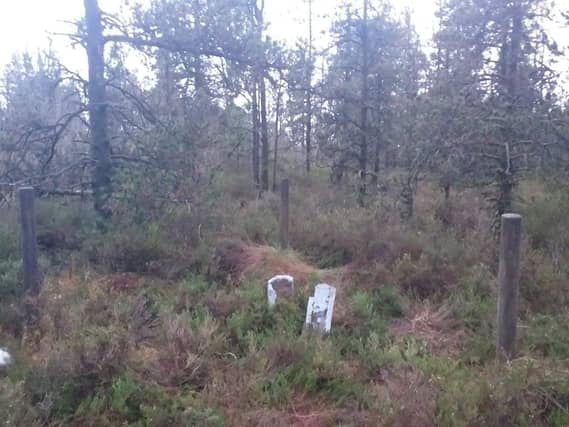
Kirby’s remains lay in this lonely hillside grave in Rossmore for nearly 70 years. On Thursday September 6, 1990, after guidance from elderly locals, Kirby’s body was exhumed - orchestrated and identified by the state pathologist, the gardaí and the local community council. The Nationalist newspaper at the time reported - “The remains were surprisingly well preserved by the peat soil in which they were interred. When the soil was removed the fully clothed body of a man of 5ft 10 ins in height was found. Beside the remains in the grave were rosary beads and an indelible pencil. A British Army stock great coat, army cap and boots, all in remarkable condition, plus a pipe in a pocket were found.” The following day, on Friday, January 7, 1990 - the remains of Thomas Kirby was given a Christian burial, in the ancient cemetery of Clogher in the parish of Clonoulty, in the presence of members of the local community. And so he was finally laid to rest - a day short of his 69th anniversary!
Thomas Kirby lost his life during a very difficult and significant period in Ireland’s history – this article is not a means of glorifying atrocities but a means of acknowledging events that occurred at a local level during this period.
The national story of the War of Independence is well documented – many of the local stories have been lost to time – at the removal of 100 years, I think we are in a good position to openly explore these events. As they say, war is only interesting for those who read about it!