

“Fatal Injuries – A Review” By Lynch Solicitors

FATAL INJURIES ACTIONS
When someone dies after an accident or other harmful event, the question arises as to whether the circumstances give rise to a claim. The first point is that a claim cannot be made unless the deceased themselves would be entitled to make one – i.e. for you to have a case, the deceased would have to have had one.
It is essential, therefore, to check if the accident or circumstances give rise to a cause of action.
The second point is that you can only recover compensation for financial loss, expenses, and a fixed lump sum. When you take a case because of the death, no account of gains (such as insurance policy proceeds) or losses (loss of a life interest) to the deceased’s estate is taken.
It is open to the next of kin to claim for what is termed ‘lost years’ – i.e. earnings less the cost of the deceased maintaining themselves.
WHEN A DEPENDANT CAN TAKE A CASE
Only certain people can bring a case with a fatal injury. In Ireland in 1961, the Civil Liability Act was introduced. That legislation introduced your right as a Dependant to claim negligence because of the death of a loved one.
These persons, allowed to bring such a case, are called “statutory dependants” and are, in essence, the deceased’s immediate family.
If you have been financially dependent on the deceased and if there is a family connection, you can claim this statutory compensation. A Spouse, Parent, Child, Co-Habitant, and divorced spouse all come under the umbrella of dependants.
Only one case may be taken for each fatality, and all statutory dependants must be named.
On death, the dependants can take a form of class action. This means that the person representing the deceased can take a case on behalf of several dependent family members. It is important to remember that such a case does not arise simply because of the death.
UNDER WHAT CIRCUMSTANCES?
The death must be a result of negligence. There must be an actionable wrong. Take a medical negligence case, for example, If someone was in a car crash caused negligently by another person and later died because of a heart attack. A
claim can be made if the heart attack directly resulted from that accident. But if the heart attack was NOT because of the accident, then no case can be taken under the legislation.
Compensation
In fatal injury cases, the claimable damage is made up of three parts:
- Loss of financial support
- Mental distress, called ‘solatium’, allows recovery for family members’ emotional distress. It is currently capped at €35,000 under the Civil Liability Act 1961
- Expenses such as reasonable funeral expenses and other costs, such as medical expenses, related to the accident
Inquests - Investigating Deaths
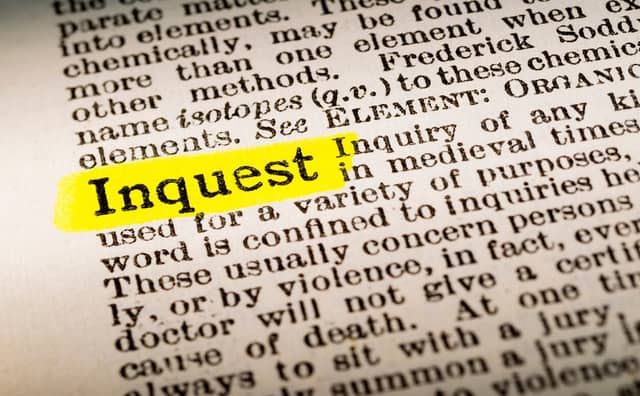
An inquest is held in the case of all unnatural deaths. The inquest is presided over by a Coroner (not a Judge), and there may also be a Jury.
Whilst no allegations concerning liability can be made at an inquest, crucial information can be obtained, which can be helpful in a subsequent compensation claim.
Where does an inquest take place?
This inquest usually takes place in the local courthouse. It can be said that many families that must attend inquests are startled at the ‘courtroom-type’ scenario, with witnesses, lawyers, juries in some cases and verdicts.
Does someone need a solicitor for an inquest?
Your solicitor should represent you at the inquest as important information about the cause of death may become available from any key witness present.
We are regularly instructed to represent bereaved families at Inquests. This can be following the death of a loved one arising from medical accidents in hospitals, accidents at work, road traffic accidents and unexpected deaths in a hospital.
What does an inquest do?
An inquest is an official, public inquiry conducted by the coroner and, in some cases, in front of a jury. An Inquest aims to discover who lost their life – when, where, how and in what circumstances.
In advance of the Inquest, the Coroner will receive depositions from the relevant people involved, post-mortem reports and medical records, if relevant. The Coroner may call medical or expert witnesses. Many Clients find it difficult to understand that the inquest is based on fact-finding – which means it is not to establish blame but rather to establish the circumstances surrounding the death.
After an Inquest, the Coroner will return a verdict about how, when and where the death occurred. The type of verdicts which can be returned include open verdicts, misadventure, natural causes, accidental death or, in some cases, unlawful killing.
Who pays for you to attend an inquest?
Many Clients are concerned about the cost of engaging legal representation for an Inquest. A High Court decision has been helpful by finding that in circumstances where the death is due to the wrongful act of another, it may be possible in most cases to recover the cost of legal representation at an Inquest in the subsequent civil case.
HOW LONG DO I HAVE TO TAKE A CASE?
Under the Statute of Limitations, a person would have had two years from the date of a negligent event to take a case – for example, a road traffic accident or a cancer misdiagnosis. This is complicated because you have 3 years from death to take a fatal injuries case.
If the deceased was out of time on the date of death to take a case for a negligent act that caused the death, you are out of time. However, it is quite possible that the deceased may not have known that they had a case. In such a case, a person may rely on the Knowledge Principle – i.e., they did not know nor could not have known that they were the victim of negligence.
For example, if the deceased died from a road traffic accident, you have 3 years to take a case. If the deceased dies after an operation in a hospital more than two years before the death, you may be out of time.
HOW LONG BEFORE MY CASE WILL BE HEARD?
If your case goes to court, it can take time before a case comes up for hearing. The time will run once all the paperwork is completed and lodged. There can be delays due to a limited number of judges. There can also be delays if cases take a long time to hear and that time is unavailable for the hearing.
On average, cases take up to 2 years to get to a hearing in the Circuit Court and 2 to 3 years in the High Court. The more complicated the case, the longer it can take to get to hearing
DOES THE CASE HAVE TO GO TO COURT?
Generally, the majority of cases that we are involved in are settled without going
to Court. We will only recommend settlement if the sum being offered is within a range that we consider reasonable. We will advise you fully before you make this decision. If circumstances lead to an inquest, we recommend that you seek legal advice
*Sponsored Content