

'The city is considered one of the most picturesque in the ancient Muslim world'

Travel Tales with Fergal in this week's Nationalist
As you can imagine I have many places on my travel bucket list, and I got to finally visit Granada in Andalucía in southern Spain this month, which was at the very top of that list.
The city did not disappoint, and I had very high expectations.
I have always wanted to visit a city that is considered one of the most picturesque, historical and beautiful cities in the ancient Muslim world.
The city is situated at the foothills of the often snow-capped Sierra Nevada mountains.
It is possible to ski on over 100kms of slopes in the Sierra Nevada in the morning and go for a swim at the nearby Costa Tropical on the same day. In April every year they hold a bikini ski day where people do just that.
I would recommend the seaside town of La Herradura, which is named after its perfect horseshoe bay, for a swim and lunch at Chambao de Joaquín restaurant right on the beach.
This time last year I was walking on the Camino in northern Spain hearing all about the Reconquista and their celebration of the Spanish kings defeating the Moors.
So I really wanted to go to Granada to see the final capital of Moorish Spain and learn about history from the Moorish perspective.
It was great to learn about the positive influence of the Moors to all of Europe from food to architecture to culture to science.
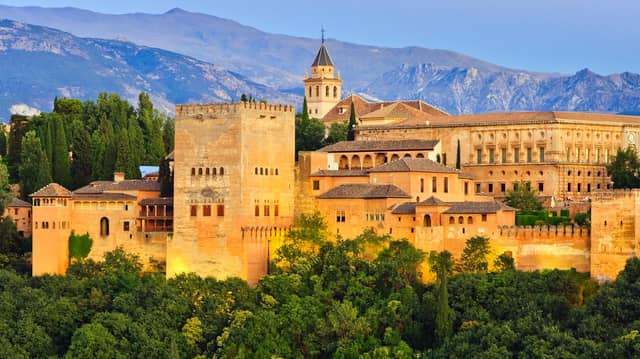
The most obvious example of this Moorish influence is the Alhambra which looms over the town. The Alhambra is a huge medieval middle eastern style complex overlooking the city encompassing forts, royal palaces, serene gardens, fountains and pools.
The Alhambra is a visually mesmerising and a sensuous delight of intricate design and decoration of ornate tiles, wood and plaster.
It is the most magical use of light, water, space with symmetry and maths at its design core.
The Alhambra is considered one of the best preserved structures in the historic Islamic world and often called one of the seven wonders of the ancient Muslim world. I got to spend a few hours touring the Alhambra, but it was not nearly enough time to really take in its architectural splendour.
I would really recommend you give yourself at least half a day to explore the complex and its stunning gardens.
I would also recommend you get a guide which enables you skip the queues, which were long even in November.
It is also essential to pre book as only a few thousand visitors are allowed each day to visit in order to protect this world heritage site.
I would highly recommend the guide I had called Manu Estudillo.
The Spanish Government has a great chain of hotels called the Parador group which are in old famous listed buildings all over Spain but the most famous is within the Alhambra.
I always thought I would like to stay there. It is a stunning hotel, and you get to be within the complex but now after visiting Granada, I would recommend a hotel in the always buzzing town below.
The Alhambra overlooks the city but really the best place to see the full glory of this complex is from the old Arab quarters of the Albaicin neighbourhood.
The Mirador San Nicolas square offers the best views of the whole Alhambra and is wonderful for a sunset drink as the fading sun lights up the complex a golden hue in the early evening.
The Alhambra actually means red or golden fort in Arabic.
The city finally fell to King Ferdinand and Isabella in 1492 but the Moorish influence is still alive, and this is so apparent when walking through its narrow ancient streets through the old bazaar and medina right in the city centre.
It feels like you are in Fez in Morocco as you stroll past open-air market stalls selling spices and tropical fruits that I have never seen before.
The Moors brought citrus fruits to Spain to stave off scurvy and the name Granada actually means pomegranate in Arabic.
I recommend a theatrical walking tour of “the Granada of Lorca” through the historic centre with www.descubriendogranada.com.
Federico García Lorca is one of the geniuses of 20th century literature. Granada is Lorca, and Lorca is Granada.
Spain’s most famous playwright and poet was killed during the Spanish Civil War and this tour gives a great overview of the city, its culture and history.
Music, arts and culture are very important to Granada and this tour gives a great sense of that.
Granada has a population of 300,000 and within that there are 60,000 students with most living in the centre of the town, making it a very vibrant place with a young city café culture.
Granada University was established in 1525 so the city has always had a vivacious youthful culture.
Granada is always buzzing day and night.
The medieval narrow streets amplify the constant chorus of joyous revelers as they move from café to bar to partake in the city’s wonderful world-famous tapas traditions.
King Alfonso 10th created the tapa and made the city the originator and home of the tapa.
The story goes that flies were buzzing around the king’s wine, so he asked for a tap over his wine to protect and when a waiter put a plate with ham over the drink the king said he liked his “tap” or cover so much that the tapa was invented in Granada.
The city still holds dear the tradition of a free tapa with your drink and the famous policy of “no tapa, no pay”. I loved moving from small bar to bar whilst sampling the most amazing tapas.
The locals eat out like this most nights of the week, so the city is always lively.
It is best to just walk and go with the flow, but I would recommend Picoteca 3 Maneras for its amazing tuna tartare tapa and the Lemon Rock bar, which has music at night and looks like a labyrinth of fun.
The Moorish cultural influence is most obvious in the Flamenco shows in the old caves overlooking the Alhambra where the Indian gypsies and Arabs historically lived.
Granada is the traditional home of flamenco and considered its purest form in this city.
I would really recommend the show I saw at Venta el Gallo.
I thought the Moorish influence of the music and dance to be strong. It is full of passion and intensity and a perfect reflection of the city’s proud Moorish heritage.
A heritage that is still vibrant today and something that makes this city unique in Europe.
A city I will return to to learn more about its amazing history and culture.
For more information on Granada go to www.turgranada.es.
Check out my Travel Tales with Fergal Granada Special on www.traveltaleswithfergal.ie