

Tipperary dereliction: it doesn't have to be this way

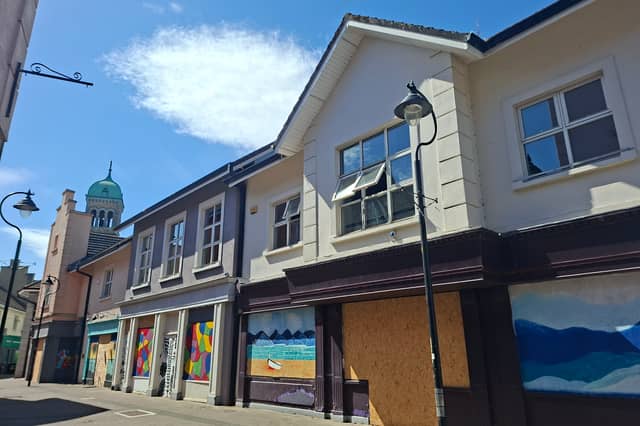

There are more than 140 properties on the council’s Derelict Sites Register, but the true extent of the problem is much larger
Dereliction has become an increasingly visible feature of towns and villages across County Tipperary.
Empty shopfronts, boarded up houses and neglected commercial buildings have become familiar sights in many communities despite an ongoing housing crisis and growing demand for residential and commercial space as populations in the county increase.
The current estimated population of Tipperary now stands at around 182,900 people, up from a total of 167,895 residents living in the county in 2022, which at the time marked a 5% increase from the 2016 census. The issue of dereliction is reflected in Tipperary County Council's Derelict Sites Register, which contains more than 140 properties across the county. While the register offers an official snapshot of dereliction, campaigners argue it represents only a fraction of the true scale of the problem.
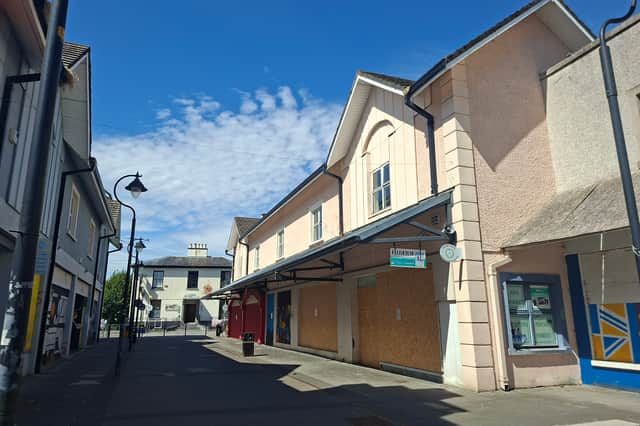
Among the most striking examples is Market Place in Clonmel, where 13 individual units within the once-thriving shopping complex are listed on the register. Once a vibrant commercial hub linking Gladstone Street, Kickham Street and Emmet Street in the town, the centre now stands largely vacant, symbolising broader changes that have reshaped Ireland's town centres over the past three decades.
Housing activist Frank O'Connor, co-founder of the Derelict Ireland campaign alongside his wife Jude Sherry, he says that developments like Market Place are not unique failures but are due to policy shortcomings that have allowed vacancy and dereliction to become normalised in the country over the years.
According to Tipperary County Council's register, there are approximately 143 officially designated derelict sites across the county. These empty buildings and homes are spread between towns including Clonmel, Thurles, Nenagh, Roscrea, Carrick-on-Suir, Templemore, Cashel, Tipperary Town and many other smaller villages. The register identifies properties that meet the legal definition of dereliction under the Derelict Sites Act 1990. Once included, owners can face a levy intended to encourage redevelopment or bring buildings back into productive use.
However, campaigners argue the register itself tells only part of the worsening story. Many buildings that appear abandoned never make it onto the register, either because they have not yet been inspected or because local authorities lack sufficient resources to investigate every complaint. This is a failure that is leading to all derelict property not being fully accounted for, says Frank O'Connor. As a result, the visible dereliction experienced by residents and visitors to towns across Tipperary is often greater than the official council figures.
In Clonmel alone, only around 35 properties are officially listed despite numerous vacant and deteriorating buildings throughout the town centre. A quick walk through the town can verify that this is not an accurate figure of derelict buildings in the town.
MARKET PLACE
The almost fully empty shopping complex Market Place is a glaring example of the issue at hand. Developed during the early 1990s, the pedestrian shopping complex was originally designed as one of Clonmel's premier retail destinations.
For many years it served as a bustling commercial centre, filled with shoppers and local businesses who took up trading in the area. However, after the financial crisis things took a turn for the worse. Large retailers like Xtravision closed shop due to a change in consumer habits and the increasing popularity of the internet. Other shops like Supervalu relocated to retail parks on the outskirts of Clonmel, attracted by larger floor space, lower operating costs, easier servicing and significantly better parking facilities. Shopping centres became more popular and with the allure of free parking customers followed.
Retail developments such as Poppyfield Retail Park and the Showgrounds Shopping Centre helped to draw retailers away from the town centre and many relocated to these areas of the town. As anchor tenants left Market Place, remaining businesses struggled with declining footfall.
Vacant units multiplied, investment slowed and maintenance deteriorated.
Today, only a small number of businesses remain operating within the complex while thirteen separate units appear on the Derelict Sites Register.
The decline has transformed what was once one of Clonmel's busiest shopping areas into a relatively quiet space with limited pedestrian activity.
The long term vacancy has created a cycle that many towns across Ireland now experience: empty buildings reduce footfall, declining footfall discourages investment, and reduced investment leads to further vacancy.
NORTH TIPPERARY
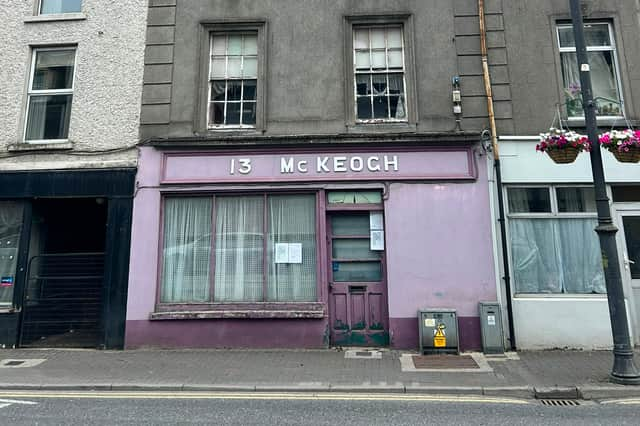
In Nenagh, several town centre buildings on Pearse Street and Mitchel Street appear on the register, including former commercial premises that occupy key retail locations in the town centre. Roscrea has a number of listed properties in the town, where long term vacancy has affected businesses and locals in the town. Together, these sites reflect a pattern seen across North as well as SouthTipperary, where once used buildings in central locations have remained unused and left to rot for years despite ongoing demand for housing, retail space and town centre regeneration.
For Frank O'Connor, Market Place is only representative of a much wider national problem.
"We wrote a report in 2024," he explains. "We kind of wrote it around the general election for the politicians to have access to it. Then last year, in October 2025, we did a detailed submission to the Oireachtas. The Derelict Ireland campaign has sought to make the issues leading to vacancy and dereliction understandable to the public, instead of just blindly accepting that ‘it’s the way things are’.
"The key to our campaign has been trying to make it understandable and accessible for everyone," O'Connor says. "So the more people who can get involved in the conversation, then obviously the more pressure can be put on the government and the more change will happen over time."
The campaign argues that Ireland's housing crisis cannot be addressed solely through new construction while thousands of existing buildings remain vacant or derelict.
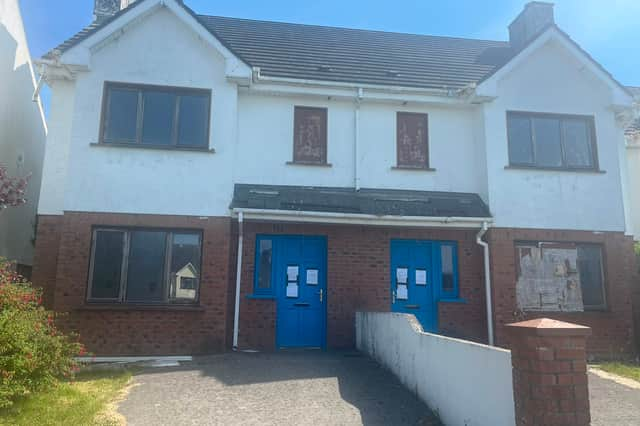
It’s not only more environmentally friendly to bring back homes into use that are already there but also ensures towns make use of the space they have and turn it into something that benefits the locality, instead of leaving a building to rot and be a health and safety hazard.
The ‘This is Derelict Ireland’ report found there were huge discrepancies between official local authority figures and the actual scale of the crisis, showing that local authorities were not documenting the full extent of the issue. One of the Derelict Ireland’s central arguments is that Ireland gradually became accustomed to dereliction.
"When we came back eight years ago and started the campaign six years ago, there was a normalisation," O'Connor says. "Everyone accepted it. It was just the way things are."
"For us, that was one of the things we had to challenge initially. It doesn't have to be this way. You can have a different country and you don't have to have dereliction."
He believes changing public attitudes has been one of the movement's biggest achievements.
"What was a cultural challenge was getting people questioning it and looking up."
That change in perception is particularly relevant in towns across Tipperary, where boarded up buildings have become such familiar sights that many residents barely notice them anymore.
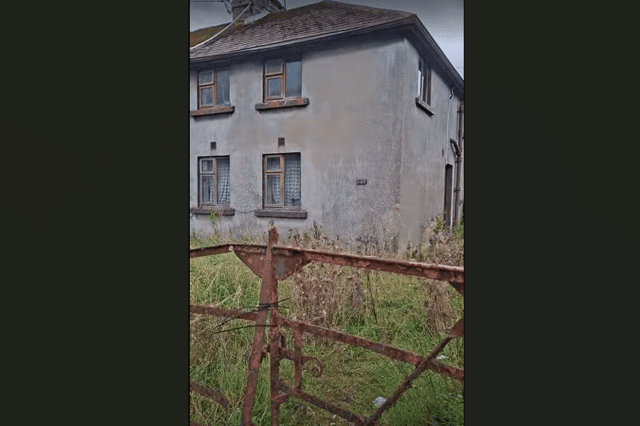
The Derelict Sites Act 1990 gave local authorities powers to identify neglected properties, place them on a register and impose annual levies on owners.
However, campaigners argue the legislation has never been fully enforced.
"There was a derelict site levy still in place since 1990," O'Connor says. "It was never fully enforced."
The Derelict Ireland campaign has consistently argued that responsibility for collecting levies should be transferred away from local authorities. Councils, they say, often lack sufficient staffing, legal resources and administrative capacity to pursue unpaid charges effectively.
Instead, they proposed allowing Revenue to collect the levy through the national tax system.
"They've decided to go with that move in the last year," O'Connor says, “and they've acknowledged it's based on our work."
The planned introduction of a Revenue collected derelict property tax is viewed by campaigners as one of the most significant policy developments in decades.
"This property tax will ensure a much higher collection rate because if Revenue is collecting, they'll be a lot more efficient than local authorities who've struggled."
According to Derelict Ireland's research, vacancy is not simply the result of weak property markets or declining towns. The campaign argues that existing tax structures and rising property values can make it financially advantageous for owners to leave buildings unused. The report challenges several commonly cited explanations for dereliction, among them the claims that vacant properties are commercially unviable, unsuitable for redevelopment or located in areas with insufficient demand.
Campaigners argue that many derelict buildings occupy prime town centre locations where demand clearly exists, and that weak enforcement and policy incentives encourage long term vacancy rates. The report is also critical of public funding mechanisms that continue to prioritise grants and subsidies without adequately addressing enforcement. The campaign also believes previous vacant property taxes have been set too low to influence owner behaviour and have contained exemptions that reduce their effectiveness.
Like many local authorities, Tipperary County Council faces the difficult task of balancing enforcement with limited resources. Investigating complaints, assessing buildings, following legal procedures and pursuing levies can require significant staff time and legal expertise. Campaigners have acknowledged these pressures but argue stronger national systems are needed to support councils.
The publication of the Derelict Sites Register provides transparency and identifies priority properties, but inclusion on the register alone does not guarantee redevelopment. Some buildings remain listed for years with little visible progress and other vacant properties deteriorate without ever reaching the register, posing a risk to public health in some cases.
But why should we argue for more to be done to fight dereliction?
Derelict buildings can reduce confidence in town centres, discourage investment and create an unsafe environment for those living in the vicinity of them.
In residential areas living next to a derelict property can pose many issues while for commercial areas of towns, it means businesses are less likely to move in next door to the derelict property.
Although stronger enforcement forms a key part of Derelict Ireland's recommendations, the campaign also argues that communities should think differently about how vacant sites are reused. Their vision extends beyond simply returning buildings to private ownership, and they advocate converting vacant sites into affordable housing, public spaces and community centres that strengthen town centres.
They also call for more reliable national data on vacancy and dereliction, arguing that existing datasets remain inconsistent and incomplete.
Better information, they argue, would allow policymakers to target interventions more effectively.
The group also encourages communities to question why so many homes and commercial buildings remain empty in towns like those in Tipperary, especially during a housing crisis.
It also works to influence government policy by making more people aware of what issues lead to dereliction and aims to try and build more support for more action on long term vacancy and dereliction in towns across the country.
Funded by the Local Democracy Scheme