

Tipperary farmers given top tips for preparing paddocks for spring

FRS issues a list of guidelines
The springtime is a very busy time on all farms and now is the time to start getting your cow paddocks ready for the turn out and at the same time making the most out of early grass as cows calve.
When getting your paddocks ready it is important to take some factors into consideration. FRS has put together some of its top 10 tips for paddock fencing this spring:
Plan first: consider the size, shape and number of paddocks; positioning and width of roadways; position of water troughs
Use good quality posts and strainers: FRS recommends long-life creosote treated posts and strainers
Ensure adequate voltage on the fence line: pick an electric fence unit capable of giving enough of a shock taking into consideration the length of wire being powered. Most electric fences give out 5,000 to 8,000 volts. Aim for 4,000-5,000 volts on the fence line. Minimum for dairy cows, 2,000 volts; minimum for cattle, 3,000 volts; minimum for sheep, 4,000 volts.
Install a good earth system for your fencer: this is one of the most neglected elements of electric fencing on many farms. Use enough galvanised earth bars (see electric fencer manufacturer recommendations. Some large fencers need up to 10 earth bars spaced two to three metres apart. You also need to ensure that all connections are tight.
Position of electric fencer earth bars: it is very important that the earthing system for the electric fencer is kept well away from all ESB and domestic earth systems. The earthing bars should also be positioned away from buildings such as the milking parlour.
Use correct lead out cable: use 2.5mm insulated galvanised lead out cable from your fencer unit to fence line and to your earth system. Ensure all connections are tight. Do not use electrical copper wire.
Use 2.5mm galvanised high tensile wire: this will give good conductivity, maintain its tension and long service life. Use a reputable brand of wire to EN standard.
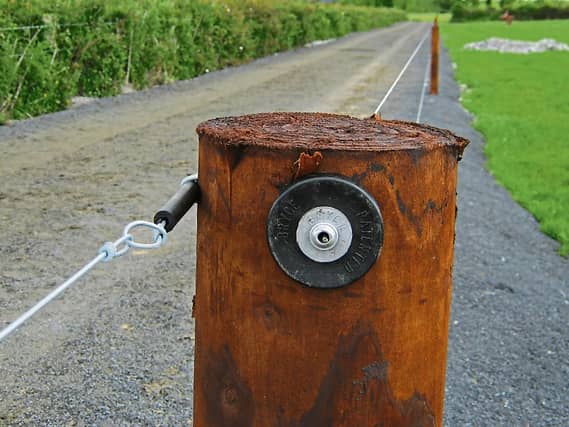
Good quality insulators for high voltage electric fencers: it is important to use heavy duty good quality insulators. A few cent extra on insulators can give a long service life and no voltage leakage.
Ensure paddock entrances are wide enough: remember slurry tanks and lime spreaders when choosing the width of the gap. Use galvanised underground cable to carry power when gap is opened.
Make the most out of early grass as cows calve: getting cattle out grazing spring grass early in the season has a number of benefits. Making the most of weight gain from grazed grass is essential for maintaining a viable calf to beef system.
The main benefits of getting cattle out early are: reduced feed and labour; a better quality diet; higher weight gains; improved health and welfare.
Contact FRS Roscrea, Parkmore, Roscrea; 0505-21166. www.frsfencing.ie; FRS Cahir, Carrigeen Industrial Estate, Cahir; 052-7441598 www.frscahir.ie