

Tipperary street names: historian seeks debate over John Mitchel
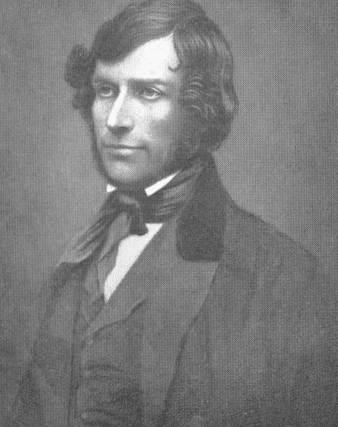

A historian has called for a debate over the naming of streets in Tipperary after the Irish nationalist John Mitchel due to his links to racism and slavery.
There are streets called after Mitchel in Thurles, Nenagh and Clonmel.
Mitchel, an activist, author, was a leading member of both Young Ireland and the Irish Confederation.
Following deportation to Tasmania he escaped to the US, where he was a pro-slavery voice.
Mitchel supported the Confederate States of America during the American Civil War, and two of his sons died fighting for the Confederates.
Now, Tipperary historian Conor Reidy has raised the issue of honouring Mitchel in light of the worldwide discussions emerging from the George Floyd killing in the US and the Black Lives Matter campaign.
“I do not believe that our history in Ireland, as a once-oppressed people, makes us in any way immune from the reality that some of our revolutionary heroes, those who forged the path to the birth of our nation, may have crossed lines that possibly exclude them from glorification in the form of street or club names,” he says.
Mr Reidy describes Mitchel as a “white supremacist, and a “hypocrite of the highest order”.
He says Mitchel, who spent a great deal of his career opining on the oppression of the Irish people at the hands of colonial masters, was an uncompromising supporter of the oppression of African people at the hands of a different set of masters.
Mr Reidy says it is an uncontested fact that Mitchel's views on race were very much in line with the slaveholding southern states of America and were even seen as extreme by many who supported slavery in America.
Mitchel believed that black people had been created as servants, but felt that black Africans, following years of exposure to western culture might possibly become civilized.
He says Mitchel condoned African slavery to the American South and had actually began to defend the institution of slavery while working at The Nation, prior to his exile to Australia and later life in America.
He was also an anti-Semite and Charles Gavan Duffy would not allow him to advocate such opinions in The Nation.
“This should clarify that John Mitchel’s racism did not begin after he moved to America but rather was something that was inherent in his personality and character from the beginning,” says Mr Reidy.
Mitchel called black people an “innately inferior people” and had stated: “We deny it that it is a crime, or a wrong, or even a peccadillo to hold slaves, to buy slaves, to keep slaves to their work by flogging or other needful correction.
Mr Reidy says Mitchel believed that slavery was inherently moral and “good in itself” and wanted to promote it “for its own sake”.
Mr Reidy says that we place the names of historical figures on streets and clubs and other public spaces to honour and glorify those individuals.
“John Mitchel may have done a lot for the Irish people but does that mean we should overlook his faults, particularly when this philosophical transgression is so hypocritical and offensive to humanity?” he asks.
He says that when you name a street or a place after a person, you are honouring the whole person, not just the part you like.
“If you are placing John Mitchel’s name on a street, then you are honouring and saluting his achievement and views on everything, including slavery. There is no ambiguity on this fact in my opinion,” he says.
However, he says that if people are aware that they are living, working, walking on a street that honours the “hate-filled white supremacist that was John Mitchel” and they are content to leave the street name intact, then that is how it must stay.
But he says that in light of our greater knowledge of history and society and the societal implications of racism, he thinks people who promote the continued use of the names of people like this, should be obliged to explain why.
Mr Reidy says that we are “obsessed” with naming things after deceased revolutionaries. Yes, these individuals were essential to the birth of our nation. However, we are wedded to this idea that we can only name things after the men of 1916, the men of 1848 or an enduring figure such as O'Connell or Father Mathew.
“For anyone that is enraged by the facts that I have put forward – things that are already in the public domain anyway but are just not talked about – how many streets in Tipperary are named after female revolutionary figures that do not have the baggage of a John Mitchel?” he asks.
While he is not suggesting removing all our great revolutionaries, he wonders if do we need streets that commemorate the lives of “vile white supremacists”.
“As a historian I reject in the strongest terms the argument that encouraging a conversation on any of this is an attempt to ‘whitewash’ or erase history.
“Removing a name from a street or sporting club does not in any way remove that person from the historical narrative.
“Instead, it sends a message about the kind of values that Ireland embraces in the twenty-first century.
“The contribution of John Mitchel to the ultimate birth of the Irish state is not in question. We cannot rewrite that part of his story because it is already written in stone.
“We do, however, have a duty to tell the full story. The full story of John Mitchel may be uncomfortable for some, but it is his truth and it is our truth,” concluded Mr Reidy.