

Long-term vacancy continues to challenge Tipperary Town amid signs of regeneration

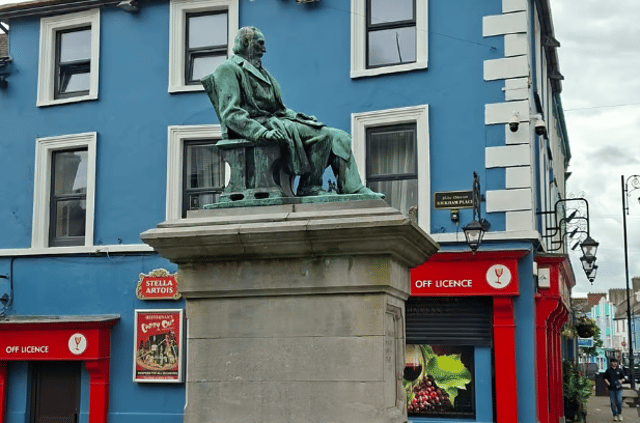

From empty buildings to new beginnings: Tipperary Town's road to renewal and a brighter future
While vacancy and dereliction continue to cast a shadow over parts of Tipperary Town, local representatives and regeneration leaders believe the town is beginning to move in the right direction.
Empty commercial units, boarded-up buildings and long-term derelict properties remain a visible feature of the town centre. However, new data suggests that vacancy levels have fallen significantly in recent years, while investment, regeneration projects and targeted supports are beginning to generate renewed confidence.
According to Sinn Féin councillor Annemarie Ryan Shiner, one of the biggest challenges facing the town is the normalisation of vacancy and dereliction. "It is like every small town in Ireland. We have become kind of immune to dereliction and vacancy and we have classed it as normal and that is the biggest problem that we have," she said.
Using data gathered through the Collaborative Town Centre Health Check, Cllr Ryan Shiner said Tipperary Town’s centre recorded 84 vacant properties in 2022, made up of 73 commercial buildings and 11 residential units. "That was about a 30% vacancy rate back in 2022. The average around Europe would be about 14%, and when it gets to about 14% that is when the alarm bells start going off," she explained.
The impact of vacancy extends beyond the appearance of the town, she argued. Derelict properties can affect footfall, discourage investment, contribute to anti-social behaviour and influence how people perceive the town.
While vacancy remains a significant issue, updated figures indicate progress has been made. Cllr Ryan Shiner's latest data collected this year found that commercial vacancies have fallen from 73 to 50 properties, while residential vacancies have decreased from 11 to 7. Overall vacancy has dropped from 84 buildings to 57, representing a reduction of approximately 32%.
Despite this improvement, the data highlights another concern. Of the 57 vacant buildings identified in 2026, 44 were already vacant in 2022. "That is a 77% long-term vacancy rate. That is massive, and that really shows that there is something wrong there," she said.
According to the councillor, several factors are contributing to the problem. Among them are absentee landlords who continue to hold vacant properties as investments without bringing them back into productive use. She pointed to a number of prominent vacant buildings in the town centre that remain boarded up and on the derelict sites register years after first being identified as problematic.
Cllr Ryan Shiner also believes current commercial rates relief schemes may be inadvertently contributing to long-term vacancy. Under existing arrangements, vacant commercial properties can receive significant rates abatements depending on the value of their rates bill.
She argues there should be time limits on these supports and that owners of properties listed on the derelict sites register should not qualify for rates relief. The councillor is also calling for a more robust use of Compulsory Purchase Orders (CPOs) to tackle persistent dereliction.
"I think Tipperary County Council needs to become stronger on doing CPOs on troublesome properties. Exhaust all the options first, talk to owners and offer all the grants available, but ultimately some properties are bringing down entire streets and impacting neighbours and businesses."
Alongside stronger enforcement, she believes vacant upper floors above commercial premises present an opportunity to help address housing shortages. "We are in the middle of a housing crisis and we have enough vacant buildings in Ireland to take everybody off the housing list," she said.
While challenges remain, efforts to revitalise the town have accelerated in recent years. Michael Begley, Manager of the Tipperary Town Revitalisation, said the organisation was established in 2020 following widespread concern about the town's future. "There were protests in 2018 and 2019 organised by March for Tipp where a couple of thousand people marched on the streets," he recalled.
"The points they were making were the traffic volumes in the town, lack of investment both public and private, and high levels of unemployment and welfare dependency. There were a lot of structural issues in the town that needed to be addressed."
The group subsequently developed a strategy containing 100 actions designed to guide the town's regeneration through to 2035. The strategy focuses on four key pillars: public realm improvements, job creation and economic development, environmental initiatives and social inclusion.
Mr Begley believes collaboration between local agencies, community groups, businesses and state bodies has been crucial to the progress achieved to date. "There is no doubt that there is a lot of investment happening," he said.
Among the projects cited are the Tipperary Engine Digital Hub initiative, investment from Nephin Renewable Gas, expansion by local bakery Ryans of Tipperary and LAWPRO having established a new office in Tipperary Town at Heffernan House.
Speaking on vacancy and dereliction, he stated: "There is a lot of property owners that we are engaging with and we know they are looking seriously at refurbishing their properties and investing in them with a view to bringing them back into use," he added. He cites one of the most significant regeneration projects currently underway is the redevelopment of 7-8 Main Street.
Mr Begley said the project has already benefited from Heritage Council funding to restore the building's facade, significantly improving its appearance. More recently, funding has been secured to appoint a design team to develop plans for a mixed-use regeneration project.
"The idea is to maintain commercial activity on the ground floor and develop residential accommodation overhead," he explained. "The idea is to regenerate the buildings, get them back into use and get more people living in the town," Mr Begley said.
Vacancy levels are still above where they need to be, long-term dereliction continues to affect parts of the town centre and housing delivery remains a pressing issue.
There are currently 225 approved social housing applicants in Tipperary Town, including 69 approved for one-bed units.
However, there is growing evidence that the trajectory is changing. Vacancy figures are moving downward, investment is increasing in the town, regeneration projects are advancing and a long-term strategy is now guiding development.