

EXPLAINER: Why property sales in Ireland get delayed and how to avoid them


By Lynch Solicitors Ltd
Selling a property is one of the most significant financial transactions a person will undertake. While the process can appear straightforward once a buyer is found, conveyancing in Ireland is detailed, document-driven, and dependent on multiple third parties.
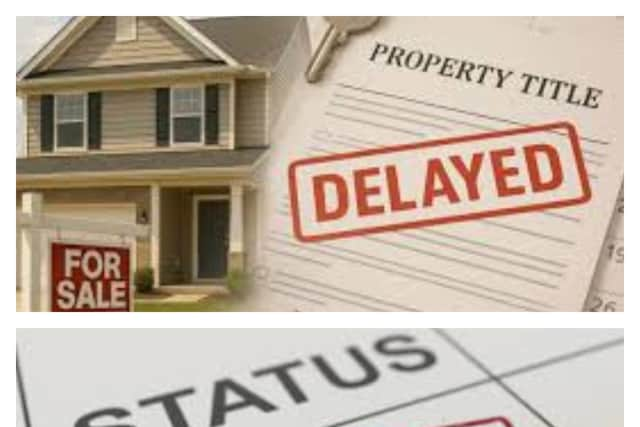
Delays are common in property transactions, but many are avoidable. In most cases, the difference between a smooth sale and a delayed one comes down to early preparation.
The most important step; Start early
The most effective way to avoid delays is simple: do not wait until you find a buyer to begin preparing. As soon as you decide to sell your property, you should:
- Instruct your solicitor
- Appoint your estate agent or auctioneer
- Begin gathering key documents
- Consider likely timelines and any potential legal or practical issues affecting the property
Early engagement allows your solicitor to:
- Request title documents from your lender or previous solicitor
- Identify planning or compliance issues in advance
- Resolve problems before the contract stage
- Ensure contracts can issue promptly once a buyer is found
Title Documents - The foundation of your sale
When selling a property, what is being transferred is legal ownership, which is proven through the title deeds. If the property is mortgage-free, the title deeds may already be in your possession or held by your previous solicitor. If there is a mortgage in place, the deeds will usually be held by your lender.
Where deeds are held by a bank, your solicitor will request their release on your behalf with your authority — a process known as taking up the title deeds on Accountable Trust Receipt (ATR). This is a formal arrangement where the solicitor holds the deeds securely until completion.
An important point is that banks can take several weeks to release title documents, and so this is one of the most common early causes of delay in a property sale. For this reason, title deeds should always be requested as soon as you decide to sell, not when a buyer is found.
Land Registry and Mapping Documents
Your solicitor will review Land Registry records to confirm ownership and ensure the legal title corresponds with the property being sold. This includes:
- The folio, which confirms ownership and outlines any rights, restrictions, or burdens affecting the property
- The filed plan, which identifies the property on the official Land Registry map
Depending on the property, it may also be necessary to obtain Land Registry-compliant maps, prepared by a qualified surveyor, engineer, or architect, to confirm boundaries for registration purposes.
Planning Permission and Compliance
If you have carried out any alterations or extensions to the property, it is essential that all planning permission and building regulation requirements have been complied with.
This may include obtaining:
- Planning permission for structural works or extensions
- Certificates of compliance with planning permission or building regulations
- Retention permission where works were completed without prior approval
Where documents are missing or incomplete, this can delay the issuing of contracts and may also affect a purchaser’s ability to obtain mortgage approval.
In some cases, it can even lead a buyer to withdraw from the transaction. For this reason, early identification of any planning issues is essential.
You should:
- Inform your solicitor of any works carried out to the property
- Locate all planning and compliance documents early
- Confirm whether any exemptions or compliance certificates apply
- Ensure a valid BER Certificate and Advisory Report is available
Additional documents and third-party dependencies
Property transactions often depend on third parties such as banks, local authorities, and management companies. Depending on the property being sold, additional documents may include:
- Confirmation that roads and services have been taken in charge by the local authority, i.e. that they are maintained by the local authority.
- For apartments or housing estates, Management Company documents, including accounts, insurance, and service charge information.
- Declarations of Identity to confirm boundaries, access, and services on site.
- Details of any rights of way, easements, or other third-party rights affecting the property.
- Confirmation of any statutory notices affecting the property, such as Compulsory Purchase Orders or road schemes.
- Mortgage redemption figures confirming the amount required to discharge a loan on completion.
Each of these can take time to obtain, and delays are common where requests are made late in the process.
Probate-related sales
Where a property is being sold following a death, the transaction will often be subject to the probate process. Probate is the legal procedure for administering the estate of a deceased person, including the distribution of assets such as property.
Delays commonly arise where:
- A Grant of Probate has not yet issued
- An application is pending or under review
- Queries are raised by the Probate Office
- The estate is complex or involves multiple assets
For these reasons, probate-related sales typically take longer to progress than standard conveyancing transactions.
Sales involving tenants
Where a property is currently occupied by tenants, additional considerations may arise, extending the conveyancing timeline.
In some cases, the property may be sold with tenants remaining in place, in which case the purchaser will acquire the property subject to existing tenancy arrangements.
The purchaser’s solicitor will need to review tenancy agreements, rent history, and compliance with residential tenancies legislation. In other transactions, the property is being sold with vacant possession on completion, meaning the tenants are expected to vacate before completion.
In these cases, delays can arise in ensuring that the tenancy is lawfully terminated and that vacant possession is delivered in accordance with statutory notice periods and Residential Tenancies Board requirements.
Where there is any difficulty in securing vacant possession on time, this can have a direct impact on completion dates and may result in delays to the transaction.
So, how long does it take to sell a property?
While every transaction is different, the average timeframe for completing a property sale is typically 8 to 16 weeks from sale agreed to completion, depending on the complexity of the transaction.
Timelines can vary depending on factors such as:
- Whether any planning or title issues arise
- The responsiveness of third parties, such as banks and local authorities
- Whether the transaction forms part of a property chain
- The speed of mortgage approval by the purchaser
In practice, early preparation and having key documents in place from the outset can significantly reduce delays and improve the overall efficiency of the conveyancing process.
For further advice or if you wish to discuss any other legal area please contact [email protected] or telephone 052-
6124344.The material contained in this blog is provided for general information purposes only and does not amount to legal or other professional advice.
While every care has been taken in the preparation of the information, we advise you to seek specific advice from us about any legal decision or course of action.
*Sponsored Content