

A few more games were unlikely to change anything for Tipperary
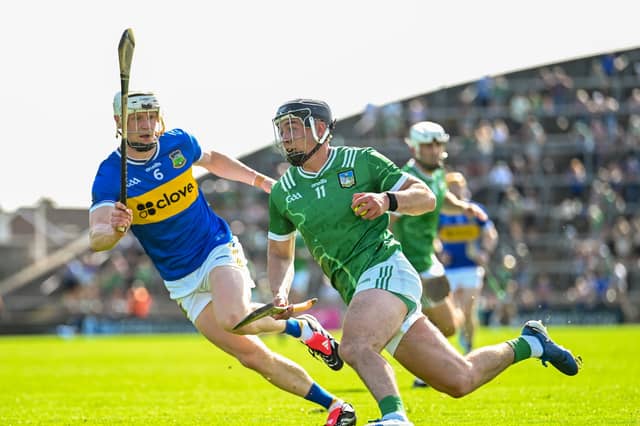

If you can’t win games you don’t deserve to be still in the championship come high summer
The Munster hurling final, as an institution, has definitely lost much of its glamour and glory since the abolition of the knockout championship. It’s now a final without finality and probably sits third in ranking behind the All-Ireland and National League. Yet it still retains some of the old magic and remains a prized possession for those who add the medal to their collection.
It’s 10 years since Tipperary last held Munster honours and this time we sit out the event once more, playing the role of interested neutrals as Cork and Limerick go to war. Fittingly, the top two ranked teams face off in the provincial showdown, as they did in the league decider and may well do later in the All-Ireland final.
It will be the fourth meeting of the teams this year across league and championship so familiarity won’t be an issue, whether or not it breeds contempt. Limerick lead the 2026 head-to-head count by two to one but the betting odds only give them a very marginal edge on Sunday, 10/11 against 11/10 for Cork. The venue is a factor.
These are undeniably the teams of the moment, with the rest of us looking on enviously from the sidelines. After a two-year hiatus, Limerick are back in the groove and looking powerful while Cork continue their push for a breakout from that haunting 21-year famine. Their rivalry looks like being the story of the hurling year.
When you look at the head-to-head record between the counties since John Kiely took over, Limerick are ahead, but only slightly. They’ve played 12 championship ties since Kiely’s tenure began in 2017 with Limerick winning six, losing five and drawing one. The league record tells a similar story: played 10 with Limerick winning five, losing four and drawing one. Combine the league and championship figures and the chart reads played 22 with Limerick winning 11, losing 9 and drawing two.
It’s a tight race then, with the statistics showing that on their better days Cork have been able to master Limerick. They did it in last year’s Munster final, albeit on penalties. They also did it in the 2024 All-Ireland semi-final, the one that ended Limerick’s bid for five-in-a-row. That came after they also beat Limerick in the round robin that year.
More than any other team then Cork have a respectable record against Kiely’s Limerick. Based on past performances you might expect Cork to win two out of five meetings between the counties. It poses an interesting speculation: will one of them win Munster and the other take the All-Ireland? Time will tell.
Injuries have dented Cork’s prospects. The loss of Ciaran Joyce is a heavy hit. Just when they appeared to have solved that bothersome full back conundrum, their key man does his cruciate. Rob Downey’s return for the last game against Clare was a positive but Darragh Fitzgibbon’s appendicitis adds a further complication. These injuries or illnesses are unsettling.
Against that, Cork this year uncovered a few attacking gems in Barry Walsh and William Buckley. They give new energy to a forward formation where Brian Hayes’ form has already put him in Hurler of the Year territory.
For Limerick it’s been a year of reset after 2024/25. Caroline Currid is back working on the mindsets and the news appears positive on the injury front. Darragh O’Donovan has returned to midfield and Dan Morrissey was back patrolling the square against Tipperary in their final game of the round robin.
More than any other team they have major options available. Mike Casey and Barry Nash are vying for a corner back spot; Shane O’Brien and David Reidy are chasing attacking places; and Tom Morrissey seems to be revelling in his role as impact substitute, hitting 0-4 on his arrival against Tipperary the last day. Cian Lynch is a creative force who can be utilised anywhere from midfield up.
Then the younger cohort of Aidan O’Connor, Cathal O’Neill and Adam English are becoming mainstays. The overall mix of players offers a potent cocktail. When on form they appear unstoppable.
The Munster final rivalry between the counties has a long history. They’ve met in 22 previous finals with Cork winning 16 and Limerick taking six. Cork have won the last two final meetings, in 2014 and last year when it took penalties to decide the issue at the Gaelic Grounds.
It’s an intriguing final pairing where form and fate on the day will decide the outcome. Whichever way it falls, people leaving Páirc Uí Chaoimh on Sunday will be conscious that there may yet be an even bigger collision awaiting these sides come July.
Elsewhere, Clare’s emphatic win over Galway in the All-Ireland Under 20 decider will have been noted with interest in Tipperary. The nagging sense of a lost opportunity will have been enlarged by the margin of victory. It could (should?) have been us will be echoed in many a conversation. Pointless reflection, perhaps, but unavoidable.
We’ll think back particularly to April 22 at the Stadium when we had Clare on the rack, with the Banner trailing by six points with time ebbing away. Then a few moments of utter madness saw the gains squandered, as a retreating Tipperary spilled 2-1 to lose a game that was won only for the holding. A Clare loss there had the potential to put them out of the championship, which is unprovable, of course, in hindsight but we definitely let them off the hook that night.
What followed were more rueful regrets in the Munster final. Had Oisin O’Donoghue played the full game would it have made the difference? Then there were the 13 first half wides and you could go on replaying all the ifs and buts.
Ultimately, we rode our luck in the early rounds of this championship and while you get away with that on a few occasions it eventually comes back to bite. The lingering impression will be of a talented Tipperary team undone by a flawed playbook.
Finally, and predictably, the split season is under fire once again. The elimination of teams from the inter-county championship in May is a convenient cue for opponents of the structure to rekindle their opposition once more.
With teams like Tipperary, Waterford, Kilkenny and Wexford out of the reckoning so early, it offers fodder to some who will forever be banging this particular drum. Mind you, the comments of some managers have added fuel to the fire as well.
There is a bottom line here: if you can’t win games – any game – then you don’t deserve to be still in the championship come high summer. Given Tipperary’s poor form this year, for example, I can’t imagine there’s much stomach in the county for prolonging the agony into June and July.
For many fans leaving the Gaelic Grounds last Sunday week there was almost a sense of relief that it was all over. A few more games were unlikely to change anything. Instead, followers were anxious to put it all behind them and look forward to a reset in the months ahead and an overall reassessment in preparation for 2027.
Indeed, would further games have done anything for Waterford or Wexford or Kilkenny? The teams who deserve to be still alive in the championship are there and good luck to them. There comes a time for the rest to step aside and reevaluate their positions for the future.
This shouldn’t even be an issue. The overwhelming view at last February’s Congress was opposed to changing the present format. Croke Park had no option but to withdraw its proposal before it took a heavy defeat. Previously a survey by the GPA showed that 89% of its members favoured the present structure.
The sole argument around extending the inter-county season seems focused on the promotional value of media coverage throughout the summer. It’s as if there’s a blanket shutdown of the games once the All-Irelands are over.
In reality the media coverage continues, only now it switches to the club scene. The split season has been a lifesaver for the clubs. Inter-county dominates the coverage for seven months of the year and then it’s the turn of the clubs, who have unfettered access to all players and can play during some of the best weather of the year. Even more importantly they have a fixture structure to follow.
Long may it last.