

Limerick broadcaster who is driving the voice for change among women highlights her ‘period of struggle’
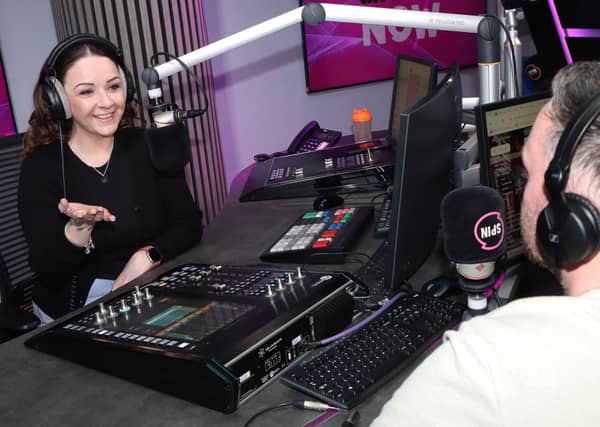

Katie had a 'tough journey' in life and a lot of what made this tough was her period
READER DISRECTION IS ADVISED
FROM Cappamore, a small town outside Limerick city to campaigning for change, broadcaster Katie Sheehan refused to be silenced and has used her voice to speak her truth and try to implement change for women.
Katie, who went to Doon Secondary School, Limerick had a “tough journey” in life and a lot of what made this tough was her period which led her to be diagnosed with premenstrual dysphoric disorder (PMDD) later in life.
PMDD is a severe form of premenstrual syndrome (PMS) and it causes a range of emotional and physical symptoms every month during the week or two before your period.
PMS has a wide variety of symptoms including mood swings, tender breasts, food cravings, fatigue, irritability and depression and it affects 3 in 4 women the week before their period.
Unlike “normal” PMS, PMDD can “cause women to get to the point where they don’t want to go on anymore.”
It took Katie to get to this moment in her journey to accept this was not going to be her faith.
April marks PMDD Awareness Month and Katie encourages women to reach out for help if they feel like something is wrong in their bodies or if they get to a stage where they too feel like they cannot go on.
Many women don’t realise until later life, periods are not supposed to hurt. They are bound to be uncomfortable but you are not suppose to go through mental or physical “torture” leading up to or on that time of the month.
Katie deems this down to education and while only realising in later life herself, that the ups and downs she faced synced around the time of her period it was in that moment that it all started to make sense.
“When you are young, you are navigating through the newness of getting your period. Looking back now, the signs were always there, I just didn’t have the information. I just thought this was your period and girls were always supposed to feel like crap. I first got my period when I was twelve and from there they were always very heavy and I could go months without one and then have one for months non-stop again.”
Katie, when bringing this up with their doctor, felt dismissed.
“I remember getting this checked with the doctor and when you are that young, they will tell you that it is because of your age and it will become regular as you become older but for me it never happened. I went on for years with pains, aches, missed periods and I didn’t realise the effects it would eventually have on my body.”
From that doctor's visit and years of not feeling better, Katie went on to see a gynaecologist where she was diagnosed with polycystic ovary syndrome (PCOS).
PCOS is a very common hormone problem for women. Women with PCOS may not ovulate, have high levels of androgens, a reproductive growth hormone and have many small cysts on their ovaries. PCOS can cause missed or irregular periods, excess hair growth, acne, infertility, and weight gain.
“I went to a gynaecologist when I was 17 and I was diagnosed with PCOS. They gave me guidelines on how to improve it from diet to exercise or going on a contraception pill but I never felt like any of those options worked or I felt any better, I thought I was always going to have to live with it.”
It took until Katie was trying for children to come to terms with the fact that there was something wrong and it was when she looked into this further, she was diagnosed with endometriosis.
Endometriosis is a disease in which tissue similar to the lining of the uterus grows outside the uterus. It can cause severe pain in the pelvis and make it harder to get pregnant.
“I didn’t realise anything was wrong until I started trying for kids and I had difficulty getting pregnant. I was struggling. I went to my gynaecologist again and I was then diagnosed with endometriosis which answered my question as to why I was not getting pregnant as easily. From that moment I was lucky enough to get pregnant with my daughter Nicole with a little bit of help.”
After experiencing the moment Katie waited for her whole life, to become a mother she wanted to expand her family. Unfortunately Katie had a miscarriage before giving birth to her second child Michael.
“I lost a baby between my daughter and my son and at that stage I kind of gave up. I got to a point where this whole journey with gynaecology, diagnosis after diagnosis took a toll on me. I said to myself if it happens it happens, I had Nicole and it was all I wanted.”
Before getting pregnant with her son, Katie knew something had changed mentally for her.
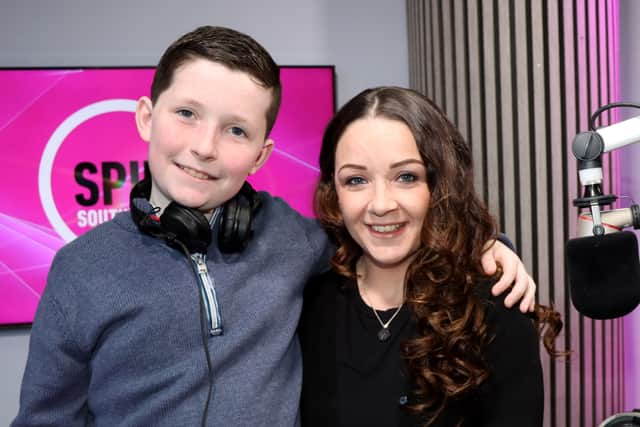
Katie thought nothing could impact this high she was feeling until later in her pregnancy she went for a scan and something was not right with the baby.
“I went for a private scan where they tell you everything and they said the baby’s bowel wasn’t developing quite as it should. I then gave birth to my son and it was a whole different struggle to find out that the reason for this was because he had cystic fibrosis.”
Cystic fibrosis is a disorder that damages your lungs, digestive tract and other organs. It's an inherited disease caused by a defective gene that can be passed from generation to generation. The disease affects the cells that produce mucus, sweat and digestive juices. Often those who are suspected to have cystic fibrosis undergo a sweat test to determine.
Michael, when born, turned blue in his crib and was rushed to Children's Health Ireland (CHI) at Crumlin. Katie, who was not permitted to leave so soon after birth, went against doctors orders and went straight to be with Michael.
“I didn’t know what was happening nor did I know if he was going to survive. When I arrived in Crumlin we spent a few days up there going through a series of tests. Michael couldn’t drink bottles and he lost a lot of weight. I will never forget those couple of days as I remember having to leave the room due to the screams. They were putting so many needles into him to find a vein to find the answers but it was hard to find a vein because he lost so much weight.”
Michael went on from Crumlin to the Cystic Fibrosis Unit in University Hospital Limerick (UHL) where he underwent a sweat test which confirmed he had the disease.
After hearing those words confirming her son had this disease, Katie explains she “checked out.”
“I remember thinking why is this happening. I went home and I read about cystic fibrosis and I cried so much. I still had to operate as a mother and for that reason I kept the crying to the night. Looking back now I was a robot. My period then came back normal after having Michael but my dips in my mood kept getting lower. I put it down to the miscarriage and then Michael’s diagnosis so I put it to the back of my mind.”
After five years, Katie recognised a complete shift in her moods labelling it “uncontrollable.”
“I remember I went back to the gynaecologist and I expressed that it felt different. I started tracking my moods and it clicked with me the lows came around my period. I remember saying to the doctor that all I wanted was my sanity back.”
The doctor in the moment told Katie she had PMDD and presented Katie with a number of options including a hysterectomy to deal with this disorder.
After that moment, Katie admits “life continued to get harder for her,” and she decided she couldn’t go on anymore.
“Unfortunately I got to the point where I couldn’t go on. The mental struggle everyday from PMDD was excruciating. I tried to take my own life but I am so grateful that I am here today. I hold a lot of shame which I know a lot of people who have been in my position hold because you think how could you do that to those who love you or the kids who rely on you? However when you are mentally not even here anymore and the pain is that hard you can’t see any other way.”
After the attempt Katie went back to her gynaecologist and decided to go ahead and have a full hysterectomy.
“I was 32 when I went ahead with it. I had two children and I was so lucky. They needed me and the strongest me and the only way to do that was to have this procedure. Some women choose to keep their ovaries but after all the diagnoses and nearly losing my life to PMDD I wanted it all gone. I knew I would go into surgical menopause but it was something at the time that had to be better than how I was living.”
Katie was the first person in Ireland who had this procedure robotically in UHL which meant shorter recovery time but before being wheeled down to theatre, Katie did question if it was the right decision.
“You know what the sad thing is there was a bit of doubt there. I love kids and I am born to be a mother and my final decision in saying I would do this was choosing the kids that were already here. There was doubt as I spent half my life trying to have kids and I was making the choice to take it away but the last moment before they put the mask on me I kept thinking about my kids and especially how much Michael needed me.”
After the surgery Katie refers to her recovery time as the “fight back” and it was during this time and in caring for her son she discovered her passion for media.
A drug which has helped many cystic fibrosis patients in Ireland is Vanza Triple and during the time of Katie’s recovery this drug was not available.
Katie campaigned for this drug going on as many media outlets and organising as many protests as possible with other cystic fibrosis parents until in 2019 the drug was brought to Ireland.
After this Katie had time to think what her next step would be and she decided her true calling other than being a mother was media.
Katie started out working in community radio in Limerick to go on to now cover weekends on Spin SouthWest. Katie interned with broadcaster Louise Cantillon during her time at the station and took over her show when she made the move to national radio.
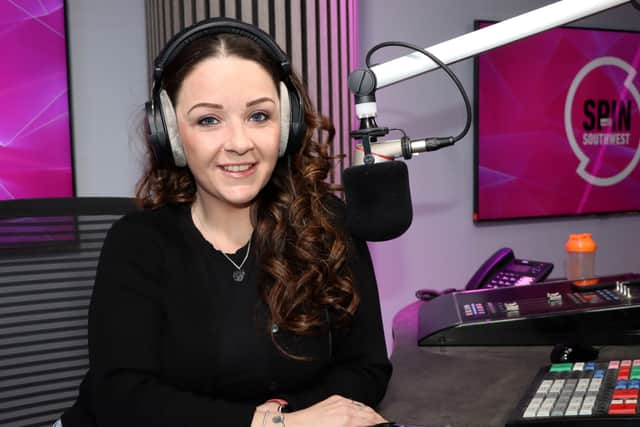
On what is next for Katie, she explains she wants to continue to use her voice to make a change.
“I want to use my voice to show people they can have everything they want. To tell girls to listen to their bodies, get help and don’t settle for an answer if you don’t feel right. To let parents of a cystic fibrosis child know it will be ok. To let people know they really can be everything they want to be.”
To hear more from Katie, you can tune into Spin SouthWest from 9am-12pm every Saturday and 12pm-3pm every Sunday or you can listen by downloading the GoLoud app.
If you have been affected by anything mentioned in this article please see here for help.