

Who was the Birdhill baby? Tragic historical mystery at Tipperary railway station
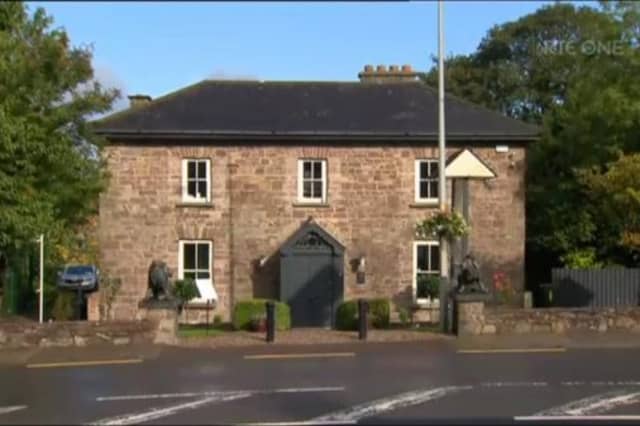

The tragic mystery of the ‘Birdhill baby’, who was found in 1941 by the side of train tracks in Tipperary, was recently discussed on the Póilíní Podcast
On the evening of April 30, 1941, the body of a newborn baby was discovered beside the railway tracks in Birdhill, Tipperary.
The baby had been wrapped in cloth, brown paper and an old flour bag, and was secured with pieces of twine. Now 85 years later, the identity of the child and the circumstances surrounding his death remain unknown.
The case was recently revisited on The Póilíní Podcast, hosted by writer and journalist Helen Moorhouse and Garda historian Dr John Reynolds, as part of an episode examining concealed births, infant deaths and the difficult circumstances faced by women during Ireland's 'emergency period'.
Helen Moorhouse explained that while policing is often associated with "arrests and guns and kidnaps", it also involves dealing with deeply tragic cases which can reveal "so much about society over the centuries".
The Birdhill case took place during the Emergency period in Ireland between 1939 and 1946 when Ireland remained neutral during the Second World War.
According to Dr John Reynolds, the Emergency brought it’s own difficulties for Gardaí, who were tasked with enforcing neutrality, dealing with rationing and monitoring threats including espionage and IRA activity. Alongside those duties, Gardaí continued to deal with ordinary crime, as well as the darker cases involving concealed births and infant deaths.
Dr John Reynolds explained that women facing an unplanned pregnancy at the time had very limited options.
“Adoption didn’t exist in Ireland until 1952. Legal adoption,” he said.
One traditional option had been to travel to England, but restrictions on travel to England during the emergency made that considerably more difficult.
“Unfortunately, because travel was was restricted, it actually brought a kind of sharp increase in the numbers of concealment of birth and also what’s called infanticide,” Dr John Reynolds said.
He explained that some women would disappear from their homes and say they had, “gone to Dublin to get work,” when in reality they may have been sent to institutions including mother and baby homes or Magdalene laundries. The shame and stigma surrounding pregnancy outside marriage was enormous at the time.
“The whole reason, an unwanted pregnancy, the shame and the stigma, the difficulty, it would ruin somebody’s life,” Helen said.
Dr John Reynolds said the social and political environment of the time was particularly harsh for women.
"You had a very, very draconian government in place under de Valera, who had this idea of the ideal family and the woman's place in the home," he said, while also highlighting "the overwhelming influence of the catholic church. It was all men making these decisions," he added.
Dr John Reynolds said Garda records for the period from 1940 to 1944 recorded 12 cases classified as murders of infants and 177 cases of concealment of birth. But he stressed that these were only the cases that were reported and investigated.
"How many thousands of cases went unreported or uninvestigated?" he asked.
"It was a really grim time to be a woman," Helen said. "It was life changing. It was life threatening. It was life destroying."
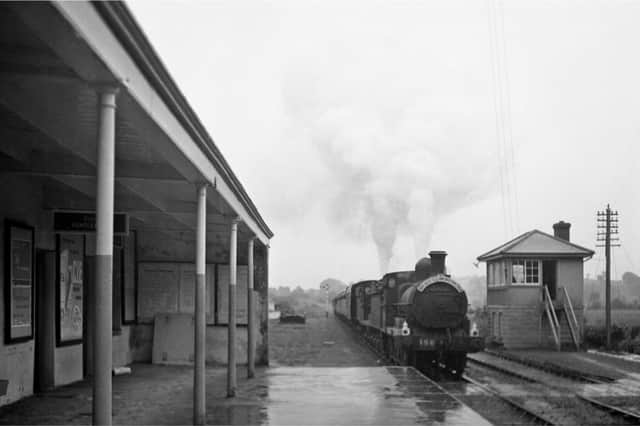
Birdhill was described by Dr John Reynolds as a strategically important village, situated on the main road between Dublin and Limerick and beside the railway line linking the two cities. The local Garda station was close to the railway, with a sergeant and several Gardaí living in the barracks. The officer in charge was Sergeant Patrick O'Malley. On the evening of April 30, 1941, the Dublin to Limerick train passed through Birdhill.
Mrs Bridget Howard, who lived at Railway Cottage beside the tracks and worked as a railway gatekeeper, later noticed something in a drain near her home.
"It was the body of a newborn baby," Dr John Reynolds said.
Mrs Howard brought the remains back to Railway Cottage and contacted Birdhill Barracks, which was only a few hundred yards away. Sergeant O'Malley went to the cottage and examined the remains before beginning the Garda response. He coincidentally had been on foot patrol when the train passed through Birdhill, and had noticed a young girl looking from one carriage and a man looking from another.
Dr John Reynolds says that there was no evidence connecting either person with the baby's death, but the detail was recorded as part of the circumstances surrounding that evening. The baby had been covered with a cloth, wrapped in brown paper and then placed inside an old flour bag. It had been secured with pieces of twine or cord and the package had been wrapped in a copy of the Evening Herald.
The baby's remains were taken to Birdhill Barracks where the local GP was called from Newport, the coroner, Dr Courtney from Nenagh, was also brought in. The inquest took place there and then inside the Garda barracks. The baby was found to be male, full term and between 24 and 48 hours old. He was described as well nourished.
The doctor concluded that the baby had been born alive and that the cause of death was drowning. Dr John Reynolds said the medical evidence indicated that the baby could have drowned either on the train or before the train was boarded. The inquest concluded that the baby had died by foul play.
The inquest left lots of unanswered questions, "Who, we didn't know, or where, we didn't know," Dr John Reynolds said.
Today, Gardaí could examine CCTV, passenger records and train bookings and establish who travelled on the service. In 1941, passengers could simply walk into a railway station and board the train. There could have been hundreds of people on board, with the service stopping at numerous locations between Dublin and Limerick.
Dr John Reynolds said there was "no evidence" in the surviving records that investigators travelled to Dublin to establish who had been on the train. There was also no mention in the available papers of what happened to the baby's remains after the inquest.
Dr Reynolds said he was therefore "guessing" that the remains may have been buried in an industrial school or Magdalene home in the area, although this was not established by the surviving records.
"And I think the superintendent probably came to the conclusion we were never going to get anywhere with this," Dr John Reynolds said. "I just think it was one of these deaths. Unless somebody came forward, it was never going to be solved and it just quietly went away like so many others."
More than eight decades later, there is still no answer to the central questions surrounding the case. Unfortunately, this was not an isolated tragedy within Ireland's history. Helen noted that even decades after the Emergency, tragedies of this nature continued to occur.
"It’s got to be dealt with and it's got to be spoken about," Dr John Reynolds said.
Unfortunately, it is unlikely we will ever learn about what happened to the Birdhill Baby or many other babies that sadly died in similar circumstances.
This sad case of the Birdhill Baby is more than an unsolved murder, it also reveals a time in Irish history where pregnancy outside marriage could bring devastating shame and women had few options.
You can listen to The Póilíní Podcast by clicking here.