

Tipperary emigrant reflects on the changing face of the Irish in Britain

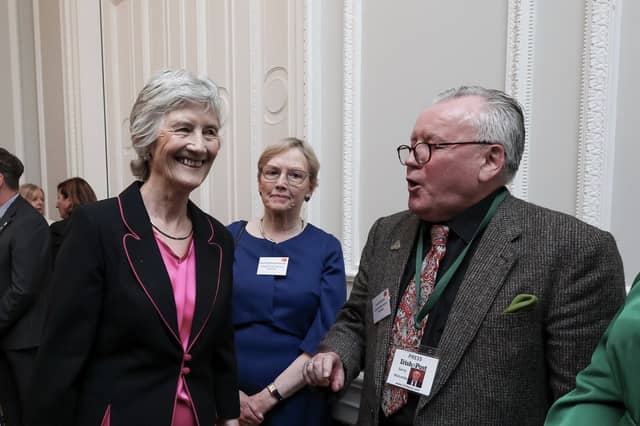

Tipperary’s Gerry Molumby reflects on over 45 years living in Britain and his involvement in welfare and cultural issues there
Thurles native Gerry Molumby has been living and working in the UK since 1979, and has been involved in Irish welfare and cultural organisations throughout that time. Here, he tells the Tipperary Star about his childhood, emigration to England.
“I grew up in Thurles town in the sixties and seventies. It was the years of the long hot summers, where droves of young people were coming down from Loughtagalla across Borroway where we lived and out the Mill Road to Lady’s Well.
There were more droves from the town as they all met and melted into the cool waters of the river Suir.
The years of black and white TV, simple needs, teenage Hops (dances) in the Pallottine Hall, Confraternity and then the big coming of age of going to hear the Miami in the Premier.
"When home now, I never see groups of children playing on the streets. That is equally gone in the UK, with people having smaller families. and such.
EMIGRATION
“I was part of the increase in emigration to Britain in the early eighties. Charlie Haughey famously was telling us, ‘We were living beyond our means’, and unemployment on the rise. I had applied to do nurse training and while waiting to start, I worked in social care and in some London pubs, and then went to the USA to visit my brother John. After nurse training I went into social housing for many years: the benefit there was the jobs came with tied accommodation.
Renting and buying was often well beyond my means. The so-called ‘Troubles’ were at their most tense still in Northern Ireland and although there was not a pronounced anti-Irishness atmosphere, it was not always easy being Irish in Britain. It was more difficult for the Irish in Birmingham. We know that following the pub bombings there, that six innocent men were imprisoned for sixteen years.
THEATRE
There was, in the eighties and nineties, a keen interest in Irish studies. Ironically, it was in the UK that I began to read up on the background and complexities of Irish and British relations. Alongside that I began to get a great interest in Irish Drama and Literature, so being single and in my mid-twenties engrossed myself in setting on a community theatre group in North London, Triskellion Theatre Group. Our first play produced was Philadelphia Here I Come, by Brian Friel.
Since then, we have presented numerous plays by JB Keane, O’Casey, John Millington Synge and Irish Cabaret and Concerts, and contributing acts to many of the Irish Festivals throughout the UK, especially Crawley.
At the onset, the company was involved in the production of a play from beginning to end. Now in a partnership with London-based friend Patrick O’Connell, the company aims to preserve and enliven Irish drama, comedy, and music in Britain.
CRICKLEWOOD
My working career continued in supported housing, helping to source accommodation for people and helping them in keeping their tenancy, many with mental health issues or learning disabilities. I was also doing the same but in a voluntary capacity for the Irish community in North London. During this time, I and some co-volunteers took the public’s welfare into their own hands and established Cricklewood Homeless Concern day centre in London in 1983.
Now called Ashford Place, this multifaceted centre still provides assistance and advice to the homeless or those others inadequately accommodated.
During all this time in the eighties and nineties, we in Triskellion have taken on promoting plays and concerts already in production.
Our focus now is to act as facilitators for producing Irish plays by touring companies from Ireland and Britain. Many of these acts are perfectly fit for cabarets, Irish centres, and festivals.
Showcasing some of the best Irish entertainment from Britain’s Irish community the show, Celtic Strands, is based on the model of Sunday Night at the London Palladium.
Together with Patrick we have raised thousands of pounds for charities like CAFOD, Irish Homeless, Church Restoration, the British Adoption Agency and St Luke’s Hospice. Basically, we bring together a variety of Irish artists, mainly from the Irish in Britain and put on a great show.
The concerts are not alien to celebrity acts either. Irish luminaries such as Niall Toibin, Philomena Begley, Finbar Furey, Seán Cannon from ‘The Dubliners,’ the current premier folk band The Kilkenny’s, The Kerry Rambling House have all swayed, sung and serenaded with Triskellion.
We toured all over England, Wales and Scotland with The Rare Oul’ Times, a Ken McIlroy two-act Irish play on the lives of Brendan Behan and Patrick Kavanagh.
In 1999, when I was married to Fiona and with my son Cormac, we all moved to Nottingham to live in our house we had bought there as we could not afford to purchase in the ever-increasing London prices being sought.
Now recently retired, at the time Fiona was embarking on a long-term career in teaching and mentoring in Derby.
Cormac, now in his mid-twenties, is a foreman for a housing trust gardening team.
I continued my involvement in the arts there with the Nottingham Irish Centre, and I have produced the Nottingham Irish Festival for over twenty five years now! During my time in the UK the one role that has a more global Irish significance is that of the President of Ireland.
GLOBAL IRISH NATION
From Mary Robinson and McAleese, Michael D and currently Catherine Connolly, they each increasingly are seen as the President of the Global Irish Nation.
That gives us a connection which in time will result in a more meaningful recognition of Irish Citizens Abroad in giving them a vote in a future president or reserved constituencies in Dáil Eireann.
I appreciate this is a complex issue which needs a referendum to happen"
Gerry’s manifesto to give a vote to Irish citizens abroad can be found at his blog, Ireland and its diaspora.
ABOUT GERRY
“I am a member of the Emigrant Support Advisory Group, who advise Minister Neal Richmond on the allocation of Emigrant Support funds to groups who are working on support for the vulnerable and underrepresented and nurturing Ireland’s cultural heritage abroad among the diaspora.
The high emigration from Ireland going back to the fifties has reduced to a gently flowing stream now.
With highly educated young people, many are coming to the UK to study and even being headhunted in Ireland for posts throughout the UK and the historic pockets of Irish in Britain centres, such as Manchester, Birmingham, and Liverpool, are now attended by older Irish people and second third generation.
Many of these young Irish in Britain born people would have grown up learning Irish music through Comhaltas, joined the thriving GAA clubs, see the upsurge of girls and young women playing Gaelic Games and watch children with no biological Irishness but a clear affinity to the beauty of our games and literature.
Ironically, many of the Irish centres now are working on end-of-life issues, preparing for, and making decisions (especially for single or bereaved people) planning funeral arrangements.
This can be intensive work but well needed and valued in the changing demographics of what it means to be Irish in Britain today”.