

It's the extent of Tipperary's fall that hurts the most
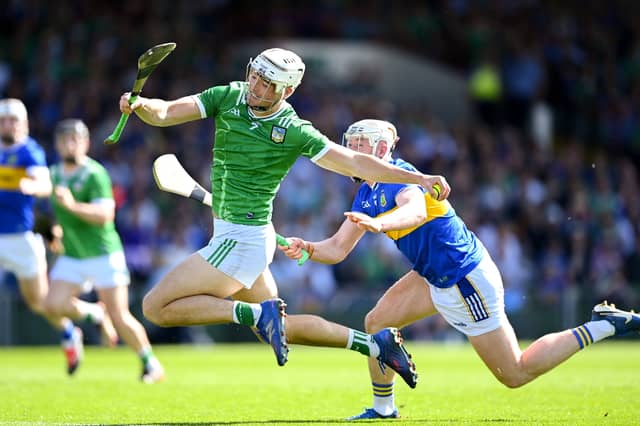

Cause of such a collapse will be the stuff of much speculation in the months ahead
How the mighty have fallen! Our hurling landscape has undergone dramatic change, with Kilkenny and Tipperary gone from contention before May is out. A new order sees Dublin and Offaly emerge in Leinster; Cork and Limerick hold sway in Munster.
Let’s not overplay events and call it epochal but it is nonetheless a significant moment in time, where the balance of power has shifted. Kilkenny’s presence in the latter stages of the championship has for so long been regarded as inevitable – just like death and taxes. Their demise now, perhaps, takes some of the spotlight from our own eclipse.
Tipperary’s exit, of course, was known before Sunday but the extent of the fall was given added emphasis at the Gaelic Grounds. A five-goal blast laid waste to our (albeit slim) hopes of some salvation. It’s an awkward place for all concerned.
We had hoped for some show of defiance against Limerick, somewhat like the last sting of a dying wasp. Alas, it wasn’t to be. Limerick carried too much clinical efficiency for that. Instead, we had to endure another heavy hit leaving us propping up the base of the table, inferior even to Waterford. It’s 2024 in reprise.
When morale is low the worst possible scenario is to concede early scores. Mere seconds after the throw-in Aaron Gillane flashed one past Rhys Shelly. We were caught cold, as Ronan Maher stood off the forward in the lead-up.
Seven minutes later Bryan O’Mara was excellent in denying Gillane another shot at goal but the ball spilled out for a ‘65’. Aidan O’Connor undercooked the shot and it dropped short. Distracted, perhaps, by Gillane’s presence, Shelly let the ball through his hands. These were two heavy blows that confirmed our pre-match expectations of a difficult day Shannonside.
And yet, for the remainder of the first half the team showed resistance. Robert Doyle moved onto Gillane, Oisín O’Donoghue was half back and there was no further goal spillage. We even began to out-point Limerick, albeit it was very pedestrian fare. Darragh McCarthy was faultless on the frees, Conor Stakelum and Stefan Tobin landed a pair each from play and there were only four points between the sides at the break.
But goals have a value far in excess of their nominal three points. They deflate one side and inflate the other. Two minutes after the restart Limerick prised open our defence once more. Kyle Hayes was through on goal and the chasing Eoghan Connolly pulled him down. A black card and a penalty – rammed home by Diarmaid Byrnes – effectively ended this contest. Thereafter all faint hopes were gone, the end margin the only issue now.
The suffering continued. Aidan O’Connor had the fourth goal and Gillane the fifth. Both were similar in execution with the attacker winning possession in front, wrong-footing his marker and easily beating Shelly, who hadn’t a save all day.
It was a rout. A 17-point deficit equals our worst-ever result against Limerick, matching that of far-off 1947, I’m told. It’s the wrong aspect of history to be emulating.
I have sympathy for the players. This was a nothing game where they couldn’t win and were always likely to ship punishment. Playing for pride is all very fine but when you leak five goals it’s hard to convince yourself. The team was at nothing in a game like this.
I always felt that so many stars aligned for us last year and it was going to be difficult to replicate the same pattern in 2026. However, it’s the extent of the fall that hurts most. Finishing bottom of the table on a score difference of minus-32 shouldn’t happen to reigning champions.
The cause of such a collapse will be the stuff of much speculation in the months ahead. A post-All-Ireland hangover, late getting back to training, second-season syndrome, a poor league, even untimely injuries will all be touted as underlying reasons. The truth may be none of these or perhaps an element of all. At this level a small dip in standards can magnify into a huge drop in competitiveness. For whatever reason we were never at the required pitch in 2026.
Kilkenny too will agonise over their predicament but from a different perspective. Their demise – no All-Ireland now in 11 years – has been signposted for some time. A succession of fallow years at underage takes its toll eventually. The loss of key players this year, whether through travel or injury, has certainly hastened their demise.
Their underage structures will obviously come under the spotlight too, especially with Under 20s and minors losing Leinster finals this season. Perhaps there’s a cyclical element too where the conveyor belt runs dry of talent.
Both counties, I suspect, will face a shake-up of some sort in the months ahead. Liam Cahill has another year of his term to complete where his known ability to turn matters around will be fully tested. Derek Lyng may not get such a chance.
Retirements too will be expected in both camps. There was that lingering sense in the Gaelic Grounds that a few Tipperary players may not feature again. Ditto for Kilkenny where a player like TJ Reid will surely step aside as he approaches his 39th birthday. He’s been an all-time great.
For others the landscape is brighter. Offaly’s graph has been rising on the back of encouraging underage progress. Qualifying for the knockouts is a major step on the upward trajectory - and great to see.
Ditto for Dublin, who’ve shown potential in recent years, though it was often a case of one-step forward and two back. Last year was typical, ousting Limerick and then collapsing against Cork. They have a real chance now of franking their progress in the Leinster final against an erratic Galway.
Elsewhere Cork and Limerick have established their Munster superiority in emphatic terms. Clare’s 16-point defeat to Cork was in the same territory as Tipperary’s loss to Limerick. Some are inclined to rationalise Clare’s display on the basis of what was at stake. I’m not so sure.
Finally, it is entirely fitting that the column would this week mark the passing of Libby Howard. She was county PRO from 1980 until 2003, a term that was broken only once when Gerry Long briefly unseated her in 1983. The jousts between the pair were a feature of County Conventions in the early 1980s.
Ultimately, Libby had the better of the competition with her Knockshegowna opponent and went on to serve over two decades in the post.
Unfortunately, Libby’s exit from the position was messy. Initially, she resigned in early 2003 in a protest over the chairmanship of a committee to honour the Tipperary teams of 1958 to 1965. Subsequently, she changed her mind but the nomination process had begun, so she had to contest an election where she was defeated by Ed Donnelly. They actually tied in the ballot before County Chairman, Donal Shanahan, gave his casting vote to the Moycarkey man.
Always colourful and with strong opinions, Libby ruffled feathers on occasions. She had her issues with this column, once demanding of a former editor that I never mention her name in future. I was made aware of the complaint but given no instruction regarding the column’s content. No matter, we remained on talking terms, agreeing to differ.
Libby has rightly been described as a trailblazer in her role as the first female pundit on ‘The Sunday Game’ programme. She remained prominent in her post-PRO years, serving as President of the Camogie Association and staying active on social media to the very end.
She was, above all else, a very passionate Tipperary woman, forever true to the cause. That was evident in her attendance at Semple Stadium as recently as April 19 for the Cork championship game, despite failing health.
She may have once sought the exclusion of her name from this column but I hope she won’t mind its inclusion this time. She did the (Tipperary) state some service and deserves recognition for her many roles in the sporting and cultural life of the country. May she rest in peace.