

Specialist hired to help improve water quality in Tipperary's rivers

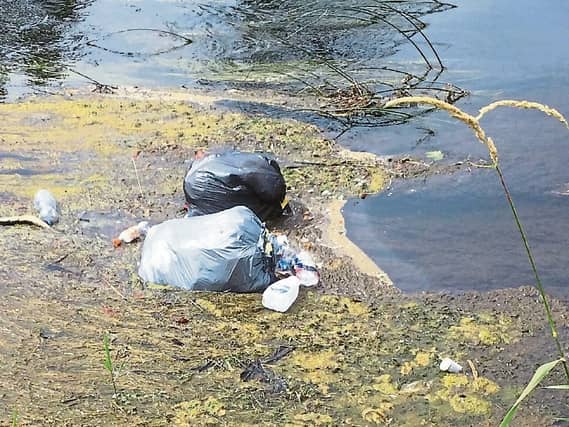

Teagasc has appointed six catchment co-ordinators to tackle river hygiene across Ireland
As part of the 'Better Farming for Water' campaign, Teagasc has appointed 6 Catchment co-ordinators to lead a multi actor approach to improve water quality in 8 of Ireland’s most important rivers, including two in Tipperary.
The Catchment Co-ordinators will work in each of the selected catchments, and co-ordinate the efforts of all relevant stakeholders to put in place a comprehensive plan to improve water quality.
Stakeholders include farmers, Teagasc, private agricultural consultants, industry representatives, the Local Authority Waters Programme (LAWPRO), local authorities, Department of Agriculture, Food and the Marine (DAFM), Department of Housing, Local Government and Heritage (DHLGH) and community groups.
The 6 Teagasc Catchment Co-ordinators and catchments are:
Fiona Doolan – Boyne
Philip Murphy – Blackwater
Claire Mooney – Suir
Neilus Nunan – Slaney
Oisín Coakley – Lee and Bandon
Ciaran Sheelan – Nore and Barrow
Noel Meehan, Head of the Teagasc Water Quality Knowledge Transfer Department said; "I look forward to working with the 6 Catchment Co-ordinators in what is a very important role under the Teagasc Better Farming for Water Campaign."
He added: "To succeed in improving water quality in the 8 selected catchments, all stakeholders will be required to play their part in a collective effort of planning and actions. Key to realising improvements is the careful targeting of the right measure in the right place alongside high levels of implementation at farm level.
We have a great opportunity to use the Better Farming for Water campaign to support farmers in the implementation of water protection measures and to have a period of sustained water quality improvement."
The Teagasc Better Farming for Water campaign focuses on 8-Actions for Change:
Reduce purchased nitrogen (N) and phosphorus (P) surplus per hectare.
Ensure soil fertility is optimal for lime, phosphorus and potassium.
Ensure application of fertiliser and organic manure at appropriate times and conditions.
Have sufficient slurry and soiled water storage capacity.
Manage and minimise nutrient loss from farmyards and roadways.
Fence off watercourses to prevent bovine access.
Promote targeted use of mitigation actions such as riparian margins, buffer strips and sediment traps to mitigate nutrient and sediment loss to water.
Maintain over-winter green cover to reduce nutrient leaching from tillage soils.