

Court hears appeal over super junior ministers attending Cabinet meetings
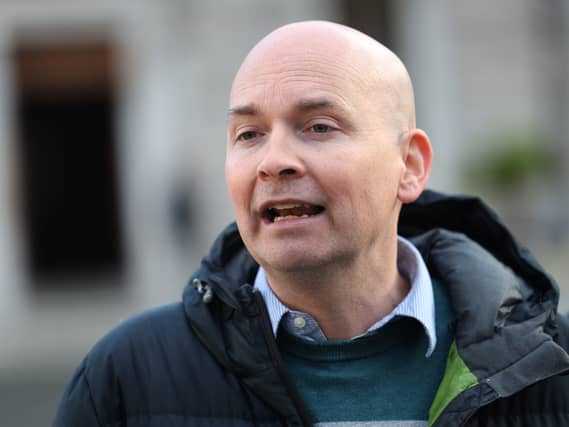

Sinn Féin Kerry TD Pa Daly and People Before Profit Dublin TD Paul Murphy have said that only government ministers can attend the meetings.
It is unconstitutional to reach a government decision with individuals who have “no entitlement” to be part of the decision making process, the Supreme Court has heard.
The court has begun hearing an appeal over super junior ministers attending Cabinet meetings and being part of government decisions.
Sinn Féin Kerry TD Pa Daly and People Before Profit Dublin TD Paul Murphy have said that only government ministers can attend the meetings.
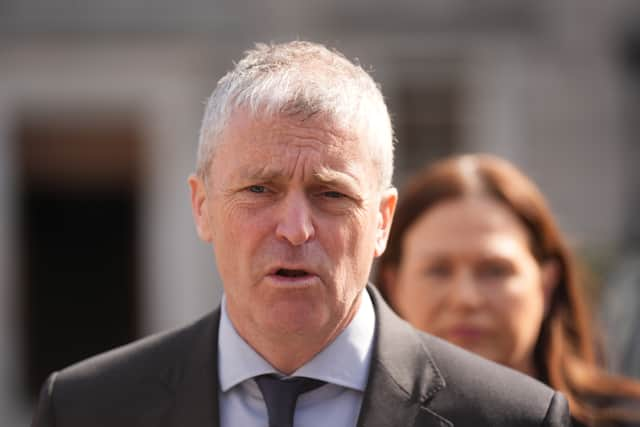
Mr Murphy has argued that the attendance of super junior ministers at Cabinet was inconsistent with the Constitution, which says the government “shall consist of not less than seven and not more than 15 members”.
He also argued that four super junior ministers had attended Áras an Uachtaráin with the 15 senior ministers who received their seal of office from the president.
Mr Daly had challenged the Government’s appointment of super junior ministers on the basis that it caused issues for Cabinet confidentiality, as well as an issue of expenses and allowances paid.
In December last year, President of the High Court Mr Justice David Barniville said he and his two colleagues had rejected the arguments made by Mr Daly and Mr Murphy “in their entirety”.
On Wednesday, Feichín McDonagh SC, barrister for Mr Daly, said that super junior ministers can attend Cabinet meetings through invitation by the taosieach of the day on a “regular basis”.
However, he said there appears to be “continuing ambiguity” over the legal basis of their attendance at Cabinet meetings.
Mr McDonagh said the taoiseach has a right to invite a super junior minister to attend a meeting, but they do not have a legal right to challenge any decision to uninvite them.
He also said that the taoiseach can invite any individual to attend Cabinet meetings, whether that is businessmen, or chief of staff of the army, in an advisory capacity – but that they do not take part in the government’s decisions.
Mr McDonagh said there was a “crucial distinction” between inviting someone to cabinet to brief members of government on issues in which they are expert, and then allowing them to stay to reach a consensus on those matters.
He added: “There is no half way house here for the respondent.
“Their obligation is to take a decision with each other and not to allow others to come in to the room and take part in the decision.
“The legal test is clear – they can have as much discussion as you want in Leinster House, or outside Leinster House or in your constituency, but the only people who take part in that decision is the 15 people.”
He said the evidence shows that government decisions are being made by the 15 ministers and four super junior ministers.
“That is the a major issue of the case that the respondents have no real answer for,” he added.
“I am not suggesting the four are wagging the tail of the 15. The consensus of the 19 is not necessarily the consensus of the 15.”
Mr McDonagh was asked by several Supreme Court judges about the difference between government discussions, in which the super junior ministers are permitted to attend, and government decisions.
“If the four or whichever number it is, is around the table and the objective is to reach a consensus, that is not the Government decision making of the Constitution’s government of 15, it is the government along with four or 10 or whatever number, which then purports to be a decision of the Government under the constitution.
“It is unconstitutional to reach a government decision which is intended to be the consensus of 15, but it is also others who have no entitlement to have involve themselves in the decision making.”
Turning to Cabinet confidentiality issues, he said the government ministers should be allowed to make decisions that may have gone against previous promises, whether those were made to super junior ministers or someone else.
Speaking outside court, Mr Murphy said: “If the Supreme Court rules in our favour that it is unconstitutional to have super juniors, then I think there’s going to be a challenge to the Government, where the Government will have to stop the practice of bringing super juniors into the Government.”
Mr Daly also said: “This case is about constitutional accountability. No Government is above the Constitution, and political convenience is no excuse for bending the rules.
“The Supreme Court must now determine whether this practice is lawful, and we await the decision of the court.”