

COLUMN: Here are your food allergies explained - all you need to know!

In this week's Nationalist
With it being Food Allergy Awareness Week this week, it’s a good time to cover the important topic of food allergies. Whether you or a loved one are affected, or you are preparing food for someone with an allergy, hopefully this will provide you with some valuable knowledge and tips.
This week nutritionist Laurann O’Reilly and owner of Nutrition By Laurann explains what an allergy is, the different types, signs and symptoms as well as some of the things that you can do to protect you and your loved ones.
What Is An Allergy?
“An allergy occurs when the body's immune system over-reacts to an otherwise harmless substance by mistakenly labelling it as a threat and triggering an immune response against it. These substances are termed allergens and may trigger symptoms through ingestion, inhalation or direct contact with the skin.” (Allergy Ireland)
How Common Are Allergies?
“Allergies are very common and they affect more than 1 in 4 people in Europe at some point in their lives” with them being “particularly common in children” as well as some allergies improving as a child gets older. (HSE)
What Are The Different Types of Allergies?
Common Non-Food Allergies
Hay Fever – An allergy to grass and tree pollen and is also known as allergic rhinitis
Dust Mites
Animals
Insect Bites and Stings
Certain medicines
Latex – Used to make some gloves and condoms
Mould – These can release small particles into the air that you can breathe in
Household Chemicals – for example washing detergents
Skincare Products – such as make up, creams/lotions and hair dyes
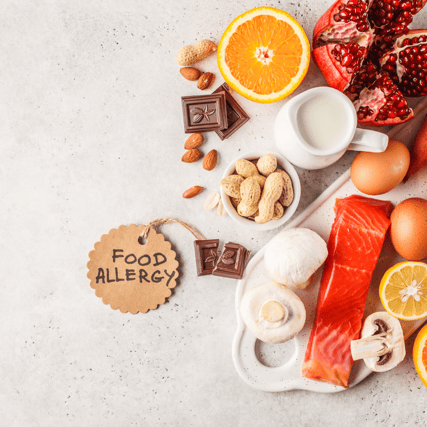
Food Allergies: A food allergy occurs when the body’s immune system sees a wrongly certain food as harmful and reacts by triggering an allergic reaction.
The 14 Allergens
Cereals Containing Gluten - wheat (such as spelt and khorasan wheat), rye, barley, oats. It’s important to note that, the cereal name for example 'wheat', must be declared and highlighted, not just the word 'gluten'
Crustaceans - for example crabs, prawns, lobsters
Eggs
Fish
Peanuts
Soybeans
Milk
Nuts (almonds, hazelnuts, walnuts, cashews, pecan nuts, brazil nuts, pistachio nuts, macademia nut). Also note that the name of the nut, for example 'almond', must be declared and highlighted, not just the word 'nuts'
Celery
Mustard
Sesame Seeds
Sulphur Dioxide and sulphites – used as a preservative
Lupin
Molluscs – for example mussels, oysters, squid, snails.
What Are Some Allergy Symptoms?
Milder Symptoms
Sneezing
A runny or blocked nose
Red/Itchy/Watery/Puffy eyes
Wheezing and Coughing
A Red and Itchy Rash
Worsening of asthma or eczema symptoms
Severe Symptoms
Most allergic reactions are mild. Occasionally a severe reaction called anaphylaxis or anaphylactic shock can happen. This is a medical emergency and needs urgent treatment. (HSE), these include
Diarrhoea
Nausea and Vomiting
Hives, Eczema, or Itchy Skin
A sudden feeling of weakness (caused by a drop in blood pressure)
Swelling or Tingling Lips/Tongue/Throat (Oral Allergy Syndrome, SafeFood)
Anaphylaxis or ‘Anaphylactic Shock’ – This is a severe allergic reaction that can be life-threatening. Even eating a very small amount of the food or particles of the food can potentially trigger this type of allergic reaction.
What is cross-reactivity?
“Sometimes a food allergen can be very similar to another allergen in a food or other material. If a person is allergic to one type of food, then they might also react to other types of food as well” for example
People who are allergic to birch pollen are sometimes also allergic to apples, almonds, peaches, kiwi, carrots, celery, peppers and hazelnuts.
Cross-reactivity with melons, tomatoes and oranges has been recorded in people who are allergic to grass pollen. (SafeFood)
- The Risk Factors For Developing A Food Allergy: There are various risk factors for developing a food allergy and these include:
1. Age: Food allergy is more common in young children than in older children or adults.
2. Family History: You’re more likely to have a food allergy if your parent or sibling has one.
3. Having An Existing Food Allergy: If you have a food allergy, you’re at greater risk for developing another.
4. Related Medical Conditions: Your risk is increased if you have an allergic disease such as asthma, eczema, or hay fever.
How To Stay Safe:
Establish if you have a food allergy as you may have a food intolerance or food sensitivity which isn’t as serious but it’s important to rule out a possible allergy first
1. It can help to research a restaurant’s menu prior to eating out.
2. Notify your child’s school if they have an allergy so they can be extra cautious
3. Prepare your own snacks in advance to ensure you have safe food options with you at all times
4. Ensure all work surfaces are cleaned and disinfected
5. Where possible avoid having the allergic food in your home or work (such as for nut allergies, having)
6. In Ireland, you can sign up to the Food Safety Authority of Ireland (FSAI) allergen alerts to stay informed of withdrawals or recalls (SafeFood)
https://www.fsai.ie/news_ centre/food_allergy_alert_ notification.html
- Food Allergies & Shopping: Whilst food shopping and having food allergies may seem daunting at first, rest assured that it is possible to shop safely and easily. The key to this is understanding how to read food labels. Thankfully the European Food Safety Authority (EFSA) and the Food Safety Authority of Ireland (FSAI), have very strict labelling requirements when it comes to listing the food allergens in Europe, which clearly have to be listed in bold in the ingredient listing.
Tip: You can access the ingredient listing of on supermarket websites that do online grocery shopping such as Dunnes/Tesco/Supervalu, this can be quite helpful if you are unsure if a product is safe and takes away the challenge of reading the tiny writing on the back of the labels instore (which you often need laser vision for).
- Eating Out With An Allergy: Again, you can research the restaurant’s menu in advance, however restaurants are now required by law (thanks again to the FSAI) to list the allergens on their menu, which is often done by a symbol or coding system for example 1=Gluten. Please request the menu allergy folder should you require it.
- Where Can One Get Tested For An Allergy? Your GP can help find out if you have an allergy. They may then refer you to an allergy specialist for testing and treatment if your allergy is severe or the cause is not known.
What To Do If You Think You Have An Allergy – Contact your GP if you think you or your loved one might have an allergy. If you have a mild allergy, they may offer advice and treatment to help manage the condition or again they may refer you to a specialist if required. It’s important to “never attempt any allergen test by yourself or self-diagnose as many of the symptoms associated with a food allergy or intolerance are common to other illnesses and you may misdiagnose” (SafeFood).