

Reasons to eat the rainbow...have you heard of the fruit and vegetable colour wheel?


Laurann O'Reilly writing in this week's Nationalist
We’ve always been told to eat our fruit and veggies, whilst most of us know they’re great for our health, did you know that there’s a deeper meaning behind their vibrant colours.
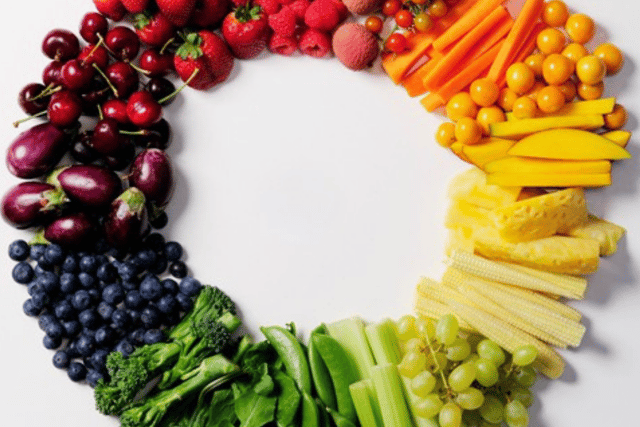
What is the Fruit & Vegetable Colour Wheel?
- Each different-colored fruit and vegetable contains unique health components that are essential to our health. So, the wider the variety of these different colours that we consume, the wider the spectrum of nutrients we get for our body.
Red Fruit & Vegetables
Contain lycopene, ellagic acid, quercetin, and hesperidin.
The Benefits: These nutrients lower blood pressure, reduce LDL (bad) cholesterol levels, scavenge harmful free-radicals (disease causing compounds) and support joint tissue.
Sources: Tomatoes, cherries, radishes, strawberries, raspberries, red pepper, baked beans, kidney beans, red lentils, cranberries, red grapes, chilli pepper
Orange/Yellow Fruit & Vegetables
Contain Beta-carotene, zeaxanthin, flavonoids, lycopene, potassium, & vitamin C
The Benefits: These nutrients help prevent sight loss, reduce cholesterol & blood pressure, promote collagen formation, healthy joints, improve immune function & balance magnesium & calcium
Sources: Oranges, carrots, lemon, peach, apricots, peach, melon, mandarins, squash/pumpkin, sweet potatoes, sweet corn, yellow peppers
Green Fruit & Vegetables
Contain chlorophyll, fibre, lutein, zeaxanthin, calcium, folate, vitamin C, calcium & Beta-carotene
The Benefits: These nutrients help to reduce cancer risk, lower blood pressure & LDL (bad) cholesterol levels, improve digestion, support eye health and vision, fight free-radicals (disease causing compounds) and boost the immune system.
Sources: Asparagus, kale & cabbage, kiwi, broccoli, sprouts, green beans, spinach, peas, watercress, rocket, gooseberries, green herbs
Blue/Purple Fruit & Vegetables
Contain lutein, zeaxanthin, resveratrol, vitamin C, fibre, flavonoids, ellagic acid & quercetin
The Benefits: These nutrients support eye health, lower LDL (bad) cholesterol, boost the immune system, support healthy digestion, improve calcium & other mineral absorption and help to fight inflammation.
Sources: Aubergine, beetroot, blackberries, blueberries, blackcurrants, plums/prunes, pomegranate, purple grapes, purple cabbage, red onion, raisons
White Fruit & Vegetables
Contain Beta-glucans, Epigallocatechin gallate (EGCG) & lignans
The Benefits: These nutrients provide powerful immune boosting activity and balance hormone levels
Sources: Apples, cauliflower, mushrooms, onions, bananas, garlic, chickpeas, butter beans, lentils, parsnips, turnip, pears
Reach for the rainbow
The recommendation is to aim for a minimum of 5 portions of fruit and vegetables per day, here are some handy tips to help you -
1) Know Your Portion sizes: We may need to aim for our 5 portions but how much is a portion?
Here is a Food Portion Guide by SafeFood
- 1 Medium Sized Fruit: Apple, orange, pear or banana
- 2 Small Fruits: Plums, kiwis or mandarin oranges
- Small Fruits: 6 strawberries, 10 grapes or 16 raspberries
- 150ml unsweetened fruit juice
- ½ Cup Cooked Vegetables: Fresh or frozen
- 1 Bowl of Salad: Lettuce, tomato, cucumber
- 1 Bowl of Vegetable Soup: Ideally homemade or good quality shop bought
2) ‘Every Meal is an Opportunity To Nourish’: It can help to look at each meal from breakfast, snacks, lunch and dinner and ask yourself, “what can I do to make this meal more nourishing?”. Try to have a minimum of 2 portions of fruit or vegetables with your main meals and at least one portion in your snacks
3) Choose Fruit & Vegetable Snacks: Speaking of snacks, having some chopped vegetables, pre-prepared fruits and berries in the fridge can be the perfect addition to yogurts or with some reduced fat hummus.
4) Colourful Shopping Trolley: Plan your shopping carefully so you can see the variety of colour in your trolley. Keep in mind the colours red, orange, yellow, green, blue, purple and white!
5) Veg Out: Even when eating out we also have the opportunity to squeeze in the veggies by asking for vegetables or salads over chips.
6) Shop local: Your local fruit and vegetable shop or farmers market are usually great sources of fresh produce. It’s great to support local too.
7) Try something new: Why not try some new fruit and vegetables that you’ve never eaten before or that you don’t commonly buy. Not only does this open up your senses to new tastes and recipes but can widen your spectrum of nutrients.
8) Frozen Foods Count Too: Whilst it is ideal to eat fresh in season produce, frozen fruits and vegetables frozen postharvest are just as nutritious and can be versatile in meals and juices. They also help to reduce food waste too.
The Ultimate Rainbow Recipe
Mixed Vegetable Casserole
Ingredients
1 White onion, diced
2 Medium courgette
4 Roma tomatoes
1-2 Long sweet potatoes (golden/purple)
1 Tin (400g) Chopped tomatoes
2-3 Garlic cloves, roughly chopped
2 Teaspoons Low sodium salt
2 Teaspoons dried thyme or 6-8 thyme sprigs, removed from stalks
60ml (1/4 cup) Extra virgin olive oil
¼ Cup of parsley for garnishing
Directions
1) Preheat your oven to 200°Celcius
2) Heat a tablespoon of olive oil in a lidded pan, add diced onion, put the lid on and reduce the heat and leave to cook for 5-6 minutes
3) Meanwhile, cut vegetables into 3mm thick slices using a sharp knife
4) To the cooked onions, add the tin of tomatoes, the garlic, 1 teaspoon of salt, half the thyme and leave your sauce to simmer for 10 minutes
5) Once the sauce has thickened and reduced, let it cool slightly. if it’s still quite thick, give it a quick pulse of an immersion (hand-held) blender
6) Pour your sauce into the base of the baking dish
7) Arrange vegetables around the baking dish to form a spiral if a circular dish, or in lines if a rectangular dish, alternating between the vegetable colours to form your rainbow.
8) Drizzle with the remaining the olive oil, salt and thyme
9) Bake for 40-45 minutes until the vegetables are slightly golden and softened
10) To add a little protein, top with cheese and serve with cooked salmon darnes/chicken breasts
About Laurann: Laurann O’Reilly is a qualified and experienced nutritionist with a BSc. Degree in Human Nutrition from University of Nottingham and a Master’s in Public Health Nutrition from University College Dublin. She has over 10 years of experience including working community and clinical care, research, personalised nutrition consultations (dealing in healthy eating, weight loss, digestive health and sports nutrition), teaching and developing nutrition courses at FETEC level, nutrition education talks and workshops (corporate wellness, schools, sports teams, public and private talks), previous food manager of the Coeliac Society of Ireland and is part of the roll out team for the Healthy Ireland Smart Start health promotion programme for pre-schools.
For further information see www.nutritionbylaurann.ie or contact Laurann at [email protected]