Search


04 Apr 2026
Search
04 Apr 2026

Please allow ads as they help fund our trusted local news content.
Kindly add us to your ad blocker whitelist.
If you want further access to Ireland's best local journalism, consider contributing and/or subscribing to our free daily Newsletter .
Support our mission and join our community now.
To continue reading this article, you can subscribe for as little as €0.50 per week which will also give you access to all of our premium content and archived articles!
Alternatively, you can pay €0.50 per article, capped at €1 per day.
Thank you for supporting Ireland's best local journalism!

CREDIT: RTÉ Investigates

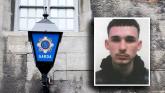
A Roscrea man who survived a fatal road crash as a teenager has now spent almost five years in uninterrupted seclusion in prison and secure psychiatric facilities, a situation that has been repeatedly raised in the Dáil by Tipperary TD Alan Kelly.
The case of Stephen Loughnane, 28, was again highlighted this week by Deputy Kelly ahead of the broadcast of RTÉ Investigates’ documentary The Psychiatric Care Scandal, which examines shortcomings in Ireland’s secure mental health system.
Deputy Kelly told the Dáil that he had spoken to Mr Loughnane’s mother, Jacinta Graham, earlier that day and said her son has been held in continuous 24-hour seclusion since 2021 due to the absence of a suitable residential placement.
“He is in uninterrupted 24-hour seclusion,” Deputy Kelly said, as he asked what action the Government has taken to address the lack of appropriate residential and secure mental health facilities for people in similar circumstances.
The Tipperary TD first raised Mr Loughnane’s case in 2021, quoting former Tipperary judge Elizabeth McGrath in describing the shortage of secure mental health places as a “scandal”.
At that time, he told the Dáil that Mr Loughnane had spent four and a half months in prison because the State was unable to secure a place for him in a suitable mental health unit, as neither the Central Mental Hospital in Dundrum nor other appropriate facilities could take him.
Deputy Kelly also said there was widespread concern locally about the lack of appropriate placement options.
“People are worried about this young man because of his situation, what he might do to himself or potentially to other people,” he said. “This is a real and serious issue. We do not have enough secure places.”
Originally from Roscrea, Mr Loughnane suffered a brain injury at the age of 16 when he was the surviving passenger in a fatal car crash. The injury led to significant psychiatric symptoms, including psychosis, hallucinations and violent outbursts.
Following an incident in 2021 in which he attacked his mother, he was remanded to Limerick Prison. According to RTÉ Investigates, he was placed in continuous seclusion there before being transferred to the old Central Mental Hospital in Dundrum and later to the new Central Mental Hospital in Portrane in November 2022. He has remained in uninterrupted seclusion across all three settings.
READ NEXT: Tipperary community share relief as biomethane plant refused planning permission
Speaking to RTÉ, his mother described the conditions under which she visits her son.
“It’s like going to visit Hannibal Lecter in the movie Silence of the Lambs, behind a screen with the glass and talking through a speaker. That’s the only way I can describe it. And absolutely nothing in the room,” she said.
“It’s heartbreaking to think of him like it. Absolutely dreadful.”
Seclusion is a strictly regulated practice intended to prevent a person who poses a threat to themselves or others from leaving a room. In the Central Mental Hospital, it involves confinement in a sparsely furnished room with controlled access to an outdoor area and limited interaction with staff.
The RTÉ investigation reported that Mr Loughnane’s initial detention in prison while awaiting transfer to hospital exposed what legal experts described as a serious gap in oversight, as prisons fall outside the remit of the Mental Health Commission.
The programme also highlighted wider capacity issues within the system. It reported that 50 beds at the new Central Mental Hospital remain unused more than three years after it opened, while dozens of people are on a waiting list and remain in prison settings.
In a statement to RTÉ Investigates, the HSE said it would not comment on individual cases but said the use of restrictive practices in Irish mental health centres has fallen to a record low following the introduction of new human rights based rules. However, figures cited in the programme show that the use of seclusion in Portrane has increased in the past year.
For Deputy Kelly and Mr Loughnane’s family, however, the issue remains immediate and personal. The Roscrea man’s case continues to be cited in the Dáil as an example of what critics argue is a failure to provide appropriate secure and residential mental health placements, both for vulnerable patients and for the communities to which they belong.

Subscribe or register today to discover more from DonegalLive.ie
Buy the e-paper of the Donegal Democrat, Donegal People's Press, Donegal Post and Inish Times here for instant access to Donegal's premier news titles.
Keep up with the latest news from Donegal with our daily newsletter featuring the most important stories of the day delivered to your inbox every evening at 5pm.

This publication supports the work of the Press Council of Ireland and Office of the Press Ombudsman, and our staff operate within the Code of Practice of the Press Council. You can obtain a copy of the Code, or contact the Council, at www.presscouncil.ie, Lo-call 1800 208 080 or email: info@presscouncil.ie.