Search


04 Apr 2026
Search
04 Apr 2026

Please allow ads as they help fund our trusted local news content.
Kindly add us to your ad blocker whitelist.
If you want further access to Ireland's best local journalism, consider contributing and/or subscribing to our free daily Newsletter .
Support our mission and join our community now.
To continue reading this article, you can subscribe for as little as €0.50 per week which will also give you access to all of our premium content and archived articles!
Alternatively, you can pay €0.50 per article, capped at €1 per day.
Thank you for supporting Ireland's best local journalism!

The demountable defences protecting the quays in Flonmel lfrom flooding,Picture John D Kelly i

The incessant rainfall bombarding the country no longer generates fear among the homeowners and business owners of Clonmel given the level of protection given by the flood relief scheme which was completed in 2012.
Fortunately, Clonmel no longer makes the RTE headlines for flooding events because of the flood relief scheme and the dedicated team involved in the operation of that scheme which protects the town.
READ MORE: Search is on to find the best band in Tipperary
Instead, other towns located all over the country have taken Clonmel’s place in the headlines as beleaguered flooding victims cry out for schemes like Clonmel and Kilkenny; that have proved to be such a huge success.
The memories of the devastating flooding to hit Clonmel in 1995, 1996, 1997, 2000, 2004, 2008 and twice in 2009 will forever haunt victims of the flooding but the town and its people are now thankfully spared that trauma. (See below John D Kelly pictures).
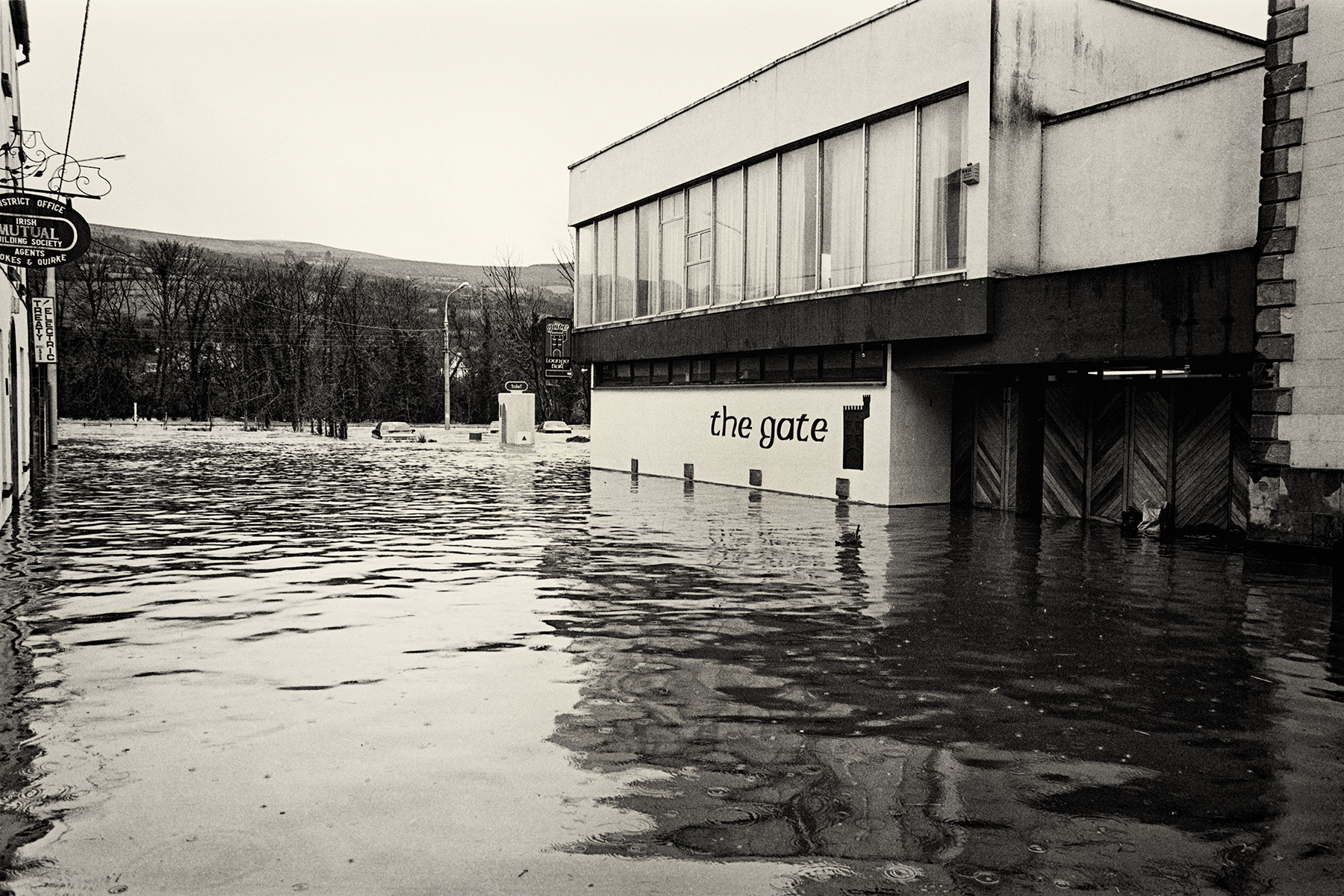


The sophisticated flood relief scheme cost in excess of €40 million.
An elaborate system of demountable defences, embankments, water tight retaining walls, non return valves, pumps, trash greens, pen stocks, warning barriers and generators have done their job. That flood relief system designed by the OPW, requires all-year round maintenance, vigilant monitoring of the scheme, inspections, staff meetings, constant communication with all the agencies involved and continuous training of staff ensures the town is no longer submerged in water.
Maintenance checks are carried out on a monthly basis by the local authority staff and contracted workers.
Quarterly meetings are held with the OPW concerning the management of the system. There are four practice runs done every year to test the system including how to operate the system in the event of a power failure through the use of generators. “It is an ongoing process involving engineering, technical and administration elements of the staff,” said Carol Creighton District Administrator of Clonmel Borough Council.
Internal staff meetings concerning the flooding system and the operation of it were ongoing all-year around and training of staff was carried out on a regular basis said the District Administrator. “Once a year a meeting is held of all of the agencies involved to remind everyone of their roles,” said Carol Creighton.
This would include Clonmel Borough Council staff, OPW, gardaí, ambulance service, fire services, Waterford County Council and HSE staff who would be involved in the event of an evacuation that would be necessary.
The demountable barriers are the most visible element of the scheme.
They are located at a total of 25 locations and the installation procedure is divided into three different emergency levels based on predicated river levels and further divided into the appropriate priority defence element sequence.
There are nine locations at the Level 1 (green) response, ten locations at the Level 2 response (yellow) and seven locations at the Level 3 response (red).
These defences are erected in stages depending on the water levels and the predicted rainfall.
“It takes about eight hours, involving up to fourteen staff, to erect the demountable defences from the car park at the Gashouse Bridge to Joyce’s Lane,” said Adam Coffey, Executive Engineer.
Adam Coffey explained that the system, by design, allowed for flooding to take place in a controlled manner at a section of the Convent Road, in an area beside the glass bridge in the Old Bridge when the panels are dropped to allow a flow of water and flooding was also allowed take place in Denis Bourke Park.
Such intentional flooding, at specific locations, was part of the design of the scheme, he said.
James Murray, Senior Executive Engineer said every action was a calculated one in response to data on loggers located in the Suir catchment area and meteorological information.
READ NEXT: Memory Cafe will open once a month at a Tipperary venue
“It is not an emergency action, it is a response to detailed information gathered up to thirty miles away and that information dictates when action is taken and what action is taken in Clonmel,” he said.
Michelle Alyward, Chief Executive of Tipperary Chamber of Commerce, said flooding over so many years had affected confidence, investment and jobs across the town.
“Today, businesses remain open because long-term flood relief is in place and being actively managed.
“The flood relief scheme, together with the ongoing work of Tipperary County Council, has delivered real economic resilience for Clonmel,” she said.

Subscribe or register today to discover more from DonegalLive.ie
Buy the e-paper of the Donegal Democrat, Donegal People's Press, Donegal Post and Inish Times here for instant access to Donegal's premier news titles.
Keep up with the latest news from Donegal with our daily newsletter featuring the most important stories of the day delivered to your inbox every evening at 5pm.

This publication supports the work of the Press Council of Ireland and Office of the Press Ombudsman, and our staff operate within the Code of Practice of the Press Council. You can obtain a copy of the Code, or contact the Council, at www.presscouncil.ie, Lo-call 1800 208 080 or email: info@presscouncil.ie.