Search


21 Jan 2026
Search
21 Jan 2026

Please allow ads as they help fund our trusted local news content.
Kindly add us to your ad blocker whitelist.
If you want further access to Ireland's best local journalism, consider contributing and/or subscribing to our free daily Newsletter .
Support our mission and join our community now.
To continue reading this article, you can subscribe for as little as €0.50 per week which will also give you access to all of our premium content and archived articles!
Alternatively, you can pay €0.50 per article, capped at €1 per day.
Thank you for supporting Ireland's best local journalism!

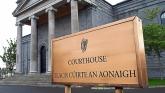
Court of Appeal, Dublin

A cattle farmer who imported almost three-quarters of a million euros of cannabis into the State has argued that his solicitor failed to recognise the importance of garda evidence that he claims should not have been given to the jury in his trial.
Defence barristers claim that evidence introduced by the prosecution suggested to the jury from the very start of the trial that Martin Murray (60) was the target of a garda operation.
READ NEXT: LIVE: Emergency services rush to scene in Tipperary through local farmland
However, State barristers submitted to the Court of Appeal that this evidence was introduced during the trial by agreement with Murray’s solicitor, who ran the case without any attending barristers.
The trial in 2023 heard that Murray, of Crumlin Little, Moneygall, Birr, county Offaly, was stopped driving on the M7 on June 30, 2017.
The truck he was driving was brought to Dublin Port, where holes were drilled into steel rollers and a camera inserted, revealing 73 packages of cannabis with a value of €730,000. A vacuum-packed bag containing €6,000 in cash was also found.
Analysis of sat-nav and tachograph equipment revealed the truck had travelled from Moneygall to Rosslare and across to Breda in the Netherlands via the UK, before returning to Ireland through England and Scotland.
Murray, who owns a dairy farm in Moneygall on the Offaly-Tipperary border, claimed he didn’t know the drugs were onboard and pleaded not guilty when he appeared before Tullamore Circuit Court.
A jury did not accept his defence and found him guilty of the importation of a controlled drug in excess of €13,000 and having drugs for sale or supply.
READ NEXT: RIP: 'A lovely man,' tributes pour in as popular Tipperary priest passes away
In December 2023, Murray was sentenced by Judge Keenan Johnson to ten years in prison, with the final two years suspended.
In launching an appeal against this conviction last June, defence barristers said that State prosecutors should not have included in their opening speech a reference to the gardaí confirming that they knew there would be drugs in the truck driven by Murray, who was identified as the target of the garda operation.
Barristers for the State, however, said that Murray’s solicitor gave permission for this information to be given.
Representing Murray, Michael Bowman SC said that the appellant had been represented at his trial by a solicitor, with a senior and junior counsel initially retained before the senior counsel asked to come off record.
Mr Bowman said that as the trial proceeded, confidential information was introduced that should not have been.
He said that Murray's solicitor had candidly acknowledged that he did not comprehend the significance of what was put before the jury, as he should have been paying more attention to the prosecution’s opening speech.
READ NEXT: IN PICTURES: Tipperary's Una Healy sizzles in bikini and does sunrise yoga on girls' trip
Counsel said that there had been no need for the level of detail given by the prosecution, as their opening speech had included a reference to the gardai confirming that they knew there would be drugs in the truck and identifying Murray as the target of the operation.
Counsel for the State, Kevin White BL said that the defence solicitor at the trial had said at the time that he had the authority to run this case, and a jury was empanelled.
Mr White said that the prosecution raised with the solicitor the fact that there was going to be evidence given that his client’s vehicle was under surveillance.
“I showed him the various portions of the statements, and I was given permission to run that,” said Mr White.
Mr White said the Director of Public Prosecutions (DPP) was of the view that factual matters had not been fully addressed in terms of the affidavits before the court, so more time was needed to do that. The matter was then adjourned in June.
At the Court of Appeal on Wednesday, Mr Bowman said that the defence solicitor had sworn he was privy to conversations with Mr White and he had used his best endeavours to represent Murray during the trial. He said that the solicitor had indicated in his affidavit how he had “missed the import of the material” that was led in evidence during the trial.
Counsel said that a discussion took place between the prosecution and the defence before the commencement of the trial, but it was now a matter for the Court of Appeal to decide to what extent it was agreed that the evidence was to be led.
Counsel for the DPP, John Berry SC said that solicitors often discuss matters outside the court, before each side gets to present its evidence and test it.
“Just because we have that system, doesn’t mean we have pure equality,” said Mr Berry, adding that “baked into our system is a huge information asymmetry”. Counsel said that the prosecution does not know the defence case and the defence is under no obligation to disclose the case in advance, so when a prosecution lawyer is speaking to a defence lawyer before a trial, they do not know what the defence case is.
“It is unfair to place the burden on the prosecution lawyer that they act as a mudguard for the defence case. It can assist to have material that at first blush may appear prejudicial but may assist you as a defence counsel,” he said.
Mr Berry said that Mr White indicated he had permission to lead the evidence during the trial, but it was not for him to second guess this agreement. During the trial, gardaí gave evidence that they had information that Murray was involved in drugs, identifying his name and date of birth.
Mr Berry told the court that in the defence’s closing speech at the end of the trial, the solicitor said that “there was a lot of information available to the gardaí at all times here,” which Mr Berry argued was the solicitor explicitly referring to elements of confidential information that he later claimed he wanted omitted.
Mr Berry said that this evidence “equally runs through the defence case as though it were raspberry writing in a stick of rock”.
“How was Mr White supposed to second guess that this wasn’t supposed to be in?” asked Mr Berry.
He went on to say that there was an agreement between the parties that some information was to be led, before a dispute arose as to the extent of that. Counsel went on to ask that when one looked at the information led, could that information be said to be so prejudicial as to warrant the Court of Appeal quashing the conviction.
In response, Mr Bowman said that the prosecution sought to introduce this evidence for a specific reason, so they must take ownership of the introduction of this material.
He said that the jury could have wondered how the gardaí could know about the drugs on the truck while Murray did not know, meaning the jury heard from the start that Murray was the target of the operation.
Ms Justice Tara Burns said that there either was an agreement between the parties for this evidence to be led or there was not. She pointed out that no requisition was made by the defence team to the judge on this matter during the trial, which suggested there was an agreement between the parties for the introduction of the evidence.
“There was clearly some reason why the solicitor agreed for it to go in, it must have been some benefit to (the defence) side,” she said.
Mr Bowman replied that if the evidence was being put in for a purpose, that needed to be explained by the prosecution. He restated his argument that the evidence as led by the prosecution made it clear to the jury that Murray was the target of the garda operation, not the vehicle that was stopped.
Mr Justice Patrick McCarthy, presiding over the three-judge Court of Appeal, said the court would reserve judgement in the case and the matter was adjourned.

Subscribe or register today to discover more from DonegalLive.ie
Buy the e-paper of the Donegal Democrat, Donegal People's Press, Donegal Post and Inish Times here for instant access to Donegal's premier news titles.
Keep up with the latest news from Donegal with our daily newsletter featuring the most important stories of the day delivered to your inbox every evening at 5pm.

This publication supports the work of the Press Council of Ireland and Office of the Press Ombudsman, and our staff operate within the Code of Practice of the Press Council. You can obtain a copy of the Code, or contact the Council, at www.presscouncil.ie, Lo-call 1800 208 080 or email: info@presscouncil.ie.