St Anne’s Secondary School in Tipperary Town is to become co-educational from September 2027
Search


07 Mar 2026

Please allow ads as they help fund our trusted local news content.
Kindly add us to your ad blocker whitelist.
If you want further access to Ireland's best local journalism, consider contributing and/or subscribing to our free daily Newsletter .
Support our mission and join our community now.
To continue reading this article, you can subscribe for as little as €0.50 per week which will also give you access to all of our premium content and archived articles!
Alternatively, you can pay €0.50 per article, capped at €1 per day.
Thank you for supporting Ireland's best local journalism!

Professor Anne Marie O’Dwyer is a clinical professor at Trinity College, Dublin and a psychologist with almost four decades of clinical experience.

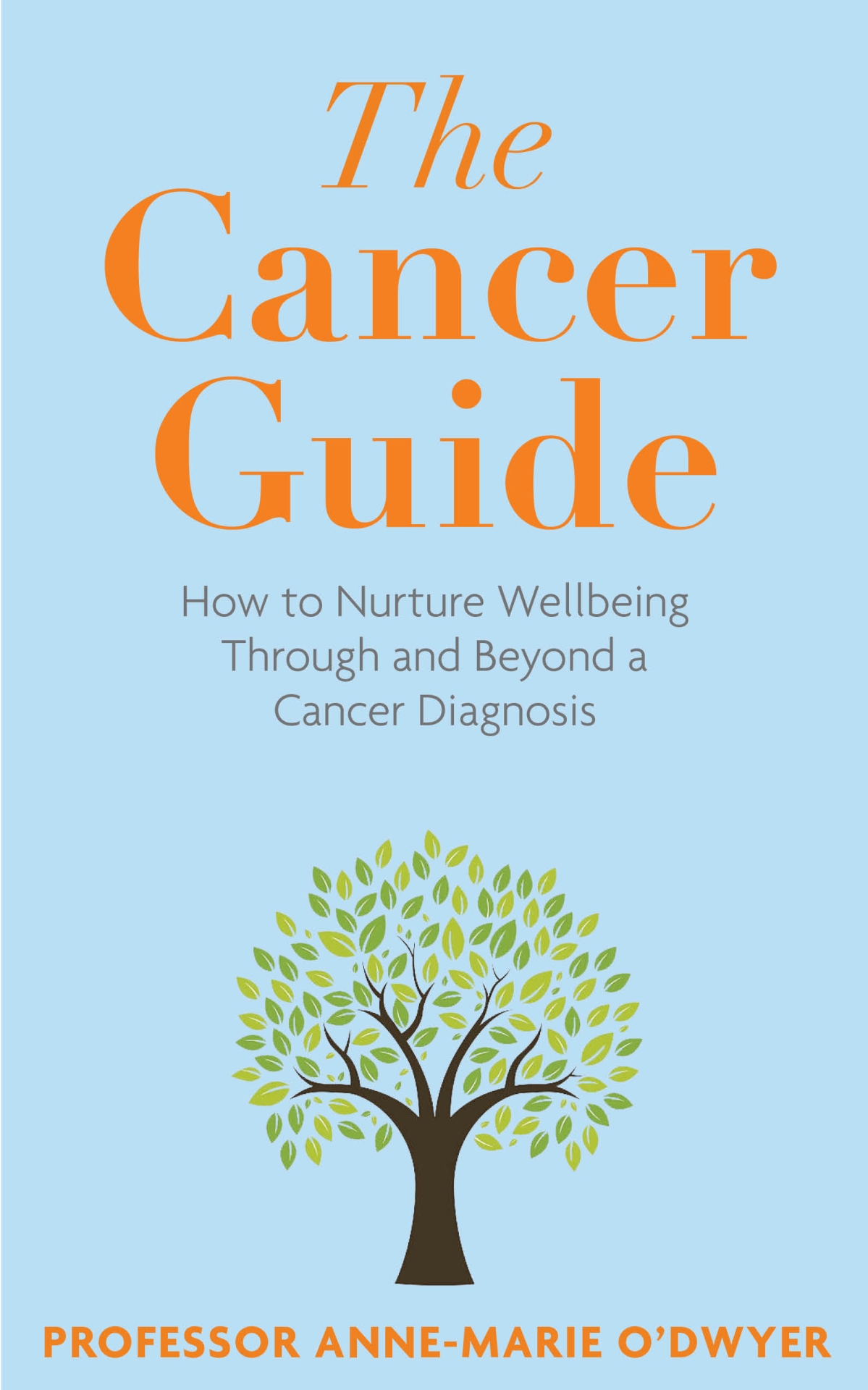
Many people across the country have been and are affected by serious illness. Cancer is one of the most devastating for many families. A new book called The Cancer Guide is an inspirational book designed to help patients, loved ones and colleagues navigate the mental anguish and trials of a cancer diagnosis and its treatment.
As a Clinical Professor at Trinity College, Dublin with over four decades’ experience in psychology, Anne Marie O’Dwyer writes about cancer with humanity and clarity, helping to combat the myths and misinformation surrounding the disease in an age of information overload.
Through her direct work with patients, O’Dwyer noticed a lack of guides to help with the emotional burden of cancer for both people living with the illness and those supporting them.
In the book O’Dwyer highlights the person at the heart of every treatment, providing helpful advice and shared experiences that are able to destigmatize the shame, fear and denial faced by those affected by cancer. She draws on case studies and professional advice to provide the definitive guide to facing illness and approaching tricky conversations.
The Cancer Guide is an empowering and informative book for all those whose lives and loved ones have been touched by cancer.
Anne Marie, who hails from Cahir, studied medicine after secondary school. While initially trained in hospital medicine, she gradually began to work with cancer patients: “I was engrossed by it but after a few months I realised that the bits I was really interested in was the psychological side of cancer care,” she says.
“There were several patients that really influenced me in that way. Patients that I still remember almost forty years later. One in particular was a young man who had lung cancer and at the time there weren’t that many treatments.
“There were no treatment options left for him and he and his wife kept coming back to see me every week. I was the ‘most junior’ person on the team.
“I knew we didn’t have any new treatments to offer so I took him aside and said ‘I am very happy to see you but I am the most junior person on the team’ as they knew there were no new treatments. His wife said ‘you are the most important person on the team and we want to keep coming’.
“That really resonated with me that what was important for them was the psychological support so when I finished my hospital training I moved to train in mental health and psychology,” says Anne Marie.
She trained initially in Ireland before moving to the UK and then eventually, as the years passed, she moved from London back to Dublin to St. James Hospital which was the hospital she had first met that couple in.
Times have changed since then: “In 2024 the treatment of cancer has got very good outcomes in general,” the Cahir native says.
“We are picking up cancer much earlier and there are new treatments coming on board as more and more people are being cured of their cancer and are living longer all the time. I think that is a very important message to get out, however despite all the facts and figures and good outcomes so many people are still afraid of the word cancer,” says Anne Marie.
She explains that: “it makes so many people feel anxious and some won’t use the word at all and that is my point.
“Of course cancer has a physical impact but quite often it is a psychological impact and that is a human response. That really brings the toll and cost of cancer, its diagnosis, its treatment and - even more importantly - how people are able to reclaim their life after treatment.
“That human response to cancer is what this book is about. Of course those human responses have been unchanged for centuries. The response of a person to a threat, which is what it is, will know those responses like fear, terror, anger, denial, a sense of isolation and a sense of abandonment.
“Some find that when they hear the word cancer in their diagnosis they stop hearing anything else at all they are so afraid. It has a big impact. The book is about that. It follows the pathway that somebody with cancer might take.
“From the diagnosis, being called in to hear their results then deciding what treatment they will have, having the treatment and then when the treatment is finished what happens then.”
It is clear that the journey is quite terrifying so to find a guide through it is hugely important.
“The reason I wrote the book is that so many people that I saw in this context said to me ‘if only I had known’. That is ‘if only I had known that it is normal to feel devastated or distressed or angry or upset. If only I had known to manage my expectations’.
“I think one of the most important times is when people come to the end of their treatment. Everyone counts down to the days and the person imagines that they will be the person they were before the cancer, that they will be happy, healthy, independent, busy and then they get to the end of treatment and they are absolutely exhausted, wrecked and demoralised.
“They then feel upset that they don't feel better so instead of feeling better they feel robbed of everything. Yes, the end of treatment is a red letter day but it is really the start of rehabilitation. It may take six months, nine months or a year to be able to get back into society again.
“The other thing that happens is that when they come to that red letter day suddenly that support starts to melt away and others pull back.
“Sometimes people miss the reassurance of going into the hospital and having someone say ‘You’re doing great’ or ‘keep going’ so it is a very difficult time. That is the kind of information that is in the book,” she says.
The book is comprehensive. The book is for patients and their families as Anne Marie explains: “Cancer never affects just one person. It is like ripples in a pond. The people close to them are equally devastated and then there is a wider circle of friends, work colleagues and others who are all affected by this diagnosis. They are often wondering what to say, what to do to help.
“It is written for them so that they can get a little insight into how the person with cancer may be feeling because often the person with cancer themselves can be too distressed or maybe too private to share their most distressing fears.”
For many it is hard to communicate without cancer, and even harder with it. The book is full of lived stories which are always a good method of building understanding.
Anne Marie has brought stories into the mix: “We have used stories for centuries to pass on information so people understand stories. Working clinically in my setting I see that. It wouldn’t be their exact story but they can identify and often they have to learn to communicate with people in a way that feels safe for them so one of the things that happens to somebody with cancer is they suddenly lose a lot of their independence and their ability to do what they did before.
“They can find that very difficult and certainly stepping back into society again can be hugely difficult for them. Learning how to manage conversation when they don’t want to talk about it can be difficult.
“Somebody who has read this book will be more equipped to deal with such a situation. Coming to terms with their new reality and being comfortable with themselves is hugely important. A lot of people are living with a cancer diagnosis now.
“A lot of people, because of treatments, will have cancer but will be living their lives and what I hope this book will do is to give them a way to live their lives to nurture their wellbeing having lived through it all.
“There is plenty in the book about diet and exercise but most importantly about managing social interactions,” she says.
The importance of finding your own way is vital as our journey is linear.
Anne Marie says change is continuous “None of us go back in time ever. None of us go back to the way we were ten or twenty years ago. We all change over time.
“Some people say to me their lives are thrown up into the air and they are waiting to see where they land. Some say ‘do you know what? I don’t want them to land where I was before, I want to do things differently’.
“Some people change their lives very significantly in the face of what has happened to them. They use what has happened to them to change their priorities and to change what they do. That is another important message in the book. If they want to do that, they might change how they use their time and stop commuting for five hours a day or decide they want to work in a different environment.
“Whatever it is, some people use this time of rehabilitation as their recovery from the impact of their treatment to reflect on their lives and think about where they want their paths to take them next.
“People can find a different way forward having been through a cancer experience. People can use that experience to change their lives to a way they find special for them now.”

Subscribe or register today to discover more from DonegalLive.ie
Buy the e-paper of the Donegal Democrat, Donegal People's Press, Donegal Post and Inish Times here for instant access to Donegal's premier news titles.
Keep up with the latest news from Donegal with our daily newsletter featuring the most important stories of the day delivered to your inbox every evening at 5pm.

This publication supports the work of the Press Council of Ireland and Office of the Press Ombudsman, and our staff operate within the Code of Practice of the Press Council. You can obtain a copy of the Code, or contact the Council, at www.presscouncil.ie, Lo-call 1800 208 080 or email: info@presscouncil.ie.